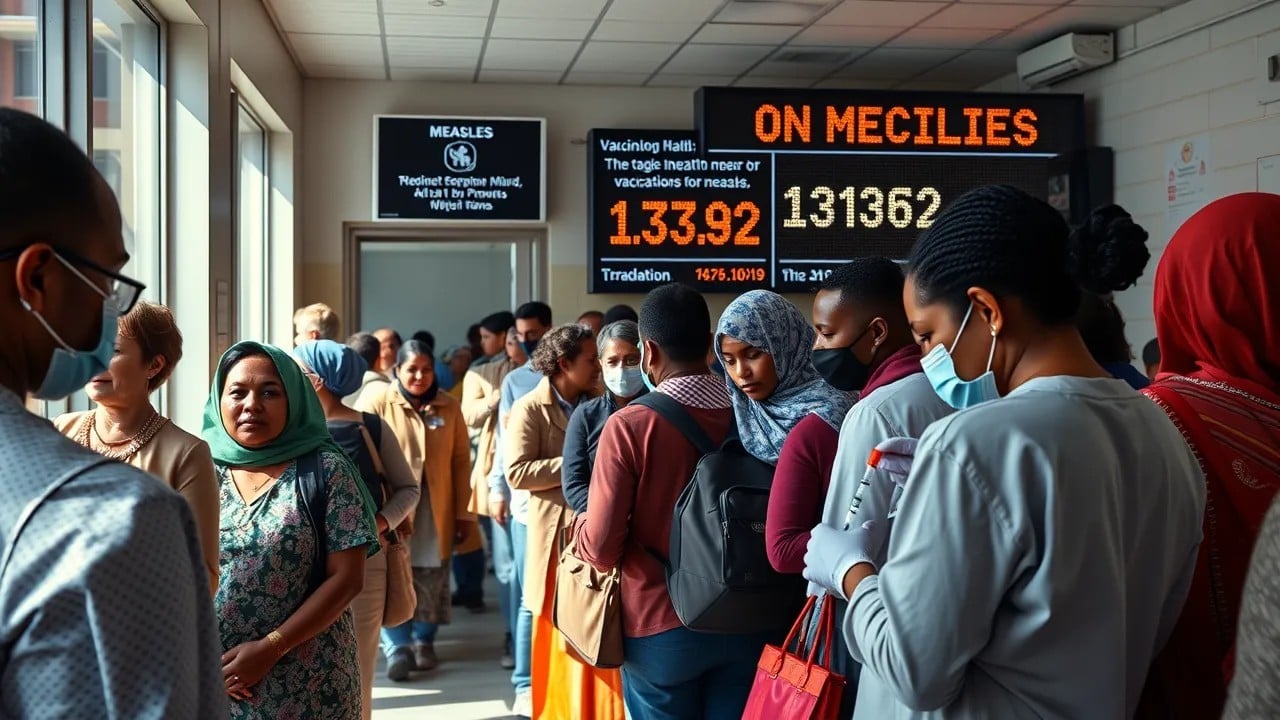
Could measles and midterms bring down Maha? – podcast
The Guardian Global Health 2026‑11‑19
In a startling reversal of a 26‑year triumph, the United States has officially lost its measles elimination status. The Centers for Disease Control and Prevention (CDC) announced that the country no longer meets the criteria for being considered free of endemic measles transmission. The decision follows a surge in reported cases across several states, driven largely by vaccine hesitancy and the political polarization that now surrounds public health.
The loss of elimination status is not merely a bureaucratic footnote; it signals that measles is once again a circulating threat in the United States. For families, it means that routine immunisation schedules may no longer guarantee protection, and for public‑health officials it demands a rapid recalibration of surveillance, outbreak response, and community engagement strategies. The timing—coinciding with the U.S. midterm elections—adds another layer of complexity, as political discourse can shape public attitudes toward vaccination and influence funding for health programmes.
Key Developments and Verified Findings
The CDC’s declaration was based on a systematic review of case data from the past year. According to the agency, 122 confirmed measles cases were reported in 2025, a sharp increase from the 12 cases recorded in 2024. The majority of these cases clustered in communities with historically low vaccination coverage, such as certain rural counties in the Midwest and urban neighbourhoods in the Northeast. Importantly, the surge included 27 cases that were linked to international travel, underscoring the global interconnectedness of disease transmission.
The CDC’s criteria for elimination require that a country report no endemic transmission for at least 12 months, with no more than two cases per million population in any given year. The United States, with a population of roughly 330 million, fell short of this benchmark. The agency noted that while outbreaks were still relatively contained, the presence of multiple independent chains of transmission indicated that measles was re‑establishing itself in the population.
The timing of the announcement dovetails with a broader public‑health crisis: a wave of misinformation about vaccines that has gained traction on social media. In the weeks leading up to the midterms, several high‑profile political figures publicly questioned the safety of the measles‑mumps‑rubella (MMR) vaccine. This rhetoric has been linked to a measurable decline in vaccination rates in several states, particularly among parents of young children. The CDC’s report warns that even a modest drop in vaccine uptake can precipitate a resurgence of measles, given the disease’s high basic reproduction number (R₀) of 12–18.
Structural Public Health and Education Context
The loss of elimination status reflects deeper structural vulnerabilities in the United States’ public‑health system. Surveillance infrastructure, once robust, has been strained by budget cuts and workforce shortages. The CDC’s own reports highlight that fewer than 50% of states maintain adequate laboratory capacity for rapid measles diagnosis, a critical component for timely outbreak containment. Moreover, the fragmentation of health insurance coverage means that many families face financial barriers to accessing routine vaccinations, especially in states that have not expanded Medicaid.
Education systems play a pivotal role in shaping vaccine attitudes. Recent studies indicate that schools with strong health‑education curricula are more likely to report higher vaccination rates among students. However, the current political climate has seen a surge in school‑based vaccine mandates being challenged in court. The intersection of public‑health policy and education policy is therefore a battleground where the future of measles prevention will be decided.
Internationally, the United States’ re‑introduction of measles serves as a cautionary tale for other countries that have recently achieved elimination status. The World Health Organization (WHO) has issued a call for renewed vigilance, urging member states to strengthen routine immunisation programmes and to invest in community‑level engagement strategies. In the Global South, where vaccine access is already uneven, the U.S. example underscores the fragility of elimination achievements in the face of political and social upheaval.
The Guardian Global Health’s coverage of this development highlights the need for a coordinated response that blends epidemiological surveillance, public‑health messaging, and policy reform. As the midterms unfold, the stakes are clear: the political decisions made in Washington will reverberate across the nation’s health‑care infrastructure, shaping the trajectory of measles and other vaccine‑preventable diseases for years to come.
Implications for Frontline and Underserved Communities
The loss of measles elimination status is not a headline that merely signals a statistical shift; it translates into concrete risks for the most vulnerable populations. In rural districts where health posts are already stretched thin, a single outbreak can overwhelm limited vaccine stocks and staff capacity. Clinics that once managed routine immunisations now face the dual burden of treating acute cases and maintaining routine schedules. The ripple effect is a slowdown in other preventive services—maternal check‑ups, antenatal screening, and child growth monitoring—because health workers must divert time to outbreak containment. When a child falls ill with measles, the community often experiences a cascade of missed school days, lost wages for caregivers, and a heightened fear that deters families from seeking routine care altogether.
Geographic barriers compound these challenges. In remote valleys, the nearest fully equipped health centre can be a two‑hour journey on foot or a three‑hour drive by unreliable public transport. During an outbreak, the logistical task of delivering additional vaccine doses, cold‑chain equipment, and personal protective gear becomes a formidable endeavor. Even when supplies arrive, the absence of trained personnel to administer the shots means that vaccination campaigns must rely on temporary staff or volunteers, whose skills may not match the stringent protocols required for measles immunisation. This gap can lead to sub‑optimal coverage, leaving pockets of susceptible children that sustain transmission chains.
Classroom capacity and educational resilience also feel the strain. Schools are often the first line of contact for children who develop febrile illnesses. In settings where health facilities are scarce, teachers may be compelled to act as informal health advisers, a role that can overwhelm their primary educational responsibilities. Moreover, outbreaks can prompt school closures to prevent further spread, depriving children of critical learning time. In communities where remote learning infrastructure is minimal, such closures translate into lost educational opportunities that disproportionately affect girls and children from low‑income families. The interruption of schooling can also erode community trust in health interventions, as families perceive a disconnect between the promised benefits of vaccination and the lived reality of disrupted services.
Community resilience, built over years of grassroots mobilisation, is tested when the disease re‑enters the epidemiological landscape. Local health volunteers, who have historically championed vaccination drives, now confront increased workloads and heightened scrutiny. Their effectiveness hinges on sustained support—adequate supplies, continuous training, and mental health resources—to prevent burnout. Without institutional backing, volunteer fatigue can erode the very social fabric that underpins successful immunisation programs. Additionally, misinformation spreads more readily in tight‑knit communities, especially when there is a perception that the health system is failing to protect the youngest members. This environment can fuel vaccine hesitancy, creating a vicious cycle that undermines both public health and community cohesion.
Policy Priorities and the Road Ahead
Addressing the renewed measles threat demands a multi‑layered policy response that is both practical and accountable. First, strengthening supply chain resilience is essential. Governments must invest in decentralized cold‑chain infrastructure—portable refrigerators, solar‑powered units, and temperature‑monitoring devices—to ensure that vaccines remain viable even in remote locales. Coupled with this, a robust forecasting system that predicts vaccine demand based on demographic shifts and outbreak patterns can preempt shortages. Transparency in procurement and distribution processes, reinforced by independent audits, will build public trust and deter corruption that could otherwise divert critical resources.
Second, workforce capacity building must be scaled up. Training programs should focus on both clinical competencies and outbreak response logistics, ensuring that health workers can swiftly pivot between routine care and emergency interventions. Task‑shifting strategies—where trained community health workers receive certification to administer vaccines under supervision—can alleviate the burden on over‑stretched staff. Importantly, these initiatives should include mental health support for frontline workers, recognising the psychological toll of managing infectious disease outbreaks in resource‑constrained settings.
Third, community engagement must be foregrounded as a core policy pillar. Public health campaigns that harness local leaders, faith‑based organisations, and schools can counteract misinformation and reinforce the value of vaccination. Interactive platforms—such as mobile SMS alerts, community radio broadcasts, and town‑hall meetings—should disseminate clear, evidence‑based messages about measles risks and the protective benefits of immunisation. Policies that incentivise vaccination, such as linking school entry to proof of immunisation or providing small stipends for caregivers who bring children for routine checks, can increase uptake without compromising equity.
Fourth, data systems require overhaul to enable real‑time surveillance. Integrating electronic health records with national epidemiological databases can facilitate rapid identification of outbreak clusters and guide targeted response measures. This digital infrastructure should be interoperable across provinces, ensuring that insights from one region inform strategies in another. Moreover, data transparency must be mandated, allowing independent researchers and civil society to monitor progress and hold authorities accountable.
Finally, international cooperation should be leveraged to secure technical and financial support. Global health partnerships—whether through WHO, UNICEF, or bilateral aid agencies—can provide expertise in outbreak containment, vaccine procurement, and health system strengthening. Importantly, these collaborations must be structured to respect national sovereignty and prioritize local ownership of solutions. By embedding global best practices within national frameworks, countries can rebuild measles elimination status while simultaneously fortifying their broader public health ecosystems.
In sum, the re‑emergence of measles amid a politically charged midterm season is a stark reminder that disease control is inseparable from social, economic, and political contexts. The policy roadmap outlined above offers a pragmatic pathway to safeguard the most vulnerable, restore public confidence, and ultimately re‑establish a resilient, equitable health system capable of withstanding future public health challenges.
Editorial Credit & Source Attribution
This article was independently researched, analyzed, and rewritten by the Nivaran Global Editorial Team to provide public-health and educational context. Primary reporting credit: The Guardian Global Health (published 2026-11-19). Cover visual: Unique AI editorial illustration created exclusively for Nivaran.
Help turn accountable public-health reporting into frontline clinical action—give monthly, make a one-time USD gift, or sponsor a rural mobile health camp.