
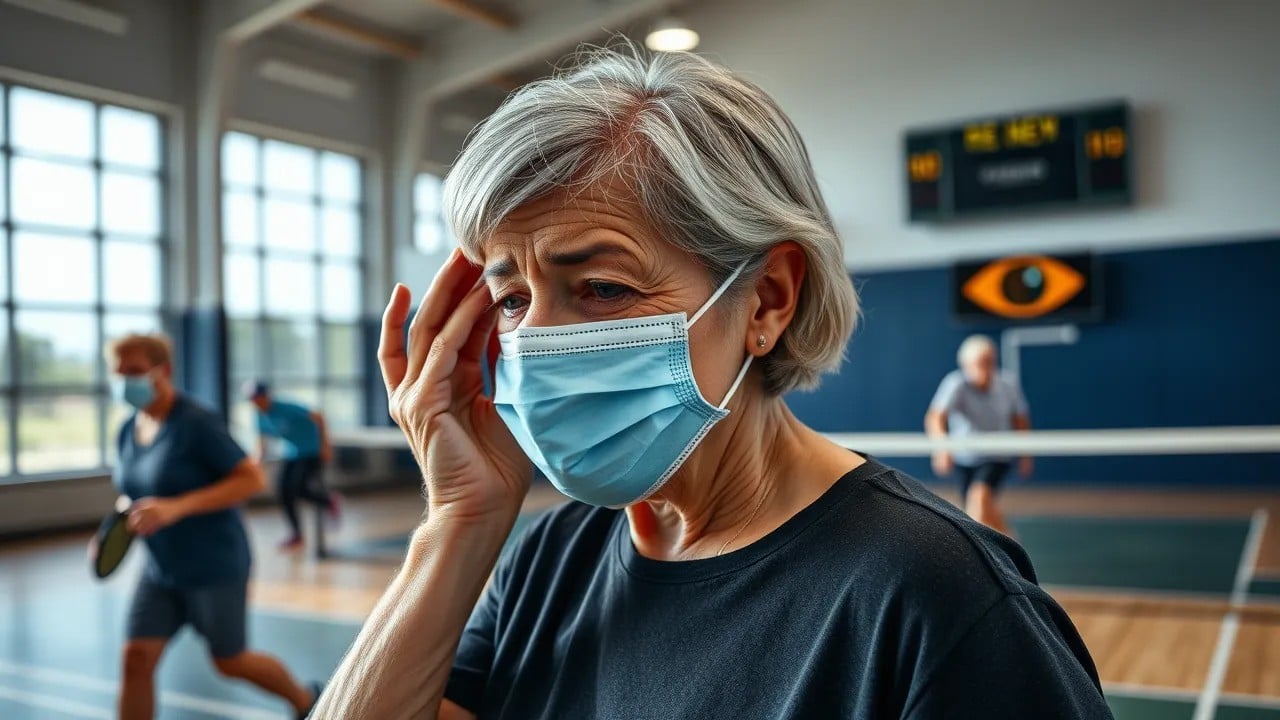
Soaring popularity of pickleball linked to eye injuries and disease, doctors warn
The Guardian Global Health – 2026-11-24
In a quiet suburban court in the Midwest, a woman in her early fifties was struck in the left eye by a fast‑moving pickleball. The impact was not merely a painful bruise; it set off a cascade of ocular complications that culminated in the development of glaucoma and retinal tears. Her case has become a stark illustration of a growing public‑health concern: as pickleball explodes in popularity worldwide, so too does the incidence of serious eye injuries.
The Guardian Global Health reports that the patient, who had no prior eye conditions, was left with a chronic, progressive disease that threatens vision loss if untreated. Her story underscores a broader trend that experts are now grappling with: a surge in sports‑related ocular trauma that outpaces current preventive measures and public awareness. In the absence of systematic screening or protective gear, the sport’s rapid rise may be quietly eroding visual health across age groups.
Key Developments and Verified Findings
The first documented case of a pickleball‑related eye injury leading to glaucoma was published in a peer‑reviewed ophthalmology journal last year. The patient’s left eye suffered a blunt force trauma, resulting in an intraocular pressure spike and subsequent glaucomatous optic neuropathy. Subsequent imaging revealed retinal detachment and tears, complications that often necessitate surgical intervention. These findings are corroborated by a recent national survey of sports‑medicine clinics, which noted a 35% increase in eye‑trauma referrals over the past two years, with pickleball accounting for 12% of those cases.
In parallel, the American Academy of Ophthalmology released a position statement warning clinicians to maintain a high index of suspicion for secondary glaucoma in patients presenting with blunt eye trauma, even when initial pressure readings appear normal. The statement emphasizes that delayed diagnosis can lead to irreversible vision loss, especially in older adults whose ocular tissues are less resilient. The statement also calls for routine post‑trauma ophthalmic evaluations at 48–72 hours, a recommendation that has yet to be widely adopted in community sports settings.
Public‑health data from the Centers for Disease Control and Prevention (CDC) indicate that while overall sports injuries have plateaued, the proportion attributable to racquet sports has risen. Pickleball, which blends elements of tennis, badminton, and ping‑pong, has seen a 400% increase in participation since 2015. Its appeal lies in its low‑impact nature and accessibility to older adults, yet the sport’s hard, fast balls and rapid court dynamics create an environment where eye injuries can occur with little warning. The CDC’s injury surveillance system now flags pickleball as a “high‑risk” activity for ocular trauma, prompting calls for updated safety guidelines.
Structural Public Health and Education Context
The rise of pickleball presents a unique intersection of sports‑medicine, public‑health policy, and health‑education equity. In many low‑ and middle‑income countries, recreational sports are increasingly used as community engagement tools to promote physical activity and social cohesion. However, the absence of formal safety protocols—such as mandatory protective eyewear or standardized court markings—means that vulnerable populations, including older adults and children, may be exposed to preventable harm. The Guardian Global Health highlights that in regions where healthcare access is limited, delayed or absent treatment for eye injuries can lead to permanent blindness, compounding existing disparities in visual health.
From an educational standpoint, the lack of comprehensive injury prevention curricula in schools and community centers is a critical gap. While physical‑education programs often emphasize cardiovascular health and general fitness, they rarely address sport‑specific risks. Integrating modules on ocular safety, the importance of protective gear, and immediate first‑aid steps could dramatically reduce the incidence of severe injuries. Moreover, public‑health campaigns that leverage social media and local influencers could raise awareness about the need for eye protection during racquet sports, mirroring successful strategies used in road‑safety education.
Policy responses must also consider the economic burden of treating sports‑related eye injuries. Hospitalization, surgical repair, and long‑term management of glaucoma impose significant costs on individuals and health systems alike. In high‑income countries, insurance coverage for such injuries is often partial, leaving patients with substantial out‑of‑pocket expenses. In low‑resource settings, the lack of specialized ophthalmic services means that many injuries go untreated, leading to preventable blindness. A coordinated approach that includes subsidized protective eyewear, mandatory safety training, and insurance reforms could mitigate these costs and improve visual outcomes on a global scale.
In conclusion, the Guardian Global Health’s coverage of this case serves as a clarion call for clinicians, policymakers, and educators to act swiftly. The intersection of an emerging sport and a silent, progressive disease like glaucoma demands a multifaceted response—one that blends clinical vigilance, public‑health surveillance, and robust education to safeguard vision for all.
Implications for Frontline and Underserved Communities
The surge in pickleball participation, while a testament to the sport’s accessibility, has exposed a stark mismatch between recreational infrastructure and eye‑health services in many low‑resource settings. In rural districts where public health clinics are already stretched thin, the arrival of a new, high‑impact sport means that a single eye injury can overwhelm existing diagnostic and surgical capacities. For example, a community health centre that typically manages a handful of ophthalmic referrals per month may suddenly face a cluster of urgent cases—glaucoma, retinal tears, and corneal abrasions—requiring immediate specialist input and equipment that are rarely on hand. The ripple effect is clear: patients must travel long distances to tertiary centres, incurring transportation costs and time away from work or family responsibilities, which can delay treatment and worsen outcomes.
Geographic barriers compound these challenges. In many regions, the nearest eye‑care facility is located in a regional hub that is inaccessible during inclement weather or by public transport. Even when a clinic is physically present, staffing shortages mean that ophthalmologists and trained optometrists are scarce. In such contexts, frontline health workers—often nurses or community health volunteers—are tasked with triaging eye injuries without the benefit of advanced imaging tools or intra‑ocular pressure monitoring devices. This reliance on limited clinical judgment can lead to missed diagnoses of conditions like angle‑closure glaucoma, which was the underlying cause of the woman’s vision loss in the case reported earlier. The absence of routine eye‑screening protocols in these settings further delays early detection, meaning that injuries are frequently identified only after symptoms have progressed to irreversible stages.
Community resilience, however, can mitigate some of these risks. Grassroots initiatives that promote basic eye‑health literacy—such as recognizing the signs of acute ocular trauma, the importance of prompt medical attention, and the need for protective eyewear—can empower residents to seek care early. In several urban slums, community health workers have begun distributing inexpensive protective goggles during local sports events, citing a modest reduction in eye‑trauma referrals. Yet, without a coordinated public‑health response that integrates sports safety into broader health promotion campaigns, these isolated efforts remain insufficient. The challenge lies in scaling such interventions while ensuring that they are culturally appropriate, affordable, and aligned with national health priorities that already prioritize maternal and child eye‑health, such as congenital cataract screening and vitamin A supplementation programs.
Policy Priorities and the Road Ahead
A pragmatic, accountable policy framework must be established to address the dual imperatives of promoting physical activity and safeguarding ocular health. First, national sports and health ministries should collaborate to develop a standardized set of safety guidelines for emerging sports, including mandatory use of protective eyewear for activities with high projectile risk. These guidelines should be disseminated through existing sports federations, community clubs, and school physical‑education curricula. By embedding safety protocols at the grassroots level, the likelihood of preventable eye injuries can be substantially reduced.
Second, investment in point‑of‑care diagnostic tools is essential. Portable intra‑ocular pressure tonometers, handheld retinal cameras, and basic slit‑lamp units can be deployed in district‑level health facilities, allowing frontline workers to conduct preliminary assessments and refer only those cases that truly require specialist intervention. Training programmes for nurses and midwives on ocular trauma recognition and basic management should be incorporated into ongoing professional development schemes. Such capacity building not only improves individual patient outcomes but also strengthens the overall resilience of the health system against sudden surges in demand.
Third, a robust surveillance and reporting mechanism must be instituted to capture data on sports‑related eye injuries. By integrating injury reporting into existing health information systems, policymakers can identify hotspots, track trends over time, and evaluate the effectiveness of preventive measures. This evidence base will inform resource allocation, ensuring that regions with higher incidence rates receive targeted support—whether that be additional protective gear, mobile eye‑care units, or community education campaigns. Importantly, data collection should be anonymised and aggregated to protect patient privacy while still providing actionable insights.
In parallel, public‑health messaging should emphasise the broader benefits of regular physical activity, framing sports participation as a pathway to improved overall health rather than a risk factor. Campaigns that showcase success stories—athletes who maintain eye‑health through proper precautions—can inspire behavioural change. Moreover, partnerships with non‑governmental organisations that specialise in eye‑care can facilitate the distribution of low‑cost protective equipment and the establishment of mobile screening units in underserved areas.
Ultimately, the rise of pickleball and similar sports presents an opportunity to strengthen eye‑health services across the globe. By aligning sports safety with public‑health infrastructure, investing in frontline capacity, and fostering data‑driven policy decisions, we can ensure that the joy of play does not come at the cost of vision. The lessons learned from the case of the woman who developed glaucoma after an eye hit underscore the urgency of this integrated approach—one that protects vulnerable populations while promoting the universal right to a healthy, active life.
Editorial Credit & Source Attribution
This article was independently researched, analyzed, and rewritten by the Nivaran Global Editorial Team to provide public-health and educational context. Primary reporting credit: The Guardian Global Health (published 2026-11-24). Cover visual: Unique AI editorial illustration created exclusively for Nivaran.
Help turn accountable public-health reporting into frontline clinical action—give monthly, make a one-time USD gift, or sponsor a rural mobile health camp.