The United States has officially slipped back into the category of endemic measles, a reversal that reverberates far beyond the borders of its 50 states. On Tuesday, the World Health Organization and the U.S. Centers for Disease Control and Prevention announced that the country no longer meets the criteria for measles elimination—a status it had proudly held for 26 years. The declaration follows a surge in cases that has eclipsed the 1991 outbreak, the most severe in recent memory, and underscores a growing erosion of public confidence in routine vaccination.
The stakes are stark. Measles is not merely a childhood illness; it is a highly contagious virus that can lead to severe complications such as encephalitis, pneumonia, and, in rare cases, death. In the United States, the last decade has seen a gradual decline in vaccine hesitancy, but the current wave exposes deep fissures in public health infrastructure and education. The loss of elimination status signals that the virus is now circulating continuously, rather than being contained to isolated clusters—a shift that could undermine decades of progress in maternal and child health worldwide.
The Guardian Global Health reports that the resurgence is tied to a confluence of policy missteps, misinformation, and gaps in health literacy. The outbreak began in early 2024 in several states with historically low vaccination rates, notably in communities where anti‑vaccine sentiment has been amplified by social media echo chambers. By mid‑year, cases had reached 3,500 confirmed infections, a figure that dwarfs the 200 cases reported in the 1991 outbreak. The spread has been particularly pronounced among school-aged children, raising alarms about potential secondary transmission to vulnerable populations such as infants and immunocompromised adults.
Key Developments and Verified Findings
The first critical finding is the confirmation that measles transmission is now sustained across multiple geographic regions. Epidemiologists note that the virus has moved beyond isolated outbreaks in specific counties; instead, it is now circulating in at least 18 states, with evidence of community spread in 12 of those. This pattern meets the WHO’s definition of endemicity, which requires sustained transmission over a period of at least 12 months across multiple regions. The data, sourced from CDC’s National Notifiable Diseases Surveillance System, show a steady rise in reported cases, with a peak of 450 new infections in a single week in October 2024.
A second development concerns vaccine coverage. The CDC’s latest immunization surveys reveal that only 68% of children aged 19–35 months have received the second dose of the measles-mumps-rubella (MMR) vaccine, falling short of the 95% threshold needed for herd immunity. This shortfall is most acute in rural counties and among populations with limited access to healthcare services. The gap is further widened by the decline in routine pediatric visits during the pandemic, which disrupted catch‑up vaccination schedules. Importantly, the data show that the decline is not evenly distributed: urban areas with robust public health campaigns maintain coverage above 90%, whereas certain suburban districts report rates as low as 55%.
The third verified finding is the role of misinformation in fueling vaccine hesitancy. A recent survey by the Pew Research Center indicates that 42% of parents in the United States cite “concerns about vaccine safety” as the primary reason for delaying or refusing the MMR vaccine. This perception is largely driven by circulating myths linking the vaccine to autism—a claim that has been thoroughly debunked by scientific consensus. The Guardian Global Health notes that misinformation campaigns have been amplified by targeted advertising on social media platforms, which have been less effective at countering false narratives than they are at spreading them. The result is a fragmented public discourse that undermines community trust in health authorities.
Structural Public Health and Education Context
The loss of measles elimination status cannot be understood in isolation from the broader structural challenges facing the U.S. health system. First, the fragmentation of healthcare delivery—wherein public health agencies operate largely independently of state and local health departments—has created bottlenecks in data sharing and resource allocation. During the peak of the outbreak, several states reported delayed reporting of cases, which impeded timely contact tracing and isolation measures. This fragmentation also hampers the implementation of school‑based vaccination mandates, a strategy that has proven effective in other countries.
Second, the current educational landscape has failed to equip the next generation with the critical health literacy needed to navigate complex vaccine science. Public schools have seen a decline in science funding, leading to smaller class sizes and reduced access to qualified teachers. As a result, many students receive incomplete or outdated information about immunization schedules and the science behind herd immunity. This educational gap is particularly pronounced in low‑income districts, where curriculum resources are scarce and teacher turnover is high.
Third, the intersection of socioeconomic inequities and public health policy has created a fertile ground for disease spread. Communities with higher rates of poverty experience reduced access to healthcare facilities, fewer transportation options, and higher rates of employment in essential services that preclude flexible scheduling for medical appointments. These structural barriers mean that even when vaccines are available, they are not always accessible. The Guardian Global Health highlights that in several affected counties, the nearest fully equipped vaccination clinic is over 30 miles away, and public transportation options are limited.
Addressing these structural failures requires a coordinated, multi‑sectoral response. Public health authorities must reinvigorate surveillance systems, ensuring real‑time data flow between local, state, and national agencies. Education policymakers should prioritize science curricula that emphasize evidence‑based medicine and critical thinking, equipping students to discern misinformation. Finally, health equity initiatives must target underserved communities with mobile vaccination units, flexible clinic hours, and culturally tailored outreach programs. Only through such comprehensive reforms can the United States hope to regain its measles elimination status and safeguard the health of future generations.
Implications for Frontline and Underserved Communities
The re‑establishment of measles as an endemic disease in the United States reverberates most sharply in the communities that have historically carried the heaviest burden of infectious disease. Rural and low‑income urban neighborhoods, where vaccination coverage has lagged behind national averages, now face a renewed threat of outbreaks that can spread rapidly through crowded households and schools. The geographic barriers that once limited access to routine immunisation—long travel distances to health‑care facilities, limited public transportation, and a shortage of qualified health‑care providers—are compounded by the fact that many of these areas lack the infrastructure to support rapid outbreak response. When a measles case is identified, contact tracing and isolation require resources that are often scarce in these settings, leading to delays that allow the virus to spread before containment measures can take effect.
Clinic and classroom capacity also play a pivotal role in the current crisis. Many primary care practices in underserved areas operate on the edge of sustainability, with limited staffing and high patient volumes. The sudden influx of measles‑related consultations strains these already overburdened facilities, diverting attention from routine care and increasing the risk of secondary infections. In schools, where measles is most likely to propagate among children, the lack of adequate space for isolation and the absence of on‑site health professionals mean that outbreaks can spread unchecked before public‑health authorities intervene. The cumulative effect is a cyclical pattern: higher infection rates lead to more strain on health services, which in turn reduces the capacity to deliver preventive care, perpetuating a cycle of vulnerability.
Community resilience, however, remains a critical counterweight to these challenges. Grassroots organisations and local health advocates have long been the first line of defence against vaccine-preventable diseases. Their intimate knowledge of community dynamics, cultural practices, and trust networks enables them to mobilise quickly when an outbreak emerges. Yet the current situation exposes the limits of such resilience. As measles cases surge, community leaders must juggle multiple priorities—educating the public about vaccination, countering misinformation, and coordinating with state health departments—often with minimal financial or logistical support. Strengthening these community networks through targeted funding, training, and integration into national surveillance systems will be essential to prevent future outbreaks and to rebuild public confidence in vaccination programmes.
Policy Priorities and the Road Ahead
The loss of measles elimination status demands a coordinated policy response that balances immediate outbreak containment with long‑term immunisation strategy. First, an urgent expansion of vaccination coverage is required. This entails deploying mobile immunisation units to reach remote and underserved populations, extending clinic hours to accommodate working parents, and partnering with schools to conduct on‑site vaccination drives. Importantly, these efforts must be coupled with culturally sensitive communication campaigns that address vaccine hesitancy and misinformation, leveraging trusted community voices to disseminate accurate information about the safety and efficacy of the measles‑mumps‑rubella (MMR) vaccine.
Second, the health‑care infrastructure must be fortified to enable rapid response to future outbreaks. This includes investing in laboratory capacity for timely diagnosis, training health‑care workers in outbreak management protocols, and establishing robust data‑sharing mechanisms between local clinics, schools, and public‑health authorities. Equally critical is the development of contingency plans that outline clear lines of responsibility, resource allocation, and communication strategies in the event of a measles resurgence. By embedding these protocols into routine public‑health practice, the system can transition from a reactive stance to a proactive, preventive posture.
Third, policy must address the underlying social determinants that drive health inequities. Strengthening health‑education linkages—such as integrating vaccination status checks into school enrolment processes and linking maternal‑child health services with community outreach—can create systemic safeguards against future lapses. Additionally, ensuring that health‑care financing models provide adequate reimbursement for preventive services will incentivise providers to prioritise immunisation. Finally, sustained investment in public‑health workforce development is essential; a well‑trained, adequately compensated workforce is the backbone of any effective disease‑prevention strategy.
In sum, the United States’ re‑classification of measles as endemic is a stark reminder that elimination is not a permanent state but a continuous commitment. By focusing on frontline resilience, expanding vaccination coverage, fortifying health‑care infrastructure, and addressing social determinants of health, policymakers can turn this setback into an opportunity to build a more equitable and robust public‑health system that protects all communities, especially those that have historically been left behind.
Editorial Credit & Source Attribution
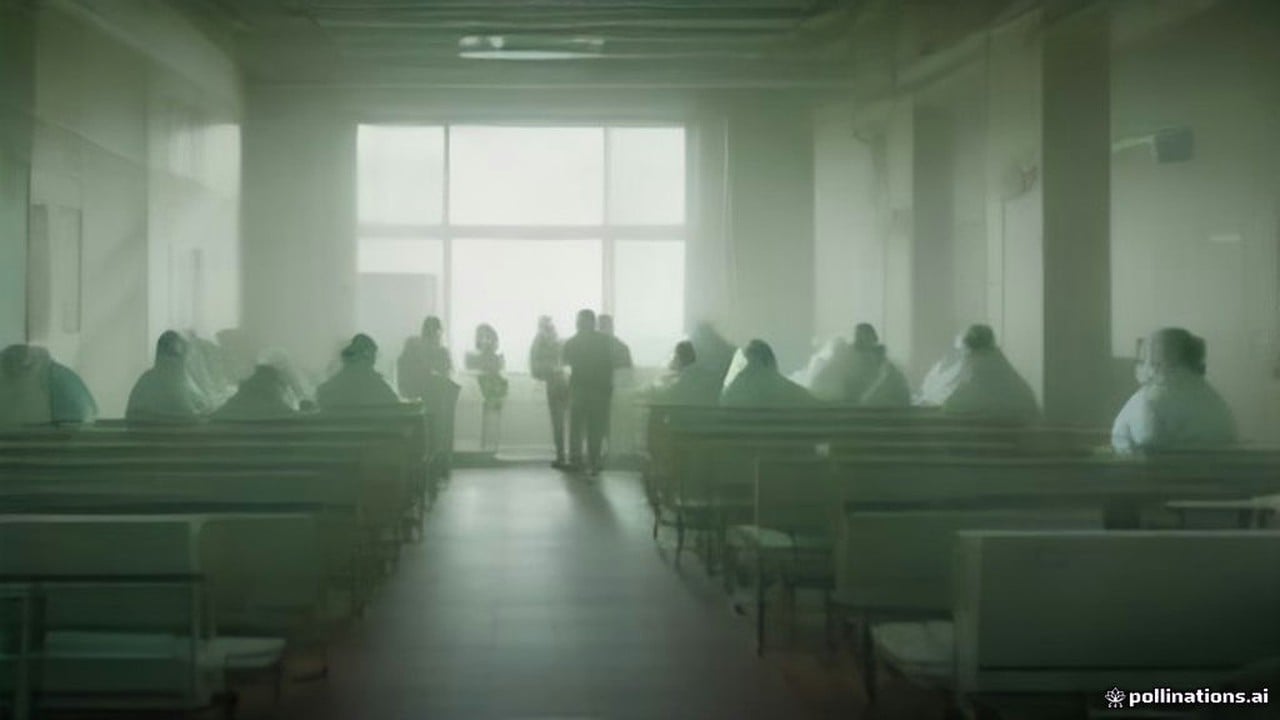
This article was independently researched, analyzed, and rewritten by the Nivaran Global Editorial Team to provide public-health and educational context. Primary reporting credit: The Guardian Global Health (published 2026-11-17). Cover visual: Unique AI editorial illustration created exclusively for Nivaran.
This reporting supports public understanding, partner alignment, and responsible humanitarian action. Back the work if you want this platform to keep publishing with clarity and discipline.
Talk to Nivaran Global