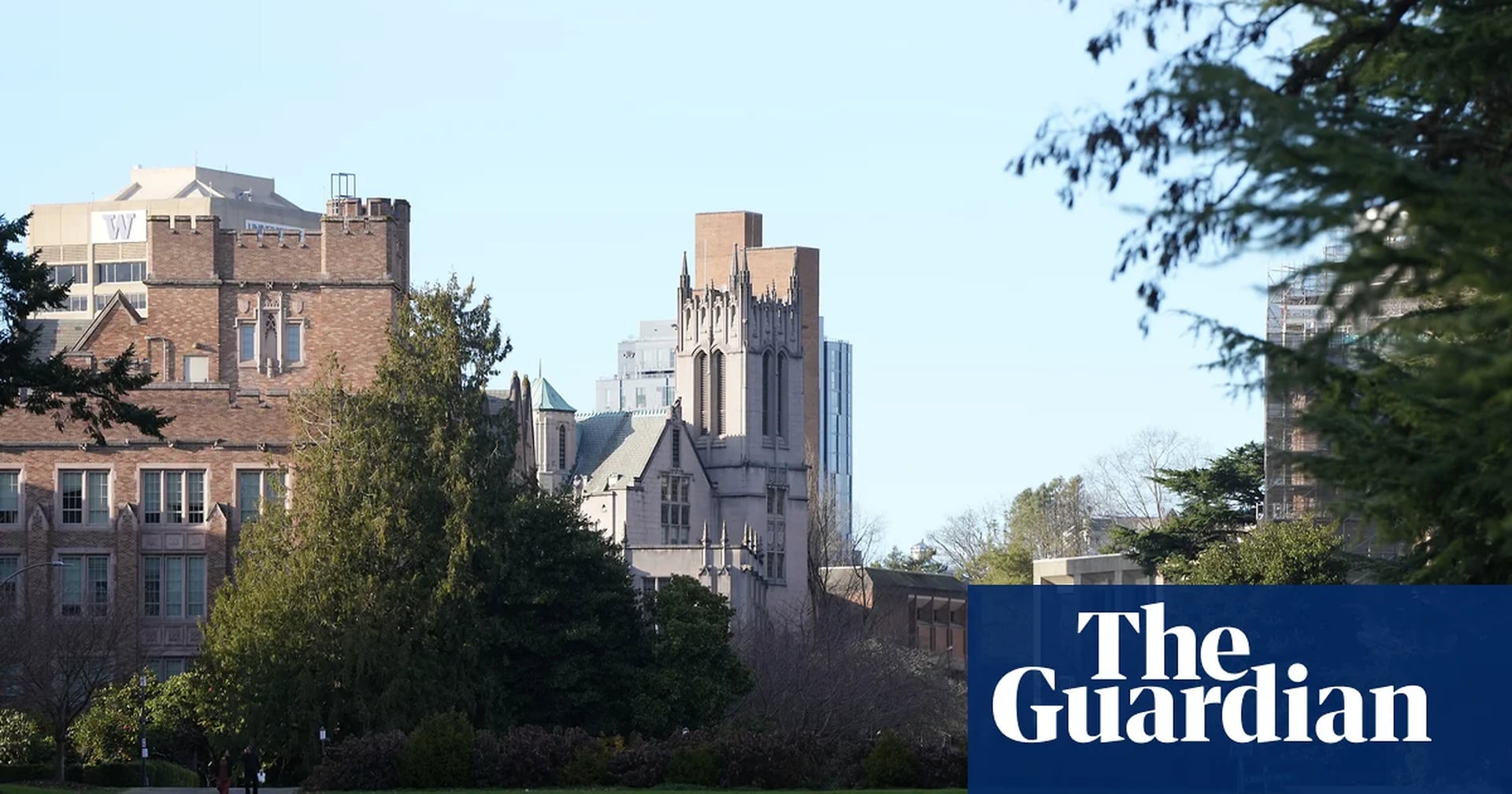
The recent removal of Professor Aria Fani from his directorship at the University of Washington’s Middle East Center has ignited a fervent global discussion on the boundaries of academic freedom and the escalating pressures faced by scholars expressing contentious political viewpoints. This incident, where a university faculty member was relieved of his administrative duties following critical remarks concerning US and Israeli involvement in the Middle East, serves as a stark illustration of the complex challenges confronting higher education institutions worldwide.
Professor Fani's case, as reported, involved the alleged use of official center newsletters to articulate strong criticisms of US and Israeli foreign policy regarding Iran, alongside a highly provocative characterization of Zionism. The university's decision to remove him from his leadership position, while not necessarily terminating his professorial role, underscores the delicate balance institutions attempt to strike between upholding principles of free speech and managing their public image, donor relations, and the perceived neutrality of their academic programs. This particular event is not isolated; it is part of a discernible pattern emerging across American universities, where faculty members are increasingly facing professional sanctions, including suspensions or dismissals, for expressing opposition to US-Israeli actions in the Middle East. At least three such incidents have been documented in the past month alone, signaling a tightening environment for political discourse within academia.
The core of this controversy lies in the perennial tension between academic freedom and institutional responsibility. Academic freedom is a cornerstone of higher education, positing that scholars should be free to research, teach, and publish without fear of censorship or retaliation. This principle is vital for the advancement of knowledge and the robust exchange of ideas. However, this freedom is not absolute. Universities also bear the responsibility of maintaining an inclusive environment, ensuring that institutional platforms are not misused to promote personal political agendas in a manner that could be perceived as official endorsement, or that could alienate or harm segments of their community. The question then becomes: where is the line drawn, particularly when the subject matter is deeply sensitive and politically charged?
In Professor Fani's situation, the alleged use of official center newsletters raises specific questions about the appropriate channels for expressing personal political views. While a professor is typically afforded broad latitude in their teaching and research, the use of an institutional communication tool might be interpreted by some as blurring the lines between individual academic expression and the official stance of the university or its specific centers. This distinction is crucial for universities, which often strive to present themselves as neutral arbiters of knowledge, fostering diverse perspectives rather than endorsing particular political positions. The perceived weaponization of institutional platforms, even if unintended by the individual, can lead to significant reputational damage and internal discord.
The broader implications of such actions extend far beyond individual cases. When professors face professional repercussions for their political statements, it can create a chilling effect across the academic community. Faculty members, particularly those in fields touching upon geopolitics, human rights, or social justice, might become hesitant to engage in critical analysis or express dissenting opinions, fearing for their careers. This self-censorship can severely undermine the university's role as a crucible for challenging ideas and a space for unfettered intellectual inquiry. A robust academic environment thrives on the fearless exploration of diverse viewpoints, even those that are unpopular or controversial. If scholars are compelled to temper their analyses or withhold their perspectives, the quality and depth of educational discourse inevitably suffer.
Moreover, these incidents highlight the increasing politicization of higher education, particularly in Western countries. Universities, once seen as bastions of independent thought, are now frequently caught in the crossfire of broader societal and geopolitical conflicts. External pressures from political groups, donors, alumni, and even government bodies can heavily influence institutional decisions regarding faculty conduct and speech. This external influence poses a significant threat to the autonomy of academic institutions, potentially transforming them from centers of critical thought into arenas for political battles. The pressure to conform to certain narratives, or to suppress others, can compromise the integrity of academic research and teaching.
The global context of this debate is equally important. While the immediate incidents are centered in the United States, the principles of academic freedom and the challenges to it are universal. In many parts of the world, scholars face far more severe consequences, including imprisonment or violence, for expressing dissenting views. Even in democracies, the line between protected speech and speech deemed unacceptable by institutions or powerful external actors is constantly being negotiated. The case of Professor Fani, therefore, resonates globally, prompting educators and policymakers worldwide to reflect on the robustness of their own protections for academic freedom and the mechanisms in place to resolve such disputes fairly and transparently.
The impact on students also warrants consideration. A university environment should ideally expose students to a wide array of perspectives, encouraging them to think critically and form their own informed opinions. When faculty members are silenced or removed for expressing certain viewpoints, it can inadvertently convey a message that some ideas are too dangerous to be discussed openly. This can stifle intellectual curiosity and limit students' exposure to the full spectrum of academic thought, particularly on complex and sensitive international issues. Conversely, some students might feel that certain expressions create a hostile environment or promote biased narratives, leading to calls for institutional intervention. Navigating these diverse student expectations and ensuring an environment conducive to learning for all remains a significant challenge for university administrations.
Looking ahead, the ongoing tensions underscore the urgent need for universities to revisit and clarify their policies regarding academic freedom, free speech, and the appropriate use of institutional platforms. Clear guidelines, developed through inclusive dialogue involving faculty, administration, and student representatives, are essential. These guidelines should aim to protect legitimate academic inquiry and expression while also addressing concerns about harassment, discrimination, and the misuse of institutional resources. Furthermore, robust processes for addressing complaints and disputes, ensuring due process and transparency, are critical to maintaining trust and upholding the integrity of the academic community.
In conclusion, the dismissal of Professor Aria Fani from his directorship at the University of Washington is more than an isolated personnel matter; it is a significant symptom of a global struggle to define and defend academic freedom in an increasingly polarized world. As geopolitical conflicts intensify and societal divisions deepen, higher education institutions find themselves at a critical juncture. Their ability to navigate these challenges, uphold their foundational principles of open inquiry, and protect the intellectual independence of their scholars will determine their continued relevance as beacons of knowledge and critical thought in the 21st century. The global academic community must remain vigilant, advocating for environments where robust debate and diverse perspectives are not just tolerated, but actively encouraged and protected.
Support Nivaran Foundation's commitment to fostering informed global dialogue on critical educational and societal issues.
Talk to Nivaran Global