
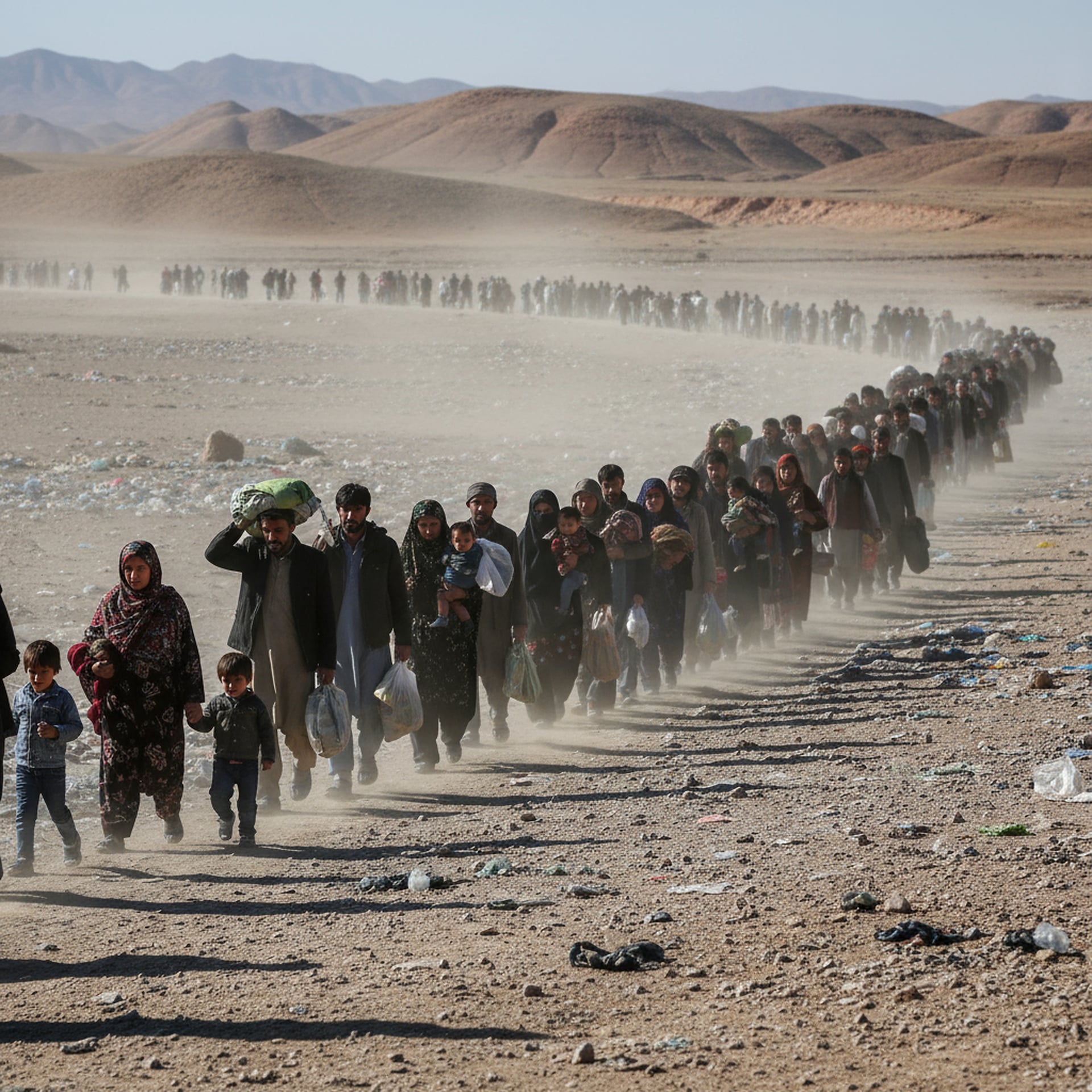
The escalating conflict within Iran has triggered a significant humanitarian crisis, compelling at least 70,000 Afghan workers and students to abandon their livelihoods and studies, returning to an Afghanistan already grappling with profound instability and widespread humanitarian needs. This mass exodus represents not only a personal tragedy for tens of thousands but also a critical blow to Afghanistan’s fragile economy, which has long relied on remittances and employment opportunities in neighboring Iran. The sudden influx of returnees places immense pressure on an already overstretched nation, exacerbating existing challenges in health, education, and social services, and deepening the cycle of vulnerability for a population caught between two escalating crises.
For decades, Iran has served as a crucial economic lifeline for Afghanistan, offering employment to millions of Afghans seeking refuge from conflict and poverty in their homeland. These workers have sent billions of dollars in remittances back to Afghanistan, forming a vital pillar of the economy and supporting countless families. The recent intensification of conflict in Iran, however, has disrupted this critical flow, leading to job losses, economic hardship for Afghan migrants, and ultimately, their forced repatriation. Students, too, have seen their educational pursuits abruptly halted, facing an uncertain future in a country where access to quality education remains a significant challenge. This disruption is not merely an economic setback; it is a direct assault on the fundamental well-being and future prospects of an entire generation.
The returnees arrive in an Afghanistan that is far from a haven of stability. The nation continues to contend with its own protracted internal conflicts, economic collapse, and a severe humanitarian emergency affecting millions. Basic services, including healthcare and education, are critically underfunded and inaccessible to a large portion of the population. The sudden arrival of tens of thousands of additional individuals, many of whom have lost their savings and face an uncertain future, places an unbearable strain on these already collapsing systems. The psychological toll on these displaced individuals, who have fled one conflict only to return to another, is profound, manifesting in increased rates of anxiety, depression, and trauma-related disorders that the existing mental health infrastructure is ill-equipped to address.
Strain on Healthcare Systems
The immediate and most pressing concern for the returning Afghans is access to adequate healthcare. Afghanistan's health system, ravaged by decades of conflict and underinvestment, struggles to provide even basic services to its existing population. The sudden influx of 70,000 individuals, many of whom may arrive with pre-existing health conditions, injuries sustained during their journey, or illnesses contracted in overcrowded transit points, threatens to overwhelm already fragile clinics and hospitals. Essential medical supplies are scarce, and healthcare professionals are few and far between, particularly in remote border regions where many returnees first arrive. This situation creates a fertile ground for the spread of communicable diseases, especially in temporary settlements where sanitation and hygiene facilities are often inadequate.
Furthermore, the specific health needs of vulnerable groups within the returnee population are often overlooked. Pregnant women face heightened risks during displacement, with limited access to prenatal care, safe delivery services, and postnatal support. Children, particularly infants and toddlers, are susceptible to malnutrition, diarrheal diseases, and respiratory infections, compounded by the stress of displacement and lack of proper nutrition. The psychological impact of forced migration and the uncertainty of their future also takes a heavy toll, leading to increased demand for mental health and psychosocial support services that are severely lacking across Afghanistan. Without immediate and sustained intervention, the health crisis among these returnees could escalate rapidly, leading to preventable illness and mortality.
Disruption to Education and Future Prospects
The impact on education is equally devastating. Many of the returnees are students whose education in Iran has been abruptly cut short. Upon their return to Afghanistan, they face a daunting landscape where educational infrastructure is severely underdeveloped, particularly for girls and in rural areas. Existing schools are often overcrowded, under-resourced, and lack qualified teachers. The sudden arrival of thousands of additional children and young adults seeking to continue their studies will further strain these limited resources, leading to larger class sizes, reduced quality of instruction, and potential exclusion for many.
Beyond the immediate logistical challenges, the psychological trauma experienced by these children and young people can significantly impede their ability to learn. The instability, fear, and loss associated with displacement can lead to difficulties concentrating, behavioral issues, and a general disengagement from academic pursuits. Creating safe, supportive learning environments that address both their educational and psychosocial needs is paramount, yet incredibly challenging in the current context. For many, the dream of an education, which they pursued in Iran, now seems distant, threatening to create a lost generation deprived of the skills and knowledge necessary to rebuild their lives and contribute to their country's future.
Economic Fallout and Long-Term Consequences
The cessation of the economic lifeline from Iran has profound long-term consequences for Afghanistan. Remittances were not just a source of income; they were a buffer against extreme poverty, enabling families to afford food, shelter, healthcare, and education. Without this income, many families will plunge deeper into destitution, increasing food insecurity and making it impossible to access essential services. The returnees themselves, having lost their jobs and often their savings, will struggle to find employment in an Afghan economy already suffering from high unemployment rates and limited opportunities.
This economic downturn will inevitably exacerbate existing humanitarian needs, creating a vicious cycle of poverty, displacement, and vulnerability. The lack of economic prospects can also fuel further instability, as desperation drives individuals towards illicit activities or recruitment by armed groups. Addressing this multifaceted crisis requires a comprehensive approach that goes beyond immediate aid, focusing on sustainable livelihoods, economic recovery, and long-term development initiatives that can absorb the returning workforce and provide opportunities for the youth.
A Call for Global Solidarity and Action
The plight of Afghans caught between two conflicts underscores the urgent need for sustained international attention and humanitarian assistance. The Nivaran Foundation emphasizes that the global community must step up its efforts to support Afghanistan, not only to address the immediate needs of these 70,000 returnees but also to bolster the country's fragile health and education systems. This includes providing emergency medical supplies, establishing mobile health clinics, and offering mental health and psychosocial support services tailored to the needs of displaced populations. In education, support is needed for building temporary learning spaces, providing educational materials, and training teachers to cope with the influx of students and their unique challenges.
Furthermore, advocacy for peaceful resolutions to regional conflicts is paramount to prevent further displacement and suffering. The international community must ensure that humanitarian principles guide all responses, prioritizing the protection and well-being of the most vulnerable. Without a concerted and compassionate global effort, the humanitarian crisis in Afghanistan, deepened by the exodus from Iran, risks spiraling further out of control, with devastating consequences for millions of lives and the long-term stability of the region.
Support Nivaran Foundation's efforts to provide essential health and education aid to vulnerable populations affected by displacement and conflict.
Talk to Nivaran Global