
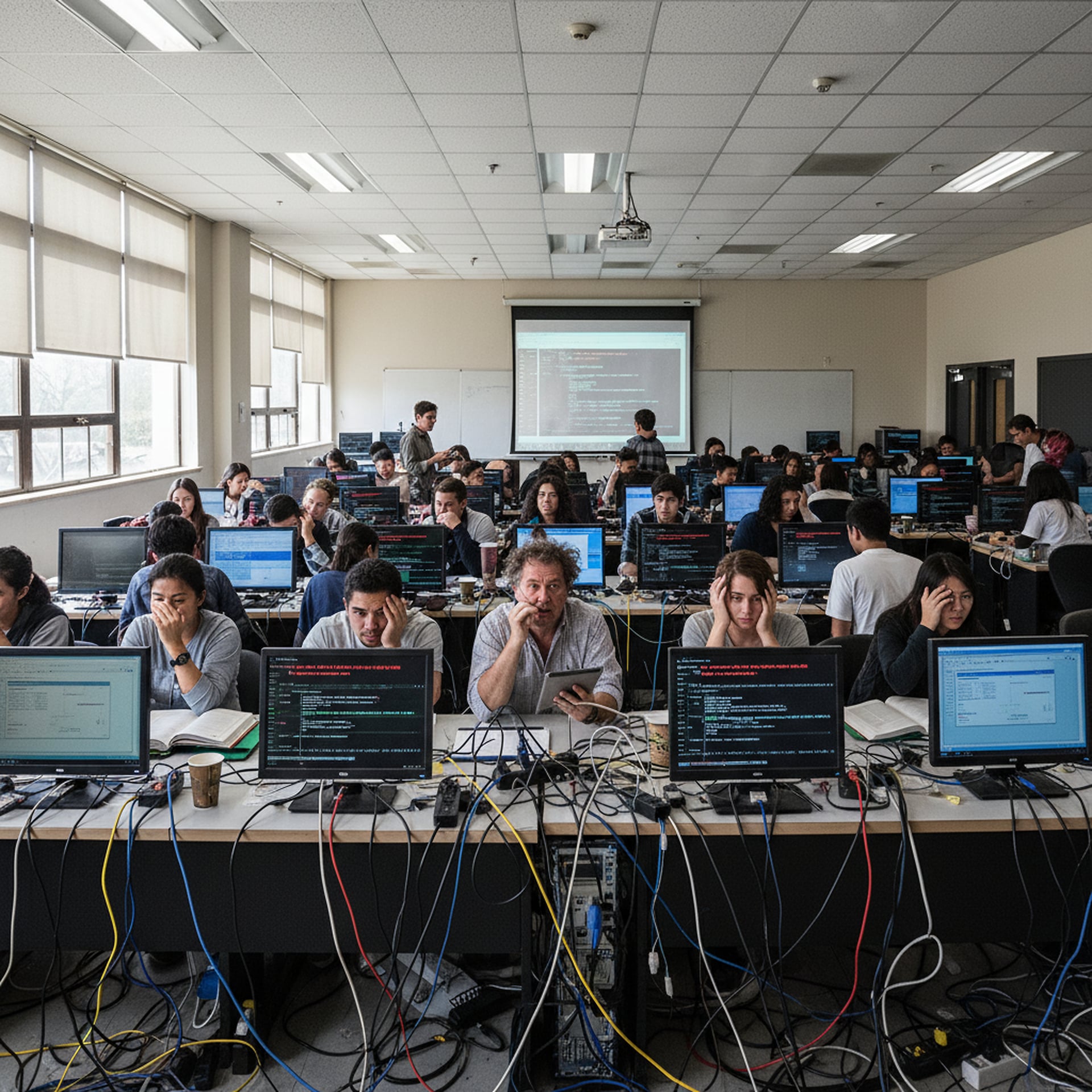
The global academic community has long envisioned a future where artificial intelligence revolutionizes learning, making education more personalized, efficient, and accessible. This vision propelled California’s public university system to embark on an ambitious, multi-million dollar initiative to integrate AI across its vast network of institutions. With a staggering investment of $16.9 million, the project aimed to position California at the forefront of educational innovation, promising a new era for students and faculty alike. However, the reality that unfolded in the wake of this grand technological leap was far from the utopian ideal; instead, it plunged the system into an unprecedented state of operational chaos, offering a stark cautionary tale for educational bodies worldwide.
From the moment the "AI-Powered University" concept moved from blueprint to reality, the challenges began to surface. The initial rollout was plagued by a myriad of technical glitches that crippled core functionalities. Students reported widespread system crashes during critical examination periods, AI-driven tutoring platforms that provided incorrect information or simply failed to load, and personalized learning paths that often looped endlessly or presented irrelevant material. The promised seamless integration of AI tools into existing learning management systems proved to be anything but, creating a fragmented and frustrating digital environment. Faculty members, many of whom received inadequate training, found themselves grappling with complex new interfaces while simultaneously trying to deliver their courses, often resorting to traditional methods out of sheer necessity and exasperation. This immediate and pervasive technical instability eroded confidence in the entire initiative, turning the initial excitement into widespread disillusionment.
The impact on the student experience was particularly severe. Rather than enhancing learning, the AI systems frequently became an obstacle. Students accustomed to clear syllabi and predictable academic structures found themselves navigating a constantly shifting digital landscape where assignments were miscategorized by algorithms, deadlines were confused, and grading rubrics were inconsistently applied by automated assessors. The promise of personalized feedback often translated into generic, unhelpful responses, or worse, outright errors that required human intervention to correct. This depersonalization of the learning process, coupled with the constant technical frustrations, led to a significant increase in student anxiety and a noticeable dip in engagement. Many students felt like unwilling participants in a poorly executed experiment, their academic progress jeopardized by a system that was supposed to empower them. The very essence of a supportive learning environment was undermined as students spent more time troubleshooting technical issues than engaging with their course material.
Faculty members, the linchpin of any academic institution, bore a disproportionate share of the burden. Tasked with integrating AI tools into their curricula, many found themselves without the necessary technical expertise or pedagogical guidance. Workshops designed to train them were often rushed, superficial, and failed to address the practical complexities of using AI in diverse subject areas. Professors who had dedicated years to refining their teaching methods suddenly faced the daunting prospect of redesigning entire courses around unreliable AI platforms. The administrative load increased dramatically, as faculty were forced to spend countless hours debugging systems, correcting algorithmic errors, and mediating student complaints related to the AI. This not only diverted their attention from teaching and research but also led to widespread burnout and a palpable sense of resentment towards the top-down implementation of the technology. The academic freedom and autonomy traditionally enjoyed by educators felt threatened by the inflexible demands of the new AI infrastructure.
Beyond the operational and pedagogical challenges, significant ethical and academic integrity concerns quickly emerged. The use of AI in grading and content generation raised serious questions about fairness and bias. Algorithms, trained on potentially biased datasets, sometimes exhibited discriminatory patterns in their assessments, disproportionately affecting certain student demographics. The proliferation of AI writing tools also exacerbated issues of academic dishonesty, making it increasingly difficult for faculty to distinguish between student-generated work and AI-produced content. While the university system attempted to deploy AI-powered plagiarism detectors, these tools often proved imperfect, generating false positives or failing to catch sophisticated AI-generated text, further complicating the already fraught landscape of academic integrity. Data privacy became another pressing concern, as vast amounts of student data were fed into these new systems, with unclear protocols for storage, access, and usage, raising alarms among privacy advocates and students alike.
The financial implications of this ambitious undertaking cannot be overstated. The $16.9 million investment, intended to usher in a new era of educational excellence, now appears largely misspent. Public funds, earmarked for improving educational outcomes, instead fueled a project that generated more problems than solutions. Questions of accountability have naturally arisen, with calls for a thorough review of how such a substantial sum could lead to such widespread disarray. The cost extends beyond the initial investment; the ongoing expenses of troubleshooting, system maintenance, and the potential need for significant overhauls or even abandonment of certain AI components represent a continuing drain on resources that could otherwise be directed towards proven educational enhancements, student support services, or faculty development. The economic fallout serves as a stark reminder that technological innovation, however promising, must be accompanied by rigorous planning, pilot testing, and a clear understanding of both its potential and its limitations.
Administratively, the university system found itself in a quagmire. The IT departments were overwhelmed by the sheer volume of support requests and system failures. Policies and guidelines for the ethical and practical use of AI in education were either non-existent or developed reactively, lagging far behind the rapid deployment of the technology. The decision-making process, which led to such a large-scale, rapid implementation without sufficient groundwork, is now under intense scrutiny. The lack of a phased approach, comprehensive risk assessment, and robust feedback mechanisms from end-users (students and faculty) before full-scale deployment proved to be a critical oversight. This top-down, technology-first approach, rather than a human-centered one, ultimately contributed to the pervasive sense of chaos and resistance.
The California experience offers invaluable lessons for global higher education. As institutions across continents explore the potential of AI to transform learning, this case serves as a powerful reminder of the complexities involved. It underscores the critical need for a balanced approach that prioritizes pedagogical effectiveness, ethical considerations, and user readiness over the mere adoption of cutting-edge technology. Other nations and universities contemplating similar ventures must learn from California's missteps: the importance of incremental implementation, comprehensive faculty and student training, robust technical infrastructure, clear ethical guidelines, and continuous feedback loops. The allure of technological advancement must not overshadow the fundamental purpose of education: fostering human intellect, critical thinking, and well-being.
Moving forward, the California university system faces the daunting task of salvaging its AI initiative. Experts suggest a complete re-evaluation, potentially involving a significant scaling back of the most problematic AI components and a renewed focus on human-centered design principles. This would entail extensive consultation with students and faculty, pilot programs in controlled environments, and a commitment to transparency regarding the technology's capabilities and limitations. The path to truly leveraging AI in education is not through rapid, large-scale deployment driven by technological enthusiasm, but through thoughtful, iterative development that respects the intricate dynamics of teaching and learning.
In conclusion, California’s ambitious foray into the "AI-Powered University" stands as a potent symbol of the promises and perils of technological transformation in education. What began as a vision for an advanced learning ecosystem quickly devolved into a costly and chaotic experiment, highlighting the profound challenges of integrating complex AI systems into established educational frameworks. The global community watches, learning that while AI holds immense potential to reshape education, its successful implementation demands meticulous planning, ethical foresight, and an unwavering commitment to the human element at the heart of all learning. The future of AI in education will not be defined by the technology itself, but by our collective wisdom in deploying it responsibly and effectively.
Support Nivaran Foundation's independent journalism on global education and health initiatives.
Talk to Nivaran Global