
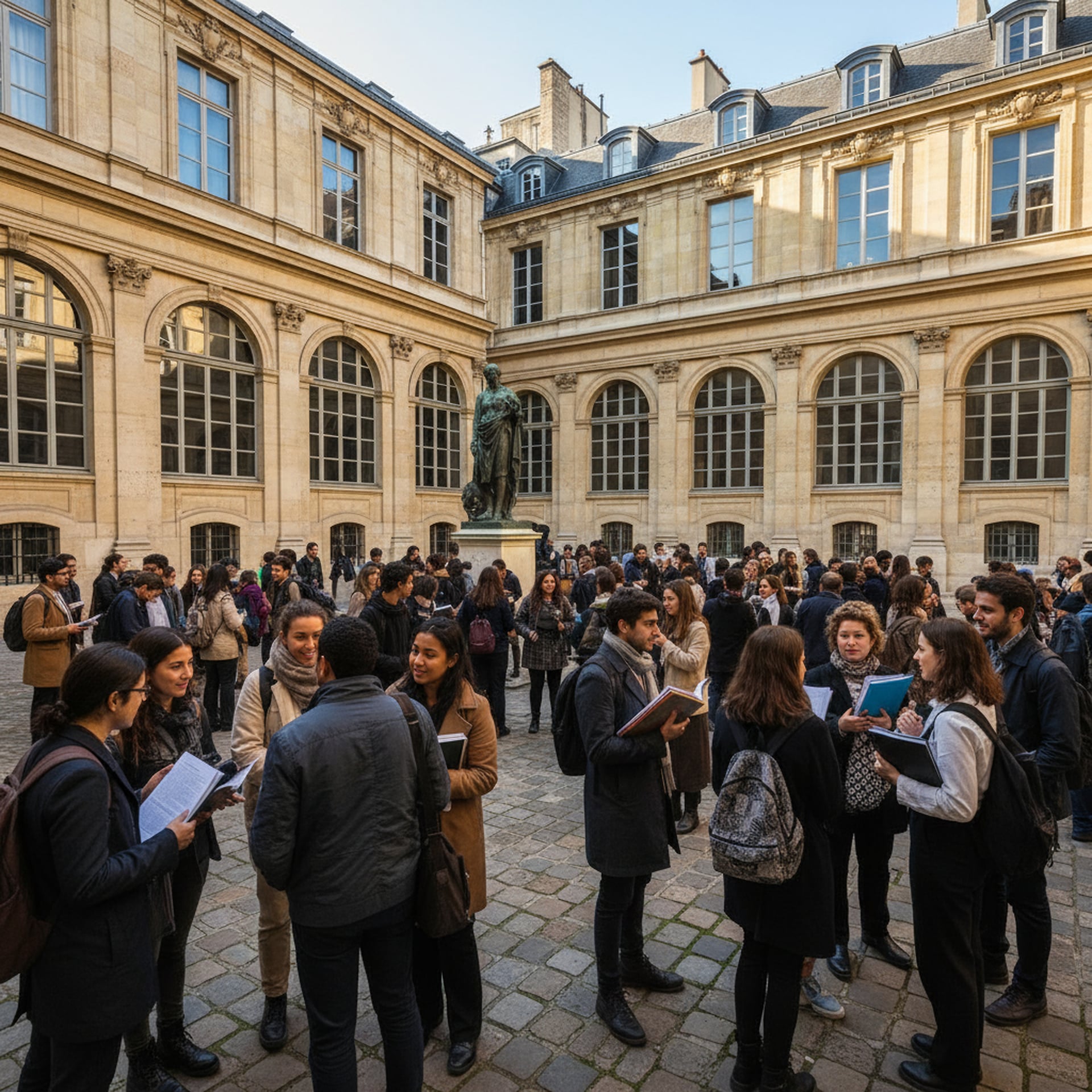
A significant recalibration of global higher education preferences is underway, particularly among students in France, who are increasingly looking past the storied halls of American universities towards European institutions. This evolving landscape reflects a complex interplay of geopolitical shifts, perceived policy changes, and growing anxieties that are reshaping the trajectory of international student mobility. Once the undisputed pinnacle for many aspiring global scholars, American higher education is now contending with a narrative that highlights concerns over visa accessibility, the sanctity of academic freedom, and personal safety, making institutions like Sciences Po in Paris increasingly attractive.
The shift is not merely anecdotal but represents a tangible redirection of academic aspirations. For decades, the allure of the American Ivy League and other top-tier universities was almost magnetic, promising unparalleled educational quality, diverse research opportunities, and a pathway to global careers. However, a confluence of factors, largely stemming from the political climate of recent years, has begun to erode this long-standing appeal. Students and their families are now weighing the academic prestige against a backdrop of uncertainty and apprehension, prompting a reevaluation of what constitutes an ideal international study destination.
One of the most prominent drivers of this trend is the heightened concern surrounding visa policies and immigration processes in the United States. The perception of stricter, less predictable immigration regulations has created a climate of anxiety for prospective international students. The arduous application processes, coupled with fears of arbitrary rejections or difficulties in securing post-graduation work opportunities, have made the prospect of studying in the U.S. seem fraught with risk. Families investing substantial resources in their children's education are naturally seeking environments that offer greater stability and clearer pathways, both during and after their studies. This administrative hurdle, often viewed as a direct consequence of a more insular national policy stance, stands in stark contrast to the perceived openness and streamlined processes offered by many European nations.
Beyond the logistical challenges, deeper concerns about academic freedom and the broader socio-political environment in the U.S. are also influencing student choices. The global academic community values an environment where intellectual inquiry is unfettered, and diverse perspectives are not only tolerated but encouraged. Reports and perceptions of political interference in educational institutions, debates around censorship, and a general atmosphere that some interpret as less welcoming to international voices have raised red flags. Students seeking an intellectually vibrant and open discourse are increasingly finding European universities, with their long traditions of academic autonomy and often more liberal social policies, to be more aligned with their ideals. This perception of a more politically stable and intellectually unconstrained environment is a powerful draw for those who prioritize a holistic and unencumbered learning experience.
Safety is another critical factor contributing to the shifting preferences. The persistent issue of gun violence and the broader social polarization evident in the United States have become significant concerns for international students and their families. News cycles frequently feature incidents that contribute to a perception of the U.S. as a less safe environment compared to many European countries. Parents, in particular, are acutely sensitive to the physical well-being of their children studying abroad, and the perceived risk factors in the U.S. are increasingly outweighing the academic benefits for some. European cities and campuses are often viewed as offering a greater sense of security and a more tranquil social fabric, providing peace of mind that is becoming an increasingly important consideration in the decision-making process.
In this evolving landscape, European institutions have emerged as compelling alternatives. Sciences Po in Paris, for instance, stands out as a prime example of a university that has successfully capitalized on this shift. Renowned for its excellence in social sciences, humanities, and international affairs, Sciences Po offers a rigorous academic program delivered in a multicultural, multilingual environment. Its strong emphasis on global perspectives, combined with its location in a vibrant European capital, makes it an attractive option for students seeking a world-class education without the perceived drawbacks of the American system. The university's strong ties to international organizations and its commitment to fostering a diverse student body further enhance its appeal.
Beyond Sciences Po, a broader trend is observable across Europe. Universities in countries like Germany, the Netherlands, and the Nordic nations are also seeing increased interest. Many offer high-quality education, often at more affordable tuition rates than their American counterparts, and provide robust support systems for international students. The ease of travel within the Schengen Area, allowing students to explore diverse cultures and gain broader international exposure, adds another layer of appeal. These institutions often boast strong research programs, innovative teaching methodologies, and a commitment to preparing students for a globally interconnected world, making them formidable competitors in the international education market.
The implications of this trend for U.S. higher education are multifaceted and potentially profound. A sustained decline in international student enrollment could lead to significant financial challenges for American universities, many of which rely heavily on the full tuition fees paid by foreign students to subsidize operations and research. Furthermore, a reduction in the diversity of the student body could diminish the richness of campus life and academic discourse, impacting the global perspectives and cross-cultural understanding that are vital for preparing all students for the complexities of the 21st century. The U.S.'s long-held position as a global leader in education and a beacon of academic excellence could also be subtly eroded, affecting its soft power and influence on the international stage.
Looking ahead, the sustainability of this trend will depend on various factors, including future political developments in the U.S. and the ongoing efforts of European institutions to attract and retain international talent. While American universities are undoubtedly resilient and continue to offer exceptional educational opportunities, they face the imperative of addressing the perceptions that are currently deterring a segment of the global student population. For Nivaran Foundation, observing these shifts underscores the critical importance of fostering accessible, safe, and intellectually vibrant educational environments worldwide, ensuring that students everywhere can pursue their academic aspirations without undue concern.
This global recalibration of student preferences highlights a critical juncture in international education. The decision of where to pursue higher education is a deeply personal one, influenced by a complex web of academic aspirations, financial considerations, and personal well-being. As the world continues to evolve, the institutions that best address these multifaceted needs, offering not just academic rigor but also security, openness, and a welcoming environment, will ultimately shape the future of global learning.
Support Nivaran Foundation's mission to foster global understanding through informed journalism and educational initiatives.
Talk to Nivaran Global