
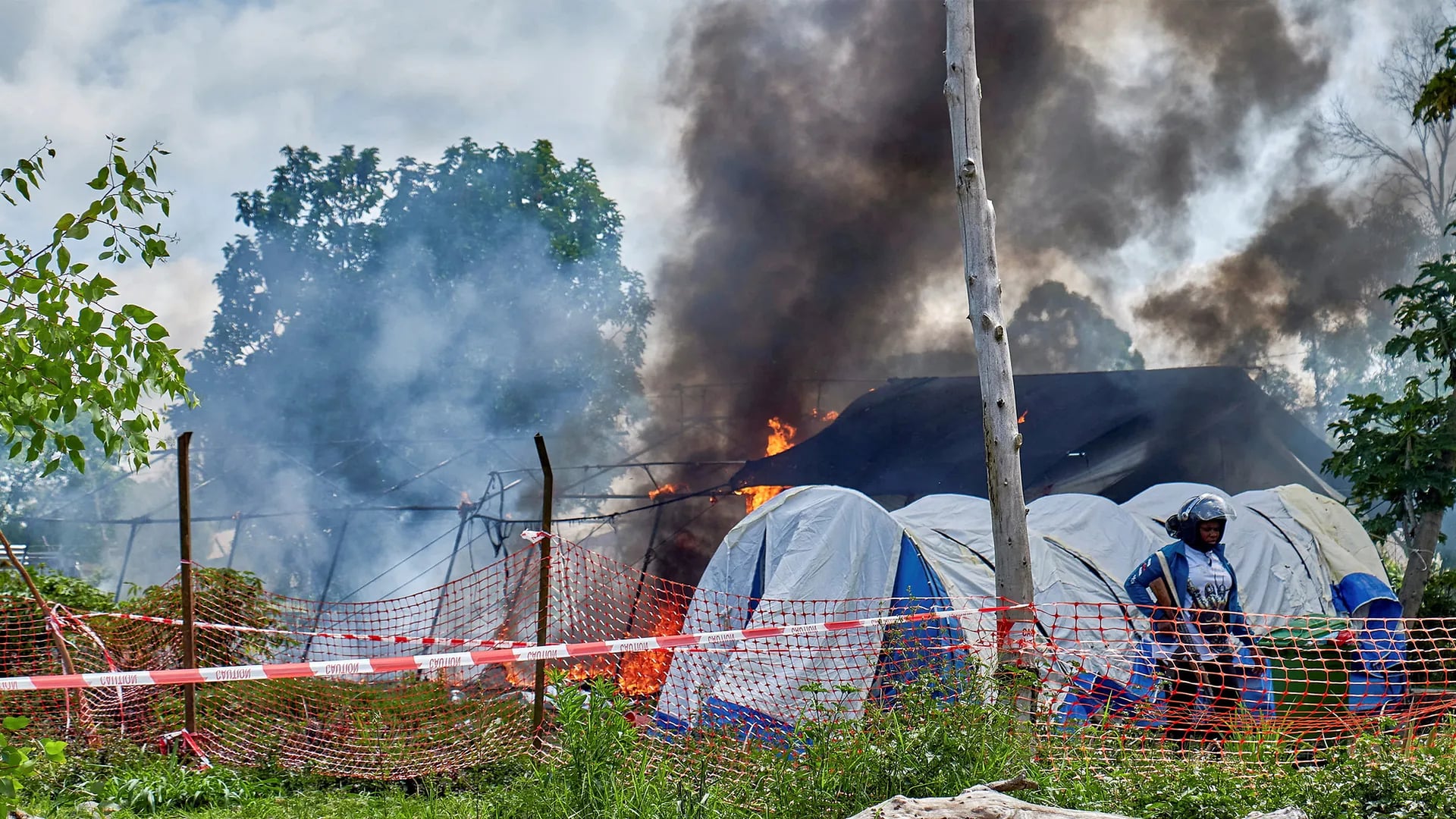
The deliberate destruction of an Ebola treatment facility in the Democratic Republic of Congo (DRC) by protesters marks a deeply troubling escalation in the fight against a persistent and deadly outbreak. This act of arson not only cripples vital medical infrastructure but also starkly illuminates the profound challenges of community mistrust and misinformation that frequently undermine global public health efforts in vulnerable regions. As health authorities grapple with containing the spread of the virus, the burning of a critical treatment center in a nation already besieged by complex humanitarian crises represents a significant setback, threatening to prolong the suffering and amplify the risk of wider transmission.
The current Ebola outbreak in the DRC is far from an isolated incident; the nation has endured numerous outbreaks, each presenting unique challenges. The virus, known for its high fatality rate and rapid spread through bodily fluids, demands swift and decisive public health interventions, including rapid diagnosis, isolation of cases, contact tracing, and safe burial practices. However, these interventions, while medically sound, often clash with deeply ingrained cultural practices and community norms, particularly in regions where traditional healers hold significant influence and where communal mourning rituals are paramount. The very nature of Ebola response requires a level of public compliance and trust that is incredibly difficult to cultivate in environments marked by historical grievances, political instability, and a pervasive sense of marginalization.
The burning of the hospital is not merely an act of random violence but a symptom of deep-seated frustrations and suspicions. In many affected communities, the arrival of international health organizations and government responders is sometimes viewed with skepticism, if not outright hostility. Misinformation campaigns, often fueled by local political agendas or a lack of transparent communication, can quickly spread rumors that portray Ebola as a hoax, a foreign imposition, or even a deliberate attempt to harm the population. These narratives exploit existing anxieties and historical distrust of external authorities, turning life-saving interventions into targets of anger. Furthermore, the stringent measures required to contain Ebola, such as isolating patients and implementing safe but often impersonal burial protocols, can be perceived as disrespectful or inhumane, further alienating communities already struggling with poverty, conflict, and a lack of basic services. The economic disruptions caused by outbreaks, including restrictions on movement and trade, also contribute to widespread resentment.
The immediate consequences of the hospital's destruction are dire. The loss of beds, medical equipment, and a safe environment for treatment means that confirmed Ebola patients may not receive the care they need, increasing their risk of mortality and the likelihood of further transmission within their communities. Healthcare workers, already operating under immense pressure and facing personal risks, are now confronted with the added danger of violence and the psychological toll of seeing their efforts literally go up in smoke. This incident will undoubtedly deter some from seeking care, driving the disease underground and making contact tracing exponentially more difficult. In the long term, such acts of violence erode the fragile trust that public health initiatives depend upon. It makes future vaccination campaigns, health education efforts, and even routine medical services harder to implement, creating a cycle of distrust that perpetuates health vulnerabilities. The incident also diverts critical resources, both financial and human, from direct disease control to security measures and rebuilding efforts, further straining already limited capacities.
The situation in the DRC serves as a stark reminder that global health security is not solely about scientific breakthroughs or medical interventions; it is fundamentally intertwined with social dynamics, political stability, and community engagement. An uncontrolled Ebola outbreak in one region poses a potential threat to the entire world, given the interconnectedness of modern travel and trade. The challenges faced in the DRC—community resistance, attacks on health workers, and the spread of misinformation—are not unique. Similar patterns have been observed in previous Ebola outbreaks, notably the devastating West African epidemic of 2014-2016, where initial community distrust significantly hampered response efforts. These recurring issues underscore the urgent need for a paradigm shift in how global health crises are approached, moving beyond purely biomedical models to embrace comprehensive strategies that prioritize community partnership and address the socio-economic determinants of health.
Historical responses to epidemics, particularly in low-resource settings, have often highlighted the critical importance of local ownership and culturally sensitive approaches. When external aid is perceived as top-down or insensitive to local customs, resistance is almost inevitable. Successful interventions, conversely, have demonstrated the power of empowering local leaders, engaging traditional healers, and integrating health messages into existing community structures. This requires patience, humility, and a willingness to listen and adapt, rather than imposing solutions. Investing in local health systems, training local healthcare workers, and ensuring that communities feel a sense of agency and benefit from the interventions are crucial steps in building resilience and trust. Without this foundation, even the most advanced medical technologies will struggle to make a lasting impact.
To effectively combat outbreaks like Ebola, a multi-faceted approach is indispensable. Firstly, transparent and consistent communication, delivered through trusted local channels, is paramount. This involves actively countering misinformation with factual, culturally appropriate information and engaging in open dialogue to address community concerns. Secondly, public health interventions must be designed and implemented with deep respect for local customs and beliefs, seeking to integrate rather than override them where possible. For instance, adapting safe burial practices to incorporate elements of traditional mourning can significantly increase acceptance. Thirdly, addressing the broader socio-economic grievances that often fuel resentment is critical. This means ensuring that health responses are accompanied by efforts to improve livelihoods, provide basic services, and foster sustainable development, demonstrating a commitment beyond just disease containment. Finally, robust security measures are necessary to protect healthcare workers and facilities, but these must be balanced with community engagement to avoid further militarizing the health response and alienating the population.
The incident in the DRC serves as a sobering reminder that the battle against infectious diseases is as much a social and political challenge as it is a medical one. For organizations like the Nivaran Foundation, which advocate for global health and education, this event reinforces the imperative to support holistic, community-centric approaches. It underscores the need to invest not only in medical supplies and infrastructure but also in the human capital and social fabric that underpin effective public health. Building trust takes time, consistent effort, and a genuine commitment to partnership. Without it, even the most dedicated efforts to save lives can be tragically undermined, leaving communities more vulnerable and global health security at greater risk. The international community must redouble its efforts to support the DRC, not just with emergency aid, but with long-term investments in health systems, education, and community resilience, ensuring that such devastating acts of despair do not recur.
The burning of an Ebola treatment hospital in the Democratic Republic of Congo is a profound tragedy, highlighting the complex interplay of disease, distrust, and desperation. It is a stark alarm bell for global health, emphasizing that medical science alone cannot conquer epidemics without the unwavering support and trust of the communities it seeks to serve. As the world confronts ongoing and emerging health threats, the lessons from the DRC are clear: fostering genuine partnerships, addressing root causes of vulnerability, and prioritizing empathetic, culturally informed engagement are not optional extras but fundamental pillars of effective and sustainable global health security. The path to overcoming Ebola and similar challenges lies in rebuilding not just infrastructure, but also the vital bridge of trust between health responders and the populations they are dedicated to protecting.
Support Nivaran Foundation's global initiatives to strengthen health infrastructure and foster community trust in vulnerable regions worldwide.
Talk to Nivaran Global