
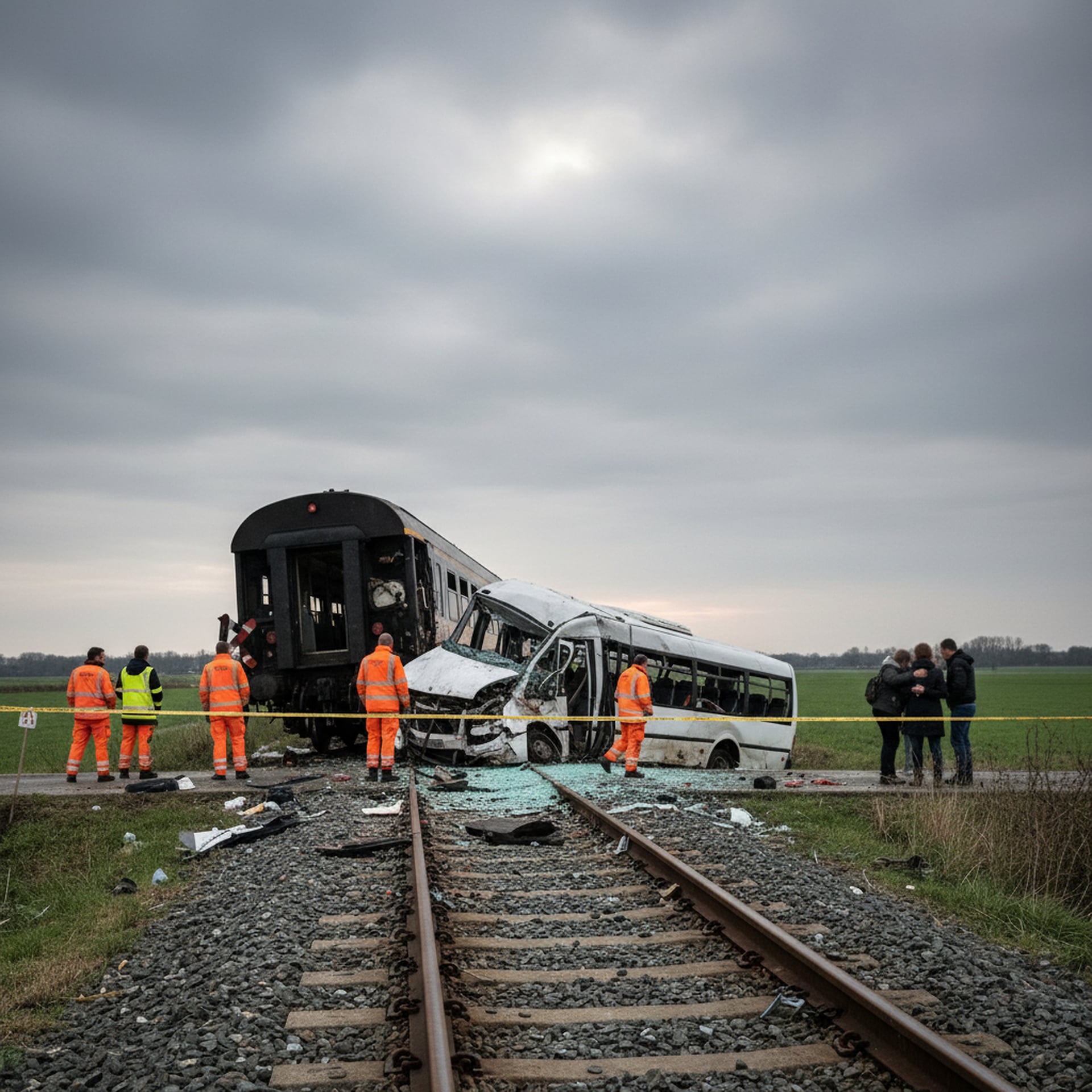
A profound sense of grief has enveloped communities across Belgium following a catastrophic train collision with a school minibus near Brussels on May 26, 2026. The tragic incident claimed the lives of four individuals, including two children aged 12 and 15, who were students attending a special education institution. This devastating event has not only plunged families into unimaginable sorrow but has also ignited an urgent global discourse on the paramount importance of transport safety for vulnerable populations, particularly children with special educational needs.
The collision occurred at approximately 15:50 UTC, a time when many students would have been returning home from school. Details emerging from the scene paint a grim picture of a powerful impact that left the school van severely damaged and the train partially derailed. Emergency services, including paramedics, firefighters, and police, rapidly converged on the site, initiating a complex rescue and recovery operation. The immediate aftermath was characterized by a desperate search for survivors amidst the wreckage, a task made more challenging by the scale of the destruction. The loss of young lives, especially those with special needs who often rely on specialized transport for their educational access, amplifies the tragedy, underscoring the unique vulnerabilities inherent in their daily routines.
The Immediate Response and Investigation
The response from Belgian authorities was swift and comprehensive. A crisis cell was immediately activated, bringing together various government agencies to coordinate efforts, manage the scene, and provide support to the affected families. Forensic teams and accident investigators commenced their meticulous work, aiming to ascertain the precise sequence of events that led to the collision. Initial inquiries typically focus on multiple factors, including the functionality of the level crossing's warning systems, the speed of both vehicles, potential human error, and environmental conditions at the time of the incident. Understanding the root causes is crucial not only for accountability but, more importantly, for implementing preventative measures to avert future tragedies. Such investigations are often protracted, involving detailed analysis of black box data from the train, eyewitness accounts, and infrastructure assessments, all contributing to a comprehensive understanding of the disaster.
The incident has naturally drawn significant attention to the safety protocols governing school transport, particularly for students with special needs. These children often require specific accommodations, which can include tailored routes, specialized vehicle modifications, and drivers trained to handle their unique requirements. The reliance on dedicated transport services means that any failure in the safety chain can have disproportionately severe consequences. Globally, organizations dedicated to child welfare and education advocate for stringent regulations, regular vehicle inspections, and continuous driver training programs to ensure the highest standards of safety for these vulnerable passengers. This incident serves as a stark reminder that even in highly developed nations with robust safety frameworks, unforeseen circumstances and systemic vulnerabilities can lead to catastrophic outcomes.
Global Implications for Special Education Transport Safety
The tragedy in Belgium resonates far beyond its borders, prompting a global re-evaluation of safety measures for students with special educational needs. Across diverse geographies, millions of children rely on school transport to access education, a fundamental right that should never be compromised by safety deficiencies. For children with disabilities, this access is often even more critical, as mainstream transport options may not be suitable or available. Therefore, the design and implementation of school transport systems must be meticulously planned, taking into account the specific needs and vulnerabilities of each child. This includes not just the vehicles themselves, but also the routes, the training of personnel, and the infrastructure surrounding transport hubs and crossings.
Many countries have established guidelines for school bus safety, but the implementation and enforcement vary widely. This incident highlights the need for a unified global approach to best practices, encouraging nations to share insights and adopt robust standards. Key areas of focus include mandatory safety features in vehicles, such as reinforced structures, seatbelts, and emergency exits; rigorous background checks and continuous professional development for drivers; and advanced warning systems at rail and road crossings. Furthermore, public awareness campaigns are vital to educate all road users about the importance of exercising caution around school transport vehicles and at railway crossings. The intersection of rail and road, particularly at unprotected or inadequately protected level crossings, remains a significant global safety challenge, contributing to numerous accidents annually.
Community Impact and Psychological Support
The emotional toll of such an event on the immediate community, the school, and the families involved is immense and long-lasting. The sudden and violent loss of life, particularly young lives, leaves an indelible mark of trauma and grief. Schools, in particular, play a crucial role in providing immediate and ongoing psychological support to students, staff, and parents affected by such tragedies. Grief counseling, trauma-informed care, and mental health services become indispensable resources in the aftermath, helping individuals process their loss and navigate the complex emotional landscape of bereavement. The Nivaran Foundation recognizes the profound impact such events have on mental well-being and advocates for accessible and comprehensive psychosocial support systems as an integral part of disaster response.
The incident also underscores the broader societal responsibility to protect children and ensure their safe passage to and from educational institutions. It calls for a collective introspection on how communities prioritize safety, invest in infrastructure, and enforce regulations. The pain felt in Belgium is a universal pain, echoing the vulnerability of children everywhere and the shared human desire to shield them from harm. This tragedy serves as a poignant reminder that education, while a beacon of hope and progress, must always be underpinned by an unwavering commitment to safety and well-being.
A Call for Enhanced Vigilance and Global Cooperation
The Belgium train collision is a sobering reminder that safety is an ongoing endeavor requiring constant vigilance, adaptation, and investment. It compels policymakers, transport authorities, educational institutions, and communities worldwide to review and strengthen their safety protocols, particularly for those who are most vulnerable. The lives lost in this incident are a stark testament to the critical need for robust infrastructure, stringent regulations, and a culture of safety that permeates every aspect of school transport. As investigations continue to unravel the full circumstances of this tragedy, the global community must unite in its resolve to prevent similar occurrences, ensuring that every child, regardless of their needs, can access education safely and without fear. The Nivaran Foundation stands with the affected families and reiterates its commitment to fostering environments where health and education thrive, free from preventable dangers.
Support Nivaran Foundation's global initiatives to ensure safe and inclusive education for all children, everywhere.
Talk to Nivaran Global