
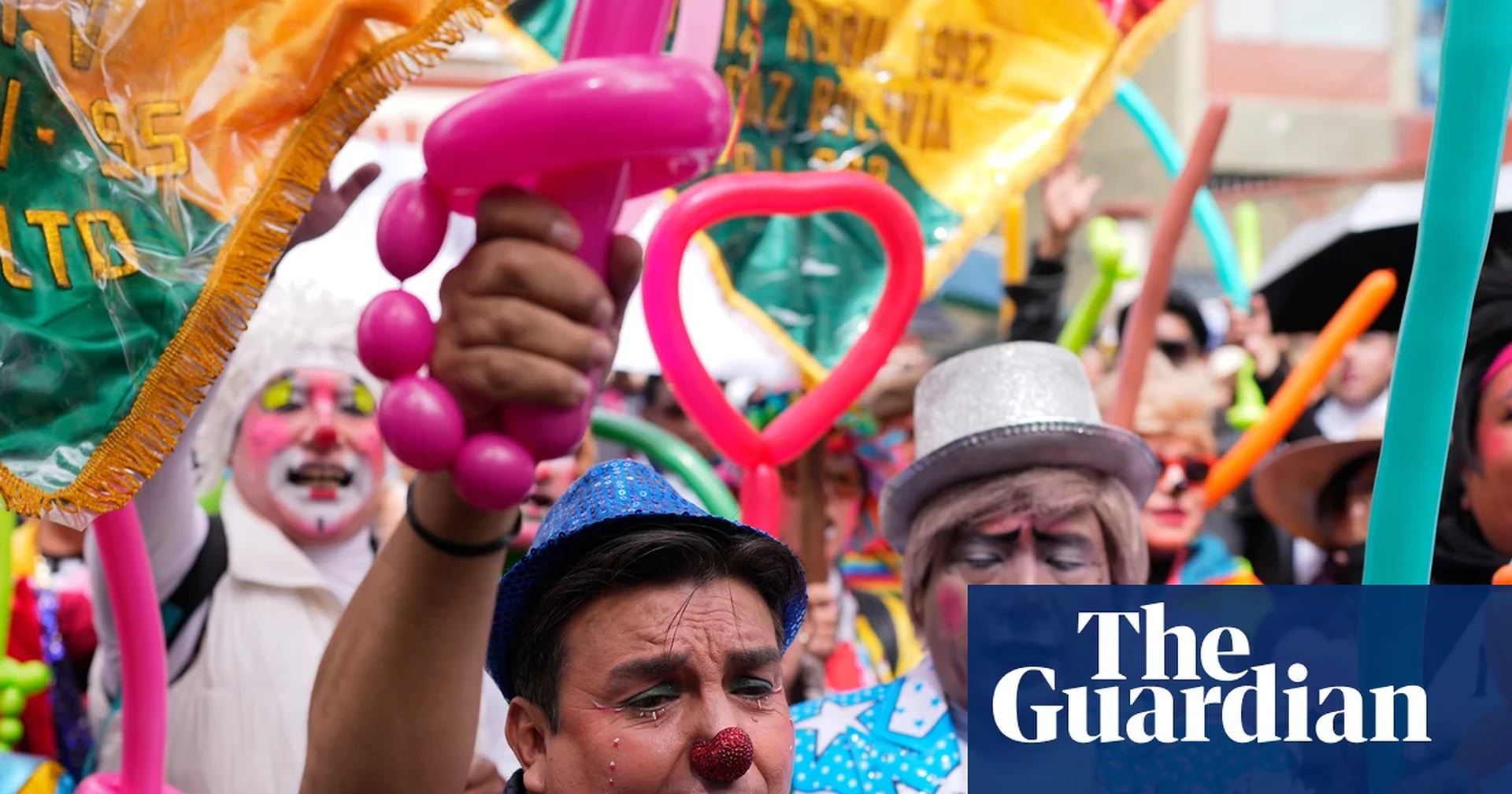
In a poignant display of both protest and the unique cultural fabric of Bolivia, dozens of clowns recently took to the streets of La Paz, their vibrant costumes and painted smiles contrasting sharply with the somber message they sought to convey. These entertainers, typically purveyors of joy and laughter, marched in unison to voice their profound concern over a new government decree that threatens to dismantle their primary source of income. The mandate, issued by the Ministry of Education, aims to enforce a strict calendar of 200 instructional days annually, a policy decision that, while seemingly innocuous and educationally sound, carries severe unintended consequences for a significant segment of the nation's informal workforce.
The core of the clowns' grievance lies in the decree's practical effect: it severely limits, if not outright bans, schools from hosting the special events, parties, and celebrations where these professional entertainers are frequently employed. For many, school-related engagements constitute the lion's share of their annual earnings, providing the financial bedrock for their families. The sudden implementation of such a policy, without apparent consideration for its broader socio-economic impact, has cast a long shadow over a profession deeply embedded in Bolivian community life and childhood memories.
The protest, which saw clowns in their signature red noses and full face paint gather before the Ministry of Education, underscored a critical tension often present in policy-making: the delicate balance between achieving governmental objectives and safeguarding the livelihoods of vulnerable populations. While the government's stated intent to enhance educational rigor and ensure consistent classroom attendance is understandable, the collateral damage to the informal economy highlights a systemic challenge faced by many developing nations. Policies designed with one goal in mind can inadvertently disrupt the intricate web of economic activity that sustains countless individuals and families.
Bolivia, like many countries in Latin America, has a substantial informal sector, where workers often operate without formal contracts, benefits, or social safety nets. Clowns, magicians, puppeteers, and other entertainers fall squarely into this category. Their income is directly tied to public and private events, with schools being a particularly stable and frequent client base. The decree, by curtailing these opportunities, effectively pulls the rug out from under a profession that, while often perceived as whimsical, is a serious and vital means of support for many. Families dependent on these earnings now face an uncertain future, grappling with how to adapt to a sudden and drastic reduction in their income streams.
Beyond the immediate economic hardship, the decree also raises questions about the holistic development of children and the role of extracurricular activities in education. While academic instruction is paramount, schools traditionally serve as more than just centers for rote learning. They are community hubs where children engage in cultural activities, celebrate milestones, and experience the joy of shared entertainment. These events, often featuring clowns and other performers, contribute to a child's social-emotional development, foster creativity, and provide much-needed breaks from academic pressures. Removing these elements entirely could inadvertently diminish the richness of the educational experience, transforming schools into purely utilitarian institutions devoid of the cultural vibrancy that enriches childhood.
The value of arts and culture in education extends far beyond mere entertainment. Performances can teach children about storytelling, rhythm, expression, and even critical thinking. They provide opportunities for shared laughter and collective memory-making, contributing to a sense of community within the school environment. From a pedagogical perspective, a balanced curriculum often includes elements that stimulate different parts of a child's brain and cater to diverse learning styles. The complete exclusion of such activities, even if temporary, might overlook these broader developmental benefits in favor of a singular focus on instructional hours.
Globally, education reforms frequently grapple with similar complexities. Governments worldwide strive to improve educational outcomes, often through standardized curricula, increased instructional time, and stricter attendance policies. However, the most successful reforms often consider the wider ecosystem in which schools operate, including the socio-economic context of students and their families, and the cultural practices that enrich community life. The Bolivian situation serves as a stark reminder that even well-intentioned policies can have unforeseen and detrimental ripple effects if not carefully calibrated and implemented with a comprehensive understanding of their impact on all stakeholders.
There is a compelling argument to be made for a more nuanced approach that allows for both robust academic instruction and the continuation of valuable extracurricular activities. This might involve designated days for cultural events that do not impinge on core instructional time, or exploring alternative funding models that support entertainers without burdening school budgets. Dialogue between the Ministry of Education and representatives of the entertainment sector could lead to innovative solutions that satisfy both the government's educational objectives and the legitimate concerns of those whose livelihoods are at stake. Such collaborative problem-solving is crucial for fostering policies that are both effective and equitable.
The plight of Bolivia’s clowns underscores a broader global challenge: how to support and integrate the informal economy into national development strategies, particularly in the face of rapid policy changes. These workers, often marginalized and lacking formal representation, are frequently the first to feel the pinch of economic shifts or regulatory adjustments. Ensuring their resilience and providing avenues for their continued contribution to society is not just an economic imperative but a matter of social justice. Their cultural contributions, often undervalued, play a significant role in maintaining community spirit and preserving unique traditions.
As the Nivaran Foundation’s global desk observes, this situation in Bolivia is a microcosm of larger issues concerning socio-economic vulnerability, the balance between policy objectives and human impact, and the critical role of the arts in a well-rounded society. The hope remains that the Bolivian government will engage in constructive dialogue with the affected entertainers, finding a pathway forward that upholds educational standards while also recognizing and protecting the vital contributions of its cultural workers. The laughter and joy that clowns bring are not merely frivolous; for many, they are the very fabric of their existence and a cherished part of childhood across the nation.
Support Nivaran Foundation's work in advocating for equitable education and sustainable livelihoods worldwide.
Talk to Nivaran Global