
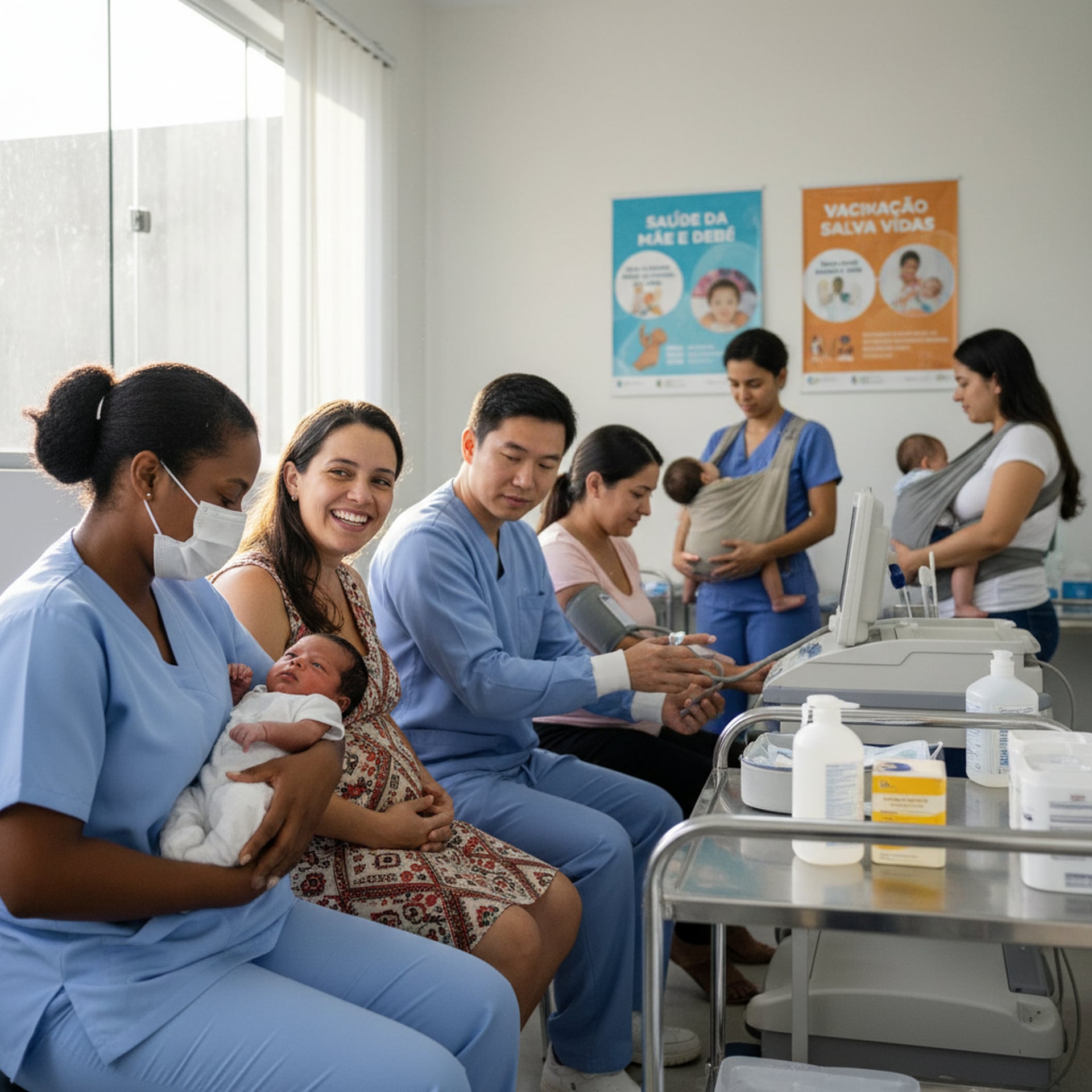
Brazil's monumental achievement in effectively eliminating mother-to-child transmission of HIV stands as a beacon of hope and a powerful testament to what can be accomplished with sustained political will, robust public health infrastructure, and a commitment to universal access. For a nation of its vast geographical scale and demographic complexity, this milestone, highlighted in recent analyses, offers invaluable lessons for global health systems grappling with similar challenges in preventing infectious disease transmission from mothers to their children.
The journey to this success was rooted deeply in Brazil's Unified Health System (SUS), a comprehensive, publicly funded healthcare system that guarantees free access to health services for all citizens. This foundational principle of universal access proved to be the bedrock upon which effective prevention of mother-to-child transmission (PMTCT) programs could be built. Unlike fragmented systems, SUS ensured that even the most vulnerable populations, often disproportionately affected by HIV, could access testing, treatment, and ongoing care without financial barriers.
A cornerstone of Brazil's strategy was the proactive integration of HIV testing into routine antenatal care. Pregnant women across the country were offered voluntary, confidential HIV screening as a standard component of their prenatal visits. This early and repeated testing throughout pregnancy was critical for identifying HIV-positive mothers as soon as possible, allowing for timely intervention. The emphasis was not just on a single test, but on a continuum of care that monitored the mother's health throughout her pregnancy.
Upon diagnosis, immediate initiation of antiretroviral therapy (ART) became the standard protocol. Brazil's commitment to providing free and readily available ART to all pregnant women living with HIV was pivotal. The goal was to reduce the maternal viral load to undetectable levels, thereby drastically minimizing the risk of transmission to the infant. This proactive and aggressive treatment approach, coupled with consistent adherence support, proved highly effective in preventing in-utero and intrapartum transmission.
Beyond antenatal care and treatment, Brazil implemented a comprehensive set of interventions during labor, delivery, and the postnatal period. This included specific protocols for managing delivery, such as considering elective C-sections in certain cases to further reduce transmission risk. Crucially, prophylactic ART was administered to newborns exposed to HIV, and mothers received extensive counseling and support regarding safe infant feeding practices, including the provision of formula milk when breastfeeding was not recommended to prevent postnatal transmission.
The success was not solely medical; it was bolstered by a holistic support system that extended beyond clinical interventions. This included psychological support for mothers living with HIV, nutritional guidance, and social assistance to address broader determinants of health that could impact treatment adherence and overall well-being. Such comprehensive care acknowledged the multifaceted challenges faced by these women and aimed to empower them to maintain their health and that of their children.
Underpinning these programmatic successes was a sustained political commitment from the Brazilian government. Decades of consistent funding, policy implementation, and a clear national strategy demonstrated that the elimination of mother-to-child HIV transmission was a high-priority public health objective. This long-term vision, transcending changes in political administration, ensured the continuity and expansion of vital services across the nation.
Furthermore, Brazil developed and maintained robust epidemiological surveillance systems. These systems were instrumental in tracking HIV prevalence among pregnant women, monitoring the effectiveness of PMTCT programs, identifying geographical areas with higher transmission rates, and adapting strategies based on real-time data. This continuous feedback loop allowed for agile adjustments and targeted interventions, maximizing the impact of resources.
Despite the strengths of its universal healthcare system, Brazil faced significant challenges, including vast geographical disparities, socio-economic inequalities, and persistent stigma associated with HIV. The ability to overcome these hurdles involved concerted efforts to reach marginalized populations, deploy mobile health units in remote areas, and implement public awareness campaigns aimed at reducing stigma and promoting early testing and treatment. The commitment to equity meant actively seeking out those who might otherwise be left behind.
For the global health community, Brazil's experience offers several critical lessons. Foremost is the indispensable role of strong, equitable, and integrated national health systems. PMTCT cannot be viewed as a standalone program; its success is inextricably linked to the strength of primary healthcare, maternal and child health services, and infectious disease control efforts. Nations aiming for similar elimination goals must prioritize investing in and strengthening their foundational health infrastructure.
Another key takeaway is the imperative to prioritize equity and reach vulnerable populations. Brazil's success demonstrates that even in large, diverse countries, it is possible to ensure that everyone, regardless of their socio-economic status or geographical location, has access to life-saving interventions. Global efforts must focus on dismantling barriers to access and ensuring that health services are culturally sensitive and responsive to the needs of marginalized communities.
Moreover, Brazil's journey underscores the need for sustained commitment from governments and international bodies. Elimination is not a finish line but a continuous effort requiring ongoing vigilance, consistent resource allocation, and adaptive strategies. The global community must maintain its focus and investment in HIV prevention and treatment programs, ensuring that hard-won gains are not reversed.
While Brazil's model provides a powerful blueprint, it also highlights the importance of adaptability. Direct replication may not be feasible in all contexts, given varying epidemiological profiles, resource constraints, and political landscapes. However, the core principles—universal access, early diagnosis, immediate treatment, comprehensive postnatal care, political will, and robust data systems—are universally applicable and can be tailored to local needs.
Brazil's triumph in eliminating mother-to-child HIV transmission serves as a powerful reminder that complex public health challenges are surmountable. It offers a tangible example of how strategic, sustained, and equitable approaches can lead to profound improvements in public health outcomes, inspiring other nations to intensify their efforts towards a world free from preventable infectious diseases.
As the global health community continues its fight against HIV, Brazil's experience provides a compelling roadmap. It reinforces the belief that with concerted global collaboration, shared knowledge, and unwavering dedication, the vision of a world where no child is born with HIV can become a reality, transforming the lives of millions and fostering healthier generations worldwide.
Support Nivaran Foundation's efforts to share critical global health insights and foster equitable health outcomes worldwide.
Talk to Nivaran Global