
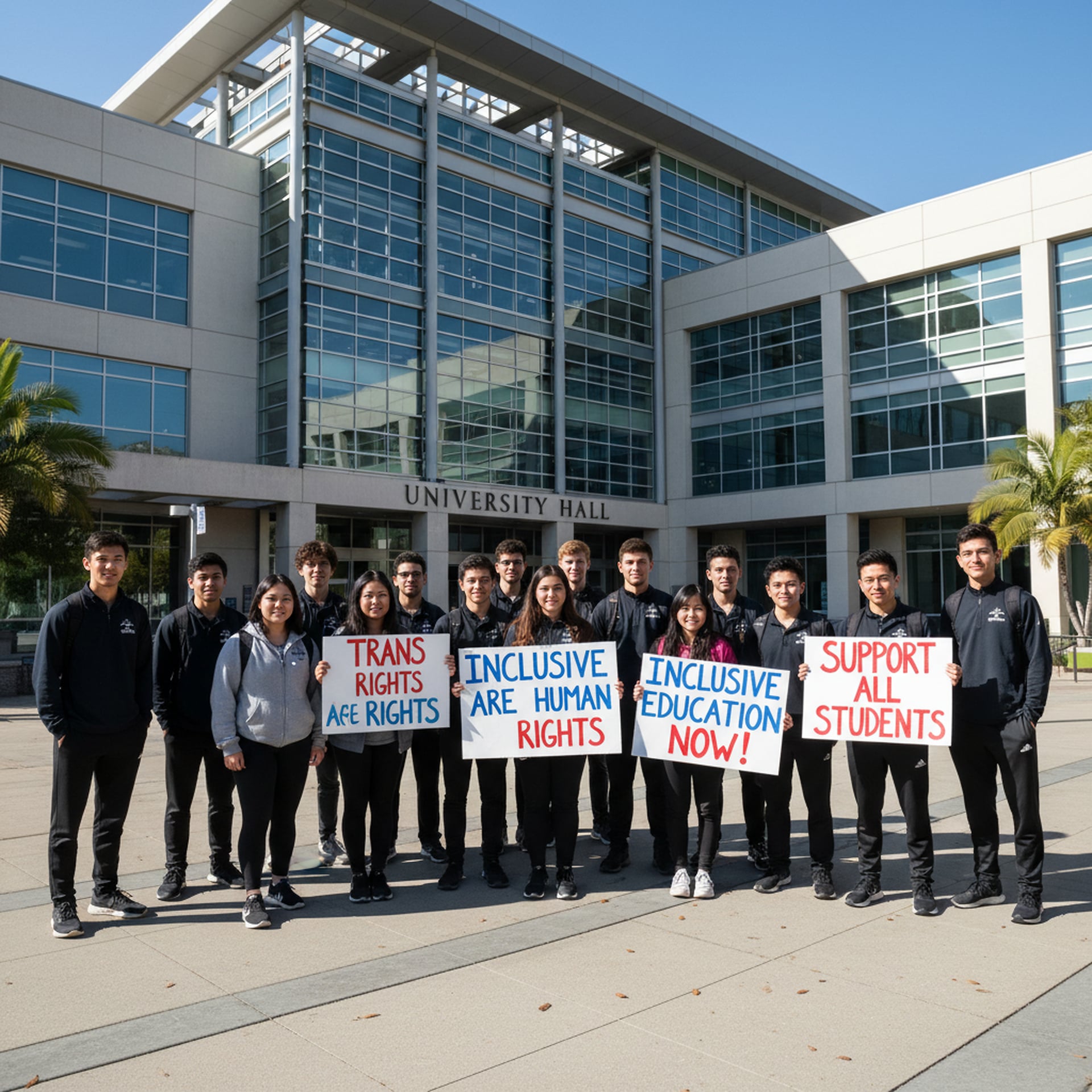
The legal challenge initiated by the California State University (CSU) system against a federal directive concerning transgender student athletes marks a significant moment in the ongoing global discourse surrounding inclusion, education, and human rights. This move, placing CSU among a select group of academic institutions willing to confront government policy in court, underscores the complex interplay between institutional autonomy, federal mandates, and the evolving understanding of gender identity within educational and athletic spheres. The threat of withholding crucial federal funds from institutions like San Jose State University further amplifies the stakes, transforming a policy dispute into a high-profile battle with far-reaching implications for universities and students worldwide.
At the heart of this controversy lies a directive issued by the Trump administration, which sought to restrict the participation of transgender student athletes in sports categories aligning with their gender identity. Proponents of such orders often cite concerns about competitive fairness, particularly in women's sports, arguing that biological differences between sexes create an inherent advantage for transgender women. This perspective frequently emphasizes the need to protect opportunities for cisgender women, framing the issue as a matter of equitable competition. However, critics, including the CSU system, contend that these directives are discriminatory, violate principles of non-discrimination, and undermine the fundamental right of all students to participate fully and equally in educational activities, including sports. They argue that such policies marginalize an already vulnerable population and fail to consider the comprehensive benefits of athletic participation, which extend beyond competitive outcomes to include physical health, mental well-being, and social integration.
The California State University system, one of the largest public university systems in the United States, has taken a principled stand, asserting its commitment to fostering an inclusive environment for all its 480,000 students. Its decision to challenge the federal order is rooted in a broader philosophy that prioritizes equity and access. For CSU, the directive is not merely an administrative hurdle but a direct affront to its values and its mission to provide a welcoming and supportive educational experience for every student. The legal action contends that the federal government’s attempt to dictate participation rules based on gender identity oversteps its authority and infringes upon the universities’ ability to set their own inclusive policies. The specific targeting of San Jose State University with threats of federal funding cuts serves as a potent reminder of the financial leverage the government wields, yet CSU's defiance signals a strong resolve to protect its students and its institutional integrity.
This legal confrontation resonates far beyond the borders of California or even the United States. Across the globe, educational institutions, sports federations, and governments are grappling with the complex question of how to balance inclusion for transgender individuals with existing frameworks, particularly in sports. Countries in Europe, Australia, and parts of Asia are engaged in similar debates, developing diverse approaches ranging from full inclusion based on gender identity to more restrictive policies based on biological sex at birth, or hybrid models incorporating hormone level requirements. The CSU case, therefore, becomes a significant data point in this international dialogue, potentially influencing policy discussions and legal interpretations in other jurisdictions. It highlights the universal challenge of adapting established norms to accommodate evolving understandings of human identity and rights, particularly within the sensitive domains of education and sport.
The implications for student well-being are profound. Policies that exclude transgender students from participating in sports consistent with their gender identity can lead to increased rates of depression, anxiety, and social isolation. For many young people, sports are not just about competition; they are vital avenues for building self-esteem, developing leadership skills, fostering teamwork, and maintaining physical and mental health. Denying access based on gender identity can strip these students of crucial developmental opportunities and reinforce feelings of being unwelcome or "othered." Universities, as custodians of student welfare, bear a responsibility to create environments where all students feel safe, respected, and empowered to thrive. The CSU challenge can be seen as an affirmation of this responsibility, defending the holistic well-being of its transgender student population.
Historically, educational institutions have often been at the forefront of social change, serving as crucibles for challenging discriminatory practices and advocating for civil rights. From desegregation battles to the fight for gender equality, universities have frequently been pivotal sites of resistance and reform. The current challenge by CSU aligns with this tradition, positioning the institution as a defender of emerging human rights principles. The precedent set by this case, regardless of its ultimate legal outcome, will undoubtedly contribute to the broader legal landscape concerning LGBTQ+ rights and educational equity. A favorable ruling for CSU could embolden other institutions globally to adopt more inclusive policies, while an unfavorable one might necessitate a re-evaluation of strategies for advocating for transgender rights within existing legal frameworks.
Furthermore, the debate surrounding transgender inclusion in sports is not monolithic. It involves nuanced scientific, ethical, and social considerations. While some argue for strict biological categories, others emphasize the social construct of gender and the importance of self-identification. The scientific community continues to research the physiological aspects of gender transition and its impact on athletic performance, contributing to an evolving body of knowledge that informs policy decisions. Educational institutions like CSU are uniquely positioned to foster these critical discussions, leveraging academic expertise to inform policy that is both evidence-based and deeply empathetic. By taking a stand, CSU is not only defending its students but also contributing to a more informed and just global conversation.
The role of philanthropic foundations and advocacy groups, such as Nivaran Foundation, in these global discussions cannot be overstated. By supporting research, facilitating dialogue, and advocating for policies that uphold human rights and promote inclusive education, these organizations play a crucial role in shaping public opinion and influencing legislative action. They often provide the necessary resources and platforms for marginalized voices to be heard, ensuring that the human impact of policy decisions remains central to the debate. The CSU case serves as a powerful reminder that the fight for equity is multifaceted, requiring legal action, public advocacy, and sustained commitment from civil society.
In conclusion, the California State University system's legal challenge against the federal order on transgender student athletes is more than a localized dispute; it is a significant development in the global struggle for inclusive education and human rights. It highlights the profound responsibility of educational institutions to protect and nurture all their students, irrespective of gender identity, and to stand firm against policies that seek to marginalize or discriminate. As this case unfolds, its trajectory will be closely watched by universities, policymakers, and human rights advocates around the world, offering potential lessons and precedents for how societies navigate the complexities of identity, fairness, and inclusion in the 21st century. The outcome will undoubtedly shape the future of educational environments, underscoring the enduring importance of ensuring that every student has the opportunity to learn, grow, and thrive without prejudice.
Support Nivaran Foundation's commitment to fostering inclusive educational environments and advocating for human rights worldwide.
Talk to Nivaran Global