
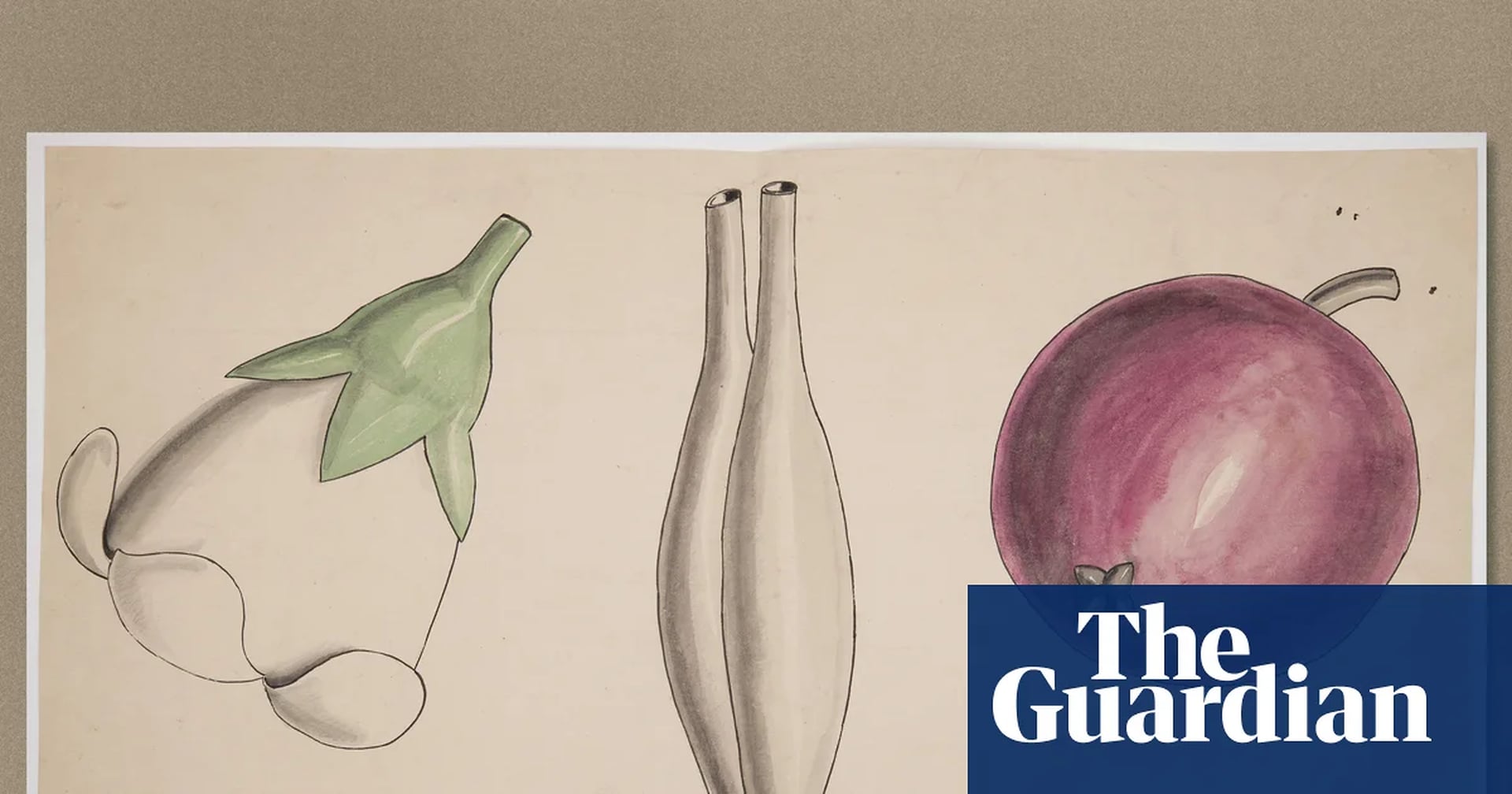
The global scientific community is abuzz with news from the University of Cambridge, where a remarkable discovery is set to revolutionize contemporary botanical education. Nearly two centuries after they were first used to instruct a young Charles Darwin, the original teaching materials and plant specimens from his mentor, Professor John Stevens Henslow, have been unearthed from the university's archives. This extraordinary find is not merely a historical curiosity; it represents a profound opportunity to reconnect modern students with the foundational principles of natural history through the very lens that shaped one of humanity's most influential scientific minds. The revival of this iconic botany course promises to bridge the chasm between historical scientific inquiry and the pressing ecological challenges of the 21st century, offering a unique pedagogical experience globally.
Stored meticulously within the hallowed confines of Cambridge University's herbarium, a treasure trove of scientific heritage lay dormant for close to 200 years. Researchers and archivists, during a recent deep dive into the university's vast collections, brought to light an unparalleled archive belonging to Professor John Stevens Henslow. Among the unearthed artifacts are exquisitely preserved, fragile plant specimens, meticulously rendered ink drawings, and vibrant watercolor illustrations – all integral components of the very course that equipped Charles Darwin with the botanical knowledge essential for his monumental voyage on HMS Beagle. These materials, testament to Henslow's dedication to empirical observation and detailed documentation, offer an intimate glimpse into the pedagogical methods of the early 19th century, revealing the precise visual and tactile aids that once guided Darwin's formative scientific explorations. Their pristine condition is a testament to careful preservation, making them invaluable for both historical study and active educational use.
John Stevens Henslow was more than just a professor to Charles Darwin; he was a pivotal mentor whose guidance profoundly shaped Darwin's intellectual trajectory. A polymath with expertise spanning botany, geology, and mineralogy, Henslow held the Chair of Botany at Cambridge, where his lectures were renowned for their emphasis on direct observation and meticulous classification. His teaching philosophy diverged from purely theoretical instruction, advocating for hands-on engagement with the natural world. It was through Henslow's course that Darwin, then a young and eager student, developed a rigorous understanding of plant morphology, taxonomy, and ecological relationships. Henslow instilled in Darwin not only a deep appreciation for botanical diversity but also the critical skills of systematic observation, data collection, and analytical reasoning – competencies that would prove indispensable during his five-year circumnavigation of the globe. Indeed, it was Henslow who recommended Darwin for the naturalist position aboard the HMS Beagle, recognizing his student's burgeoning talent and the solid scientific foundation he had acquired through his tutelage. The unearthed materials thus represent the tangible legacy of a mentorship that laid the groundwork for a scientific revolution.
Armed with the comprehensive botanical training provided by Henslow, Charles Darwin embarked on the voyage of the HMS Beagle in 1831, a journey that would forever alter humanity's understanding of life on Earth. His meticulous observations of flora and fauna across diverse ecosystems, from the rainforests of Brazil to the unique biodiversity of the Galápagos Islands, were directly informed by the foundational knowledge he gained from Henslow's course. The ability to accurately identify, classify, and document plant species was crucial to his broader ecological and evolutionary insights. Darwin's subsequent development of the theory of evolution by natural selection, articulated in "On the Origin of Species," stands as one of science's most profound achievements. This theory, which posits that all life shares a common ancestor and has diversified over millions of years through a process of natural selection, fundamentally reshaped biology and continues to be the cornerstone of modern life sciences. The revival of Henslow's course underscores the direct lineage between foundational scientific education and monumental scientific breakthroughs, demonstrating how early, rigorous training can ignite a spark that leads to global paradigm shifts.
The decision by Cambridge University to reintroduce Henslow's original botany course, utilizing these newly discovered materials, carries immense modern relevance for global education. In an era dominated by advanced genetic sequencing and computational biology, there is a renewed appreciation for the importance of foundational observational skills and a deep understanding of natural history. Contemporary students will now have the unprecedented opportunity to learn botany through the very specimens and illustrations that educated Darwin, fostering a unique connection to the historical roots of scientific discovery. This approach moves beyond abstract theoretical learning, providing hands-on engagement with the physical evidence of biodiversity. It encourages students to develop the keen observational abilities, meticulous documentation practices, and critical thinking skills that are as vital today for addressing complex environmental challenges as they were two centuries ago. By studying plant life through Henslow's lens, students can gain a richer appreciation for the intricate web of life, the processes of evolution, and the urgent need for conservation in a rapidly changing world. This initiative serves as a powerful reminder that while scientific tools evolve, the fundamental principles of inquiry remain timeless.
The successful unearthing and integration of Henslow's archive into a modern curriculum also highlight broader themes of educational innovation and the critical importance of preserving scientific heritage. Universities and research institutions globally possess vast, often underutilized, archives that hold untold stories and invaluable data. This Cambridge initiative demonstrates how these historical assets can be revitalized to enrich contemporary learning experiences, providing tangible links to the past that inspire future generations. The careful preservation of fragile specimens, ink drawings, and watercolor illustrations over two centuries is a testament to the dedication of archivists and the enduring value placed on scientific documentation. Such efforts ensure that the raw data and original interpretations of past scientists remain accessible, allowing for re-evaluation, new discoveries, and a deeper understanding of scientific progress. Globally, this sets a precedent for how historical scientific collections can be actively used as living educational tools, transforming static artifacts into dynamic learning resources that foster a deeper appreciation for the journey of scientific thought and discovery. It underscores the responsibility of institutions to not only safeguard but also to creatively deploy their historical resources for the benefit of global education.
The revival of a course focused on foundational botany, particularly one with such a distinguished lineage, resonates far beyond the hallowed halls of Cambridge. Botanical studies are inherently global in their impact, forming the bedrock of numerous critical fields, including medicine, agriculture, environmental conservation, and climate science. Understanding plant diversity, their ecological roles, and their biochemical properties is essential for developing new pharmaceuticals, ensuring food security for a growing global population, and devising effective strategies to combat climate change and biodiversity loss. Plants are the primary producers of oxygen, the basis of most food chains, and a vast, largely untapped source of medicinal compounds. A robust education in botany, such as that offered by Henslow's revitalized course, equips future scientists, policymakers, and innovators with the fundamental knowledge required to tackle these grand challenges. It cultivates a holistic understanding of ecosystems and the intricate interdependencies of life, fostering a generation capable of sustainable stewardship of the planet's invaluable natural resources. This initiative, therefore, contributes significantly to strengthening the global scientific literacy necessary for a thriving future.
The reintroduction of John Stevens Henslow's botany course at Cambridge University, powered by the discovery of his original teaching materials, marks a significant moment in global education. It is a powerful testament to the enduring value of foundational scientific inquiry and the profound impact of mentorship. By allowing students to engage directly with the very materials that once inspired Charles Darwin, the university is not merely teaching history; it is actively shaping the future of scientific exploration. This initiative underscores the critical importance of preserving our scientific heritage, demonstrating how the wisdom of the past can illuminate the path forward, inspiring a new generation of naturalists and scientists to confront the complex challenges facing our planet with curiosity, rigor, and a deep appreciation for the natural world.
Support Nivaran Foundation's commitment to advancing global education and scientific literacy, empowering future generations of innovators and problem-solvers.
Talk to Nivaran Global