
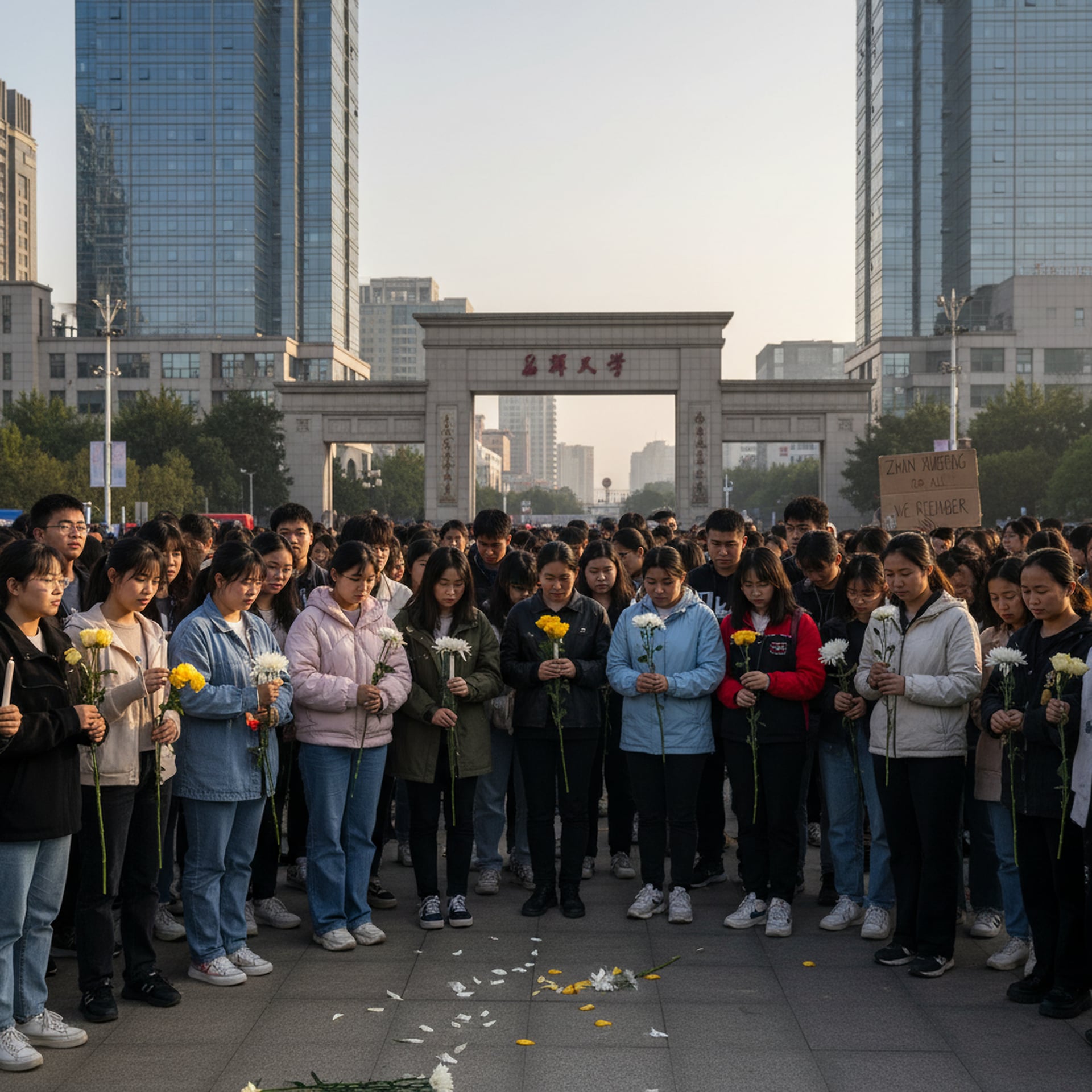
The unexpected passing of Zhang Xuefeng, a prominent education influencer in China, ignited an unprecedented wave of public mourning that quickly transcended personal grief, morphing into a powerful, albeit quiet, collective commentary on the nation's unforgiving higher education system. His death, reported in early April 2026, became a focal point for millions grappling with the immense pressures of academic competition, career uncertainty, and societal expectations, echoing similar struggles faced by students and families across the globe.
Zhang Xuefeng was not a traditional academic or government official; he was a pragmatic voice who offered millions of Chinese students and their parents an alternative perspective on navigating the labyrinthine pathways of higher education and career selection. Through his online platforms, he dispensed often blunt, sometimes controversial, but always practical advice. He was known for encouraging students to prioritize practical skills and job market realities over the pursuit of prestigious but potentially less lucrative academic degrees. He challenged the deeply ingrained cultural reverence for specific university rankings and fields of study, advocating instead for choices that would lead to stable employment and personal fulfillment, even if those choices were considered less “glamorous” by traditional standards. His message resonated profoundly in a society where the Gaokao, China's notoriously rigorous national college entrance examination, dictates the future of millions, and where a university degree is often seen as the sole gateway to success.
The Chinese education system, like many in East Asia, is characterized by intense competition from an early age. The Gaokao is a high-stakes examination that can determine not only a student's university placement but also their social standing and future economic prospects. This creates immense pressure on students, parents, and even entire families, leading to widespread anxiety, burnout, and a narrow focus on academic achievement at the expense of holistic development. While the system aims to foster meritocracy, it often inadvertently creates a rigid hierarchy where certain degrees and universities are disproportionately valued, sometimes irrespective of their actual utility in a rapidly evolving job market. Graduates often find themselves with degrees from highly-ranked institutions but struggle to secure employment that matches their qualifications or aspirations, leading to disillusionment and a sense of betrayal by the system they worked so hard to master.
It was against this backdrop of systemic pressure and growing disillusionment that Zhang Xuefeng’s voice gained prominence. He offered a lifeline to those feeling lost or overwhelmed, providing candid insights into industry trends, salary expectations, and the practicalities of various career paths. His advice often ran counter to conventional wisdom, urging students, for instance, to consider vocational training or less celebrated majors if they offered clearer employment prospects. This made him a hero to many who felt unheard and unguided by official channels. Therefore, when news of his passing broke, the public outpouring of grief was not merely for a popular personality; it was a collective expression of shared anxieties and frustrations. It was a moment where millions felt seen and understood, and their collective sorrow became a subtle yet potent critique of the very system Zhang had helped them navigate. This “quiet revolt” manifested in online tributes, shared stories of personal struggle, and a communal acknowledgment of the deep-seated issues within the education landscape.
The phenomenon observed in China is not isolated; it reflects a broader global challenge in education. Across Asia, countries like South Korea, Japan, and India grapple with similar hyper-competitive academic environments, where students face immense pressure to excel in standardized tests and gain admission to elite institutions. This often leads to high rates of stress, mental health issues, and a feeling of being trapped in a relentless academic rat race. Even in Western nations, while the structure may differ, students contend with rising tuition costs, mounting student debt, and an increasingly competitive job market that often demands more than just a degree. The relevance of traditional academic pathways is being questioned globally as economies shift and new skills become paramount. There's a growing disconnect between what universities teach and what industries require, leaving many graduates feeling unprepared and underemployed.
Influencers like Zhang Xuefeng emerge in such contexts because they fill a critical void. They provide accessible, relatable, and often unfiltered guidance that traditional institutions or government bodies may struggle to offer. Their popularity underscores a fundamental need for education systems to become more responsive, flexible, and student-centric. The global conversation increasingly points towards the necessity of fostering diverse pathways to success, valuing vocational skills alongside academic achievements, and integrating comprehensive career guidance much earlier in the educational journey. Moreover, there is an urgent need to address the mental health crisis exacerbated by academic pressure, ensuring that students are not just academically proficient but also emotionally resilient and well-equipped for life beyond the classroom.
The collective grief for Zhang Xuefeng serves as a poignant reminder to policymakers and educators worldwide. It highlights that education is not merely about imparting knowledge or securing degrees; it is fundamentally about preparing individuals for meaningful lives and contributing to society. When a system becomes so demanding that it generates widespread anxiety and disillusionment, it signals a need for profound introspection and reform. The quiet lament in China was a powerful call for a more humane, equitable, and relevant approach to education, one that prioritizes the well-being and diverse aspirations of its students over rigid metrics of success.
Nivaran Foundation believes that such a shift is imperative for global progress. Education systems must evolve to foster creativity, critical thinking, and adaptability, moving beyond rote learning and narrow specialization. They must provide robust support structures, including mental health services and comprehensive career counseling, ensuring that every student has the opportunity to thrive, regardless of their chosen path. The legacy of Zhang Xuefeng, therefore, extends beyond China’s borders, becoming a universal symbol of the quiet yearning for an education system that truly serves its people. His passing, and the reaction to it, underscores the urgent need for a global dialogue on how to build educational frameworks that are not only excellent but also compassionate, inclusive, and truly empowering.
Support Nivaran Foundation's work in advocating for equitable and sustainable education systems that prioritize student well-being globally.
Talk to Nivaran Global