
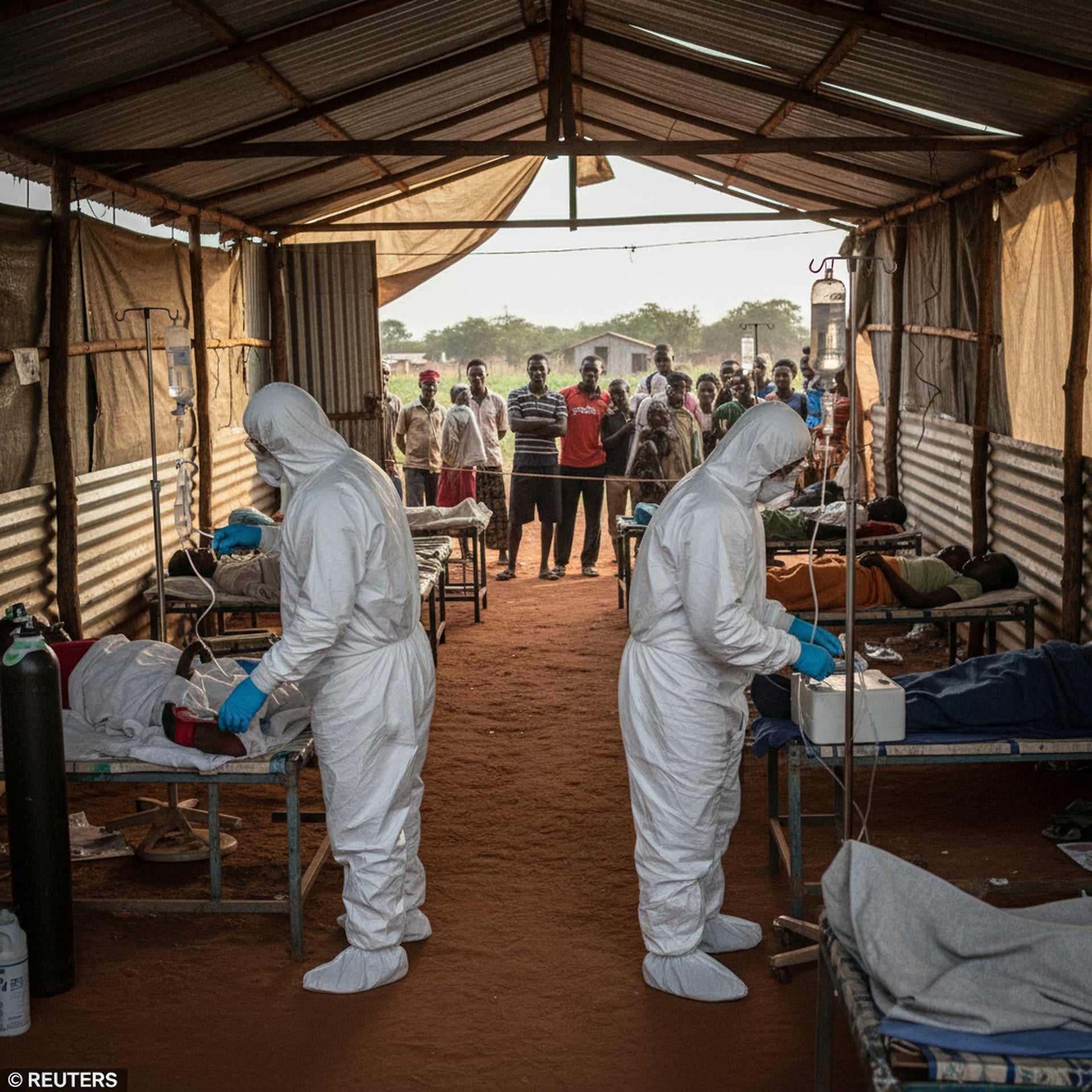
The Democratic Republic of Congo (DRC) has officially declared a significant outbreak of Ebola virus disease, a development that has immediately drawn urgent attention from global health agencies. An African health organization has reported a grim preliminary assessment, indicating dozens of fatalities and hundreds of suspected infections, painting a concerning picture of the disease's silent spread before its public acknowledgment. This declaration, coming after what appears to be a period of unannounced transmission, has prompted considerable alarm among international health experts who stress the critical importance of early detection and transparent reporting in containing such highly virulent pathogens.
The DRC has unfortunately been at the epicentre of numerous Ebola outbreaks since the virus was first identified near the Ebola River in 1976. Its vast, often remote territories, coupled with a fragile healthcare infrastructure, persistent internal conflicts, and significant population displacement, create an environment highly susceptible to the emergence and rapid spread of infectious diseases. These factors complicate surveillance efforts, hinder access to affected communities, and make the swift deployment of medical aid and public health interventions exceedingly challenging. Each new outbreak in the region serves as a stark reminder of the persistent vulnerability and the complex interplay of socio-political and environmental factors that underpin public health crises in this part of the world.
Ebola virus disease is a severe, often fatal illness in humans, caused by the Ebola virus. It is transmitted to people from wild animals and spreads in the human population through direct contact with the blood, secretions, organs, or other bodily fluids of infected people, and with surfaces and materials (e.g., bedding, clothing) contaminated with these fluids. Initial symptoms typically include sudden onset of fever, intense weakness, muscle pain, headache, and sore throat. These are followed by vomiting, diarrhoea, rash, impaired kidney and liver function, and in some cases, both internal and external bleeding. The average case fatality rate is around 50%, though it can vary significantly depending on the virus species, outbreak management, and access to advanced medical care. The rapid progression of the disease and its high mortality rate underscore the urgency required in any response.
The delay in publicly announcing this latest outbreak is particularly troubling for several reasons. Firstly, every day that an outbreak remains unacknowledged allows the virus to spread further, making contact tracing exponentially more difficult and increasing the overall scale of the epidemic. Early notification is a cornerstone of international health regulations, designed to trigger immediate national and international responses, including the deployment of resources, expertise, and medical countermeasures. Secondly, a lack of transparency can erode public trust, making communities less likely to cooperate with health authorities, which is vital for successful containment strategies like safe burials, isolation, and vaccination campaigns. Health experts emphasize that prompt and open communication is not just a procedural requirement but a fundamental tool for effective disease control and maintaining global health security.
In response to such declarations, a coordinated international effort typically mobilizes. The World Health Organization (WHO) plays a central role, working alongside regional bodies like the Africa Centres for Disease Control and Prevention (Africa CDC), and non-governmental organizations such as Médecins Sans Frontières (MSF). The response framework is multi-faceted, encompassing enhanced surveillance to identify new cases, rigorous contact tracing to monitor individuals who may have been exposed, rapid laboratory testing for confirmation, and the establishment of dedicated isolation and treatment centres. Crucially, safe and dignified burial practices are implemented to prevent further transmission from deceased individuals, and extensive community engagement campaigns are launched to educate the public and build trust.
A significant advancement in recent years has been the development and deployment of effective Ebola vaccines, particularly the rVSV-ZEBOV vaccine. This vaccine has proven highly effective in protecting individuals at high risk of exposure, and its strategic deployment through "ring vaccination" — vaccinating contacts of confirmed cases and contacts of contacts — has been instrumental in curbing previous outbreaks. However, the logistical challenges of delivering and maintaining a cold chain for vaccines in remote, often conflict-affected areas of the DRC remain substantial. Furthermore, vaccine hesitancy, fuelled by misinformation or distrust, can impede uptake and complicate efforts to build a protective barrier within communities.
The humanitarian and socio-economic consequences of an Ebola outbreak extend far beyond the direct health impacts. Fear and stigma can lead to social ostracization, disrupting community cohesion and normal daily life. Economic activities, from farming to trade, can grind to a halt, exacerbating poverty and food insecurity in already vulnerable regions. The closure of schools and the diversion of healthcare resources to the Ebola response can have long-term detrimental effects on education and the provision of essential non-Ebola health services, creating a ripple effect of suffering. These broader impacts underscore the necessity of a holistic response that addresses not only the immediate medical crisis but also the wider humanitarian needs of affected populations.
Lessons learned from past, large-scale epidemics, most notably the devastating West African Ebola outbreak of 2014-2016 and previous outbreaks within the DRC itself, have significantly shaped current response strategies. These experiences highlighted the critical importance of strong leadership, rapid deployment of resources, robust cross-border cooperation, and, above all, the imperative of building and maintaining community trust. Engaging local leaders, traditional healers, and community members from the outset is paramount to ensuring that public health interventions are culturally appropriate and effectively implemented. The global health community has invested heavily in improving preparedness and response capabilities, but each new outbreak tests the resilience and adaptability of these systems.
This latest declaration in the DRC serves as a potent reminder that global health security is an interconnected endeavour. An outbreak in one region, particularly of a highly infectious disease like Ebola, poses a potential threat to the entire world. It underscores the urgent need for continued investment in strengthening national surveillance systems, enhancing diagnostic capabilities, training a skilled health workforce, and ensuring equitable access to medical countermeasures globally. Proactive measures, including robust primary healthcare systems and community-based surveillance, are essential to detect outbreaks early and prevent them from escalating into larger epidemics.
As the international community mobilizes to support the DRC in containing this new Ebola outbreak, the focus must remain on rapid, coordinated action and unwavering transparency. The scale of the reported infections and deaths before the official announcement highlights a critical vulnerability that must be addressed to safeguard both local populations and global health. Sustained international support, coupled with strengthened local capacities and a commitment to open communication, will be crucial in mitigating the impact of this latest crisis and preventing future outbreaks from spiralling out of control.
Support Nivaran Foundation's work in strengthening global health systems and emergency preparedness to prevent and respond to outbreaks like Ebola.
Talk to Nivaran Global