
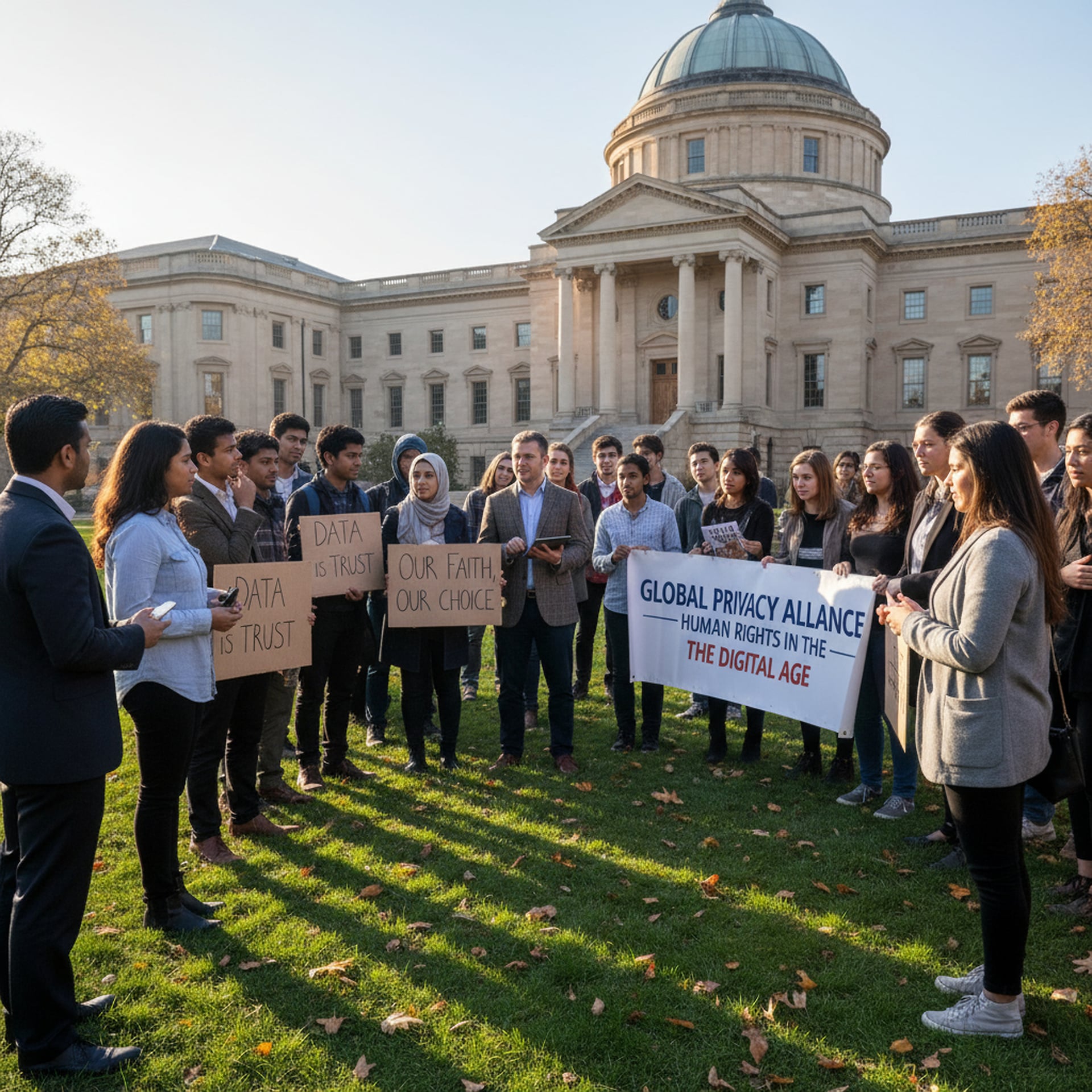
In a decision that has reverberated across educational institutions and civil liberties circles worldwide, a U.S. court has approved a government request to obtain a list of Jewish individuals affiliated with a major university. The ruling, stemming from an investigation into antisemitism on campus, has ignited a fervent global discussion about the delicate balance between combating discrimination and safeguarding fundamental rights to privacy and religious freedom. While the stated intent is to address a serious and pervasive issue, the implications of such data collection extend far beyond the immediate context, raising alarms about potential government overreach and the chilling effect on minority communities within academic environments globally.
The genesis of this controversy lies in a government-led inquiry into allegations of antisemitism at the University of Pennsylvania. In its pursuit of evidence, the government sought to compel the university to provide names and contact information of Jewish students, faculty, and staff. This move, framed by authorities as a necessary step to understand the scope and nature of antisemitic incidents, has been met with profound skepticism and concern. While the global rise in antisemitism is an undeniable and deeply troubling phenomenon that demands robust responses, the method of collecting sensitive demographic data on an entire religious group has sparked widespread apprehension regarding its proportionality and potential for unintended consequences.
For many, the act of compiling lists of specific demographic groups evokes unsettling historical echoes. Throughout history, such lists have, in various contexts, been precursors to discrimination, persecution, and even violence against minority populations. This historical precedent fuels contemporary fears that even well-intentioned data collection can, if not handled with extreme caution and transparency, become a tool for surveillance or targeting. The global community, particularly those advocating for human rights and the protection of vulnerable groups, views this development through the lens of past atrocities, emphasizing the critical need for safeguards against any actions that could inadvertently pave the way for future abuses.
The judicial rationale behind the approval likely weighed the government's investigative prerogatives against individual privacy rights, concluding that the former, under specific conditions, warranted the data request. Legal experts globally are scrutinizing this decision, examining how it aligns with or diverges from international norms regarding data protection and civil liberties. The complexity of these legal arguments underscores a universal challenge: how do modern democracies effectively combat hate and discrimination while rigorously upholding the privacy and autonomy of their citizens, especially within diverse educational settings that are meant to foster intellectual freedom and safety for all?
Universities, as custodians of vast amounts of sensitive student and faculty data, find themselves in an increasingly precarious position. They are tasked with fostering inclusive environments, protecting academic freedom, and ensuring the privacy of their communities, while also being subject to legal mandates from state authorities. This ruling highlights the profound dilemma faced by educational institutions worldwide: how to cooperate with legitimate investigations into discrimination without compromising their foundational commitment to safeguarding the personal information and religious freedoms of their diverse populations. The balance is delicate, and missteps can erode trust and create an environment of fear rather than safety.
The global implications for data privacy are particularly significant. In an era defined by digital footprints and pervasive data collection, the world is grappling with how to regulate the gathering, storage, and use of personal information, especially when it pertains to sensitive categories like religious affiliation. This U.S. court decision adds another layer to the ongoing international discourse on data sovereignty, digital rights, and the extent to which governments can compel institutions to surrender such information. It underscores the urgent need for robust, internationally recognized frameworks that protect individuals from unwarranted surveillance and ensure accountability for how sensitive data is managed.
Furthermore, the ruling raises serious concerns about its potential impact on religious freedom and the participation of minority groups in campus life. When individuals know that their religious affiliation might be subject to government collection, it can create a chilling effect, discouraging open expression of identity or participation in religious student organizations. This phenomenon is not confined to one nation; minority groups across the globe often face disproportionate scrutiny and surveillance. The precedent set by this decision could embolden similar requests in other jurisdictions, potentially undermining efforts to create truly inclusive and welcoming educational environments where all students feel secure in their identities.
This event must also be contextualized within the broader trend of digital surveillance and the erosion of privacy in an interconnected world. Governments, corporations, and other entities increasingly possess the technological capacity to collect, analyze, and leverage vast quantities of personal data. The approval of this data collection request, even for a seemingly legitimate purpose, contributes to a global narrative where individual privacy is increasingly challenged by state power. It compels a renewed examination of the ethical boundaries of surveillance and the democratic safeguards necessary to prevent the misuse of information in an age where data is both a powerful tool and a potent vulnerability.
Nivaran Foundation believes that educational institutions are vital pillars of inclusive societies, serving as spaces where diverse identities are celebrated, and critical thought flourishes. The protection of students and faculty from unwarranted data collection based on their identity is paramount to maintaining these principles. When such protections are perceived to be weakened, it not only impacts the immediate community but sends a message globally about the vulnerability of fundamental rights within academic settings. Our mission is to highlight how such developments can either foster or hinder the creation of equitable and just educational landscapes worldwide.
Civil liberties organizations, human rights advocates, and educational bodies globally are expected to closely monitor the aftermath of this ruling, contemplating potential legal challenges and advocating for stronger protections. The long-term challenge lies in developing comprehensive policies that effectively combat hate and discrimination—including antisemitism—without resorting to measures that inadvertently infringe upon the very freedoms they seek to protect. This complex interplay between security, justice, and individual rights will continue to shape global policy debates for years to come.
In conclusion, the U.S. court's approval for the collection of Jewish individuals' data from a university, while ostensibly aimed at investigating antisemitism, has opened a Pandora's Box of global concerns regarding data privacy and religious freedom. This decision serves as a stark reminder of the multifaceted challenges inherent in balancing state security interests with fundamental human rights. As the world navigates an increasingly complex landscape of digital information and identity politics, the imperative remains to establish robust ethical frameworks and legal protections that safeguard individual privacy and religious freedom, particularly within the sanctity of educational environments, against any potential overreach or misuse of sensitive personal data.
Support Nivaran Foundation's independent journalism on global education and human rights issues.
Talk to Nivaran Global