
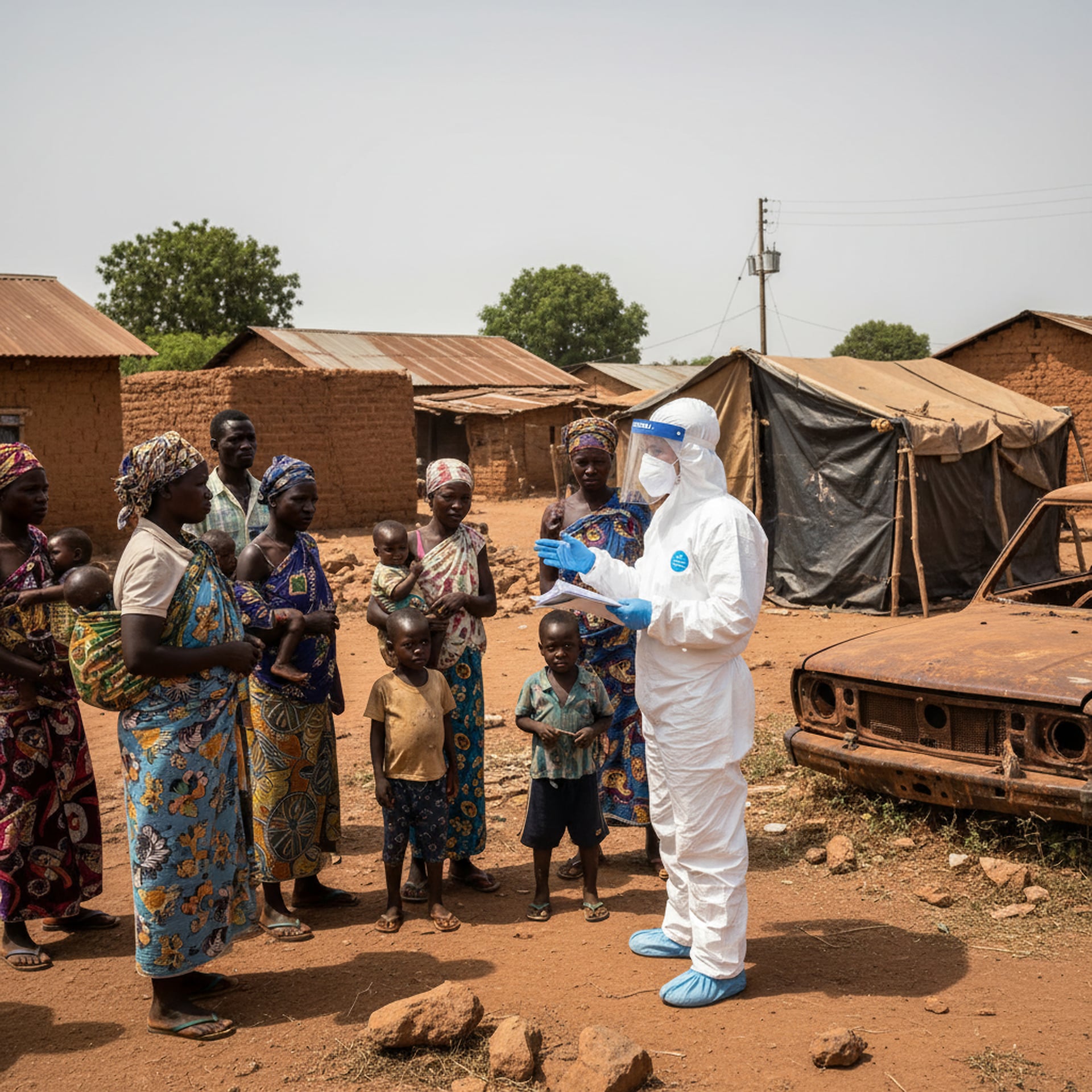
The recent revelation that an Ebola outbreak in the Democratic Republic of Congo circulated undetected for several weeks before authorities raised the alarm serves as a potent and concerning reminder of the persistent vulnerabilities within global health security frameworks. This critical delay, occurring within a nation already grappling with profound humanitarian crises and armed conflict, underscores how breakdowns in fundamental public health reporting and fragile health systems can rapidly escalate localized health threats into potential regional, or even global, emergencies. The silent spread of such a virulent pathogen for an extended period in a volatile environment significantly amplifies the challenges of containment, placing immense pressure on already strained resources and endangering countless lives.
The Democratic Republic of Congo, a vast nation in Central Africa, has long been a crucible for complex health challenges, including recurrent Ebola outbreaks. Its sheer geographical scale, coupled with a severely underdeveloped infrastructure, makes effective disease surveillance and rapid response inherently difficult. Large swathes of the country, particularly in the east, are mired in protracted conflict, rendering many communities inaccessible to health workers and international aid organizations. This environment of insecurity fosters deep distrust among populations towards external actors and even governmental health initiatives, often leading to underreporting of illnesses and resistance to public health interventions. When a highly infectious disease like Ebola emerges in such a setting, the combination of weak state presence, active conflict, and community distrust creates a perfect storm, allowing the virus to establish a foothold and spread stealthily before its presence is even acknowledged.
Ebola virus disease is notorious for its high fatality rate and its rapid, often devastating, progression. Transmitted through direct contact with blood, body fluids, and tissues of infected people or animals, its symptoms can initially mimic common illnesses like malaria or typhoid, making early diagnosis challenging even in well-equipped facilities. In remote areas lacking diagnostic laboratories, healthcare workers often rely on clinical observation, which can be ambiguous. The critical window for containing an Ebola outbreak is in its earliest stages; swift identification of cases, isolation of the infected, rigorous contact tracing, and safe burial practices are paramount. Any delay in these crucial steps allows the virus to propagate unchecked, leading to a wider geographical spread and a greater number of infections and deaths. The weeks of undetected transmission in DR Congo represent a catastrophic loss of this vital window, transforming what might have been a manageable cluster into a far more formidable public health crisis.
The implications of such a delayed detection extend far beyond the immediate affected communities. In an increasingly interconnected world, a localized outbreak in a fragile state can quickly become a global concern. Air travel and cross-border movements, even from remote regions, mean that pathogens can traverse continents in a matter of hours. While the immediate risk of international spread from this specific DR Congo outbreak might be contained, the underlying systemic failures it exposes are universal. They highlight the precariousness of global health security, which is only as strong as its weakest link. If a nation cannot effectively monitor and report on infectious disease threats within its borders, then the entire global community remains vulnerable. This incident serves as a stark reminder that investing in robust health systems and surveillance capabilities in every corner of the world is not merely an act of humanitarianism but a fundamental imperative for collective safety.
The "reporting breakdown" cited in the context of this outbreak points to multiple layers of systemic failure. At the most basic level, it suggests a lack of trained personnel capable of recognizing unusual disease patterns or a breakdown in the communication channels meant to relay such information up the chain of command. This could stem from insufficient training for local health workers, inadequate resources for regular data collection, or even deliberate suppression of information due to political pressures or fear of stigma. Furthermore, "weak health systems" encompass a broader spectrum of deficiencies: a scarcity of medical supplies and personal protective equipment, dilapidated or non-existent healthcare infrastructure, a severe shortage of qualified medical professionals, and a lack of functional laboratories for rapid diagnostics. In conflict zones, these existing weaknesses are exacerbated by the destruction of facilities, displacement of populations, and the constant threat of violence, making the delivery of even basic health services a heroic, often perilous, undertaking.
Past Ebola outbreaks, particularly the devastating West African epidemic of 2014-2016, provided invaluable, albeit tragic, lessons on the critical importance of early detection and rapid response. Following that crisis, significant global efforts were initiated to strengthen epidemic preparedness, particularly in vulnerable nations. International organizations, national governments, and philanthropic foundations poured resources into training, infrastructure development, and establishing rapid response mechanisms. Yet, the recurring nature of these challenges, as evidenced by the DR Congo incident, indicates that these lessons are either not being fully absorbed, or the underlying structural impediments are too profound to be overcome by intermittent interventions. Sustained investment, political will, and a fundamental shift towards strengthening primary healthcare at the community level are essential to build true resilience.
From Nivaran Foundation's perspective, this situation underscores the urgent need for a paradigm shift in how global health security is approached. Reactive measures, while necessary during an active outbreak, are insufficient. The focus must pivot towards proactive capacity building, empowering local communities and health workers with the tools, training, and resources needed to detect and respond to threats at their earliest possible stage. This includes establishing robust, community-based surveillance networks where local leaders and volunteers are trained to identify suspicious symptoms and report them through reliable channels. It also necessitates investing in mobile diagnostic units, improving cold chain logistics for vaccines and treatments, and fostering trust between health authorities and the populations they serve through culturally sensitive engagement strategies.
Furthermore, addressing the root causes of health system fragility in conflict-affected regions is paramount. This requires a coordinated international effort that extends beyond immediate health aid to encompass peacebuilding initiatives, humanitarian assistance, and sustainable development. Without stability, security, and basic infrastructure, even the most well-intentioned health interventions will struggle to gain traction. The international community must commit to long-term partnerships with nations like the DR Congo, supporting their efforts to build resilient health systems that can withstand shocks, whether from disease outbreaks, natural disasters, or conflict. This includes advocating for universal health coverage, ensuring equitable access to essential health services, and investing in research and development for new tools to combat emerging infectious diseases.
In conclusion, the weeks-long undetected spread of Ebola in the Democratic Republic of Congo is more than just a localized tragedy; it is a global alarm bell. It starkly illustrates how the intersection of conflict, weak governance, and underfunded public health systems creates fertile ground for infectious diseases to flourish and threaten global well-being. The imperative is clear: the world cannot afford to wait for the next outbreak to become a full-blown crisis before acting. A concerted, sustained, and globally coordinated effort to strengthen health surveillance, bolster local health infrastructure, and foster community trust in vulnerable regions is not merely an option but a fundamental necessity for safeguarding the health and security of all humanity. The time for decisive action, grounded in prevention and preparedness, is now.
Support Nivaran Foundation's efforts to bolster health systems and improve early disease detection in vulnerable communities worldwide.
Talk to Nivaran Global