The vast, arid landscapes of the California desert, approximately two hundred miles east of the bustling metropolis of Los Angeles, have become an unlikely crucible for a radical experiment in higher education. Here, an off-grid community known as Mars College is challenging the very foundations of traditional learning, operating without tuition fees, formal grades, or even a conventional power grid. This audacious model, which traces its philosophical lineage to the transformative principles of events like Burning Man, is drawing individuals from diverse backgrounds, all seeking an educational experience untethered from institutional norms and financial burdens. Its emergence prompts a critical global conversation about the future of learning, accessibility, and the true meaning of academic pursuit.
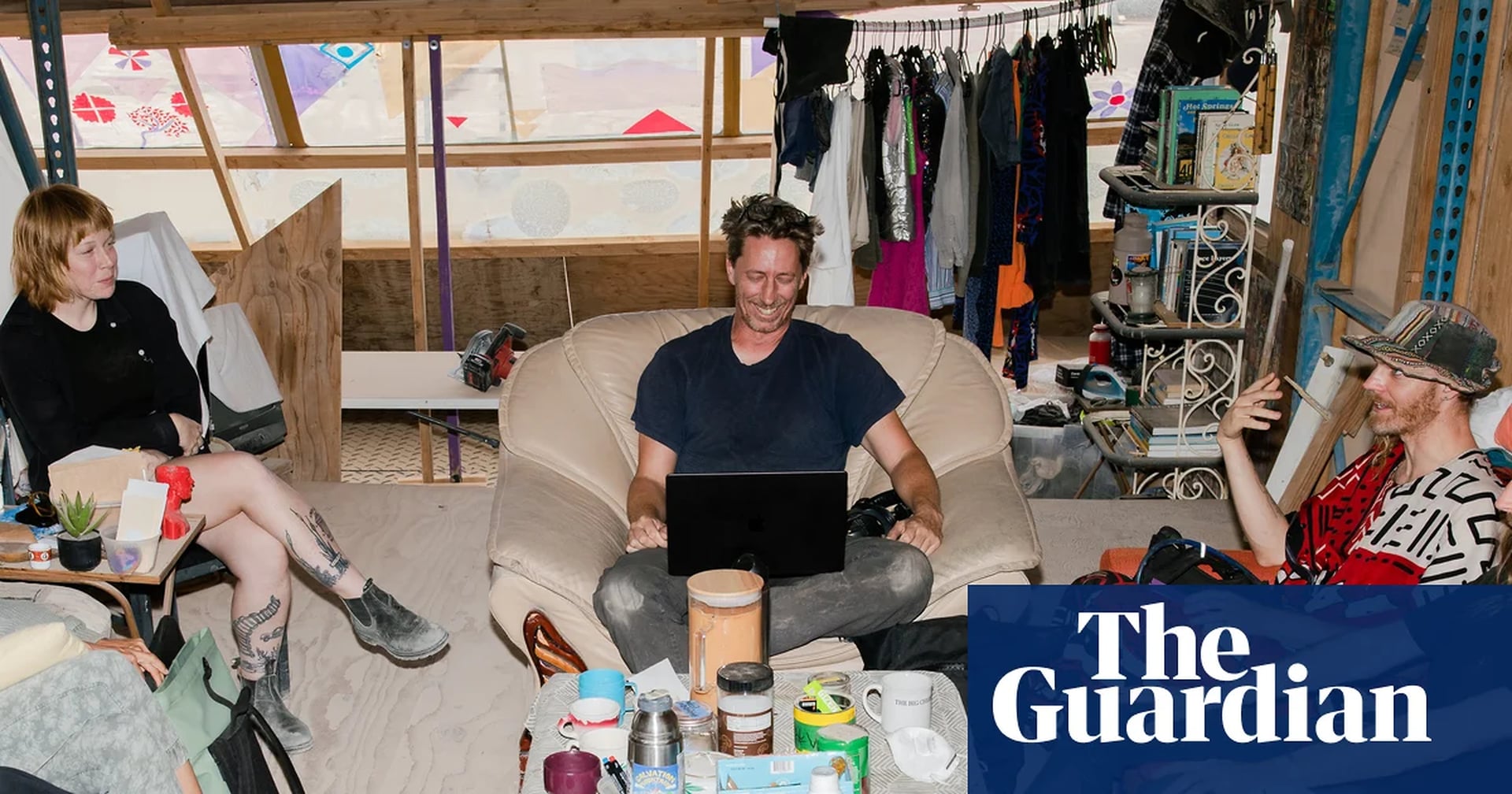
At Mars College, the typical classroom is replaced by an open-air gathering, often around a collection of well-worn couches, where laptops balance precariously on knees amidst the desert dust. Learning is intensely communal and deeply personal. Imagine a scene where a dozen aspiring writers, perhaps like Ira Birch, a poet known for their distinctive style, gather to share their latest work. The initial nervousness of presenting to peers quickly gives way to candid discussion, constructive feedback, and the shared vulnerability that fosters genuine growth. This environment cultivates a sense of belonging and mutual support, starkly contrasting with the often isolating and competitive nature of conventional academic settings. The emphasis is not on evaluation but on engagement, not on credentialing but on creation and collaboration.
The philosophical bedrock of Mars College is rooted in principles of self-reliance, radical self-expression, and communal effort, echoing the ethos of temporary autonomous zones and intentional communities. Participants are not merely students; they are active contributors to the functioning and evolution of the entire ecosystem. This translates into an educational philosophy where learning is not a passive reception of information but an active, hands-on engagement with real-world challenges and creative projects. The absence of a rigid curriculum means that learning pathways are often self-directed, emerging from the collective interests and expertise of the community members. This approach fosters an intrinsic motivation for knowledge acquisition, driven by curiosity and the desire to contribute, rather than external pressures or the pursuit of grades.
The decision to eliminate tuition fees is perhaps one of the most revolutionary aspects of the Mars College model, directly addressing the escalating global crisis of educational affordability. Across the world, rising tuition costs and mounting student debt are creating significant barriers to higher education, particularly for marginalized communities. By removing this financial hurdle, Mars College opens its doors to a broader spectrum of individuals who might otherwise be excluded from advanced learning opportunities. This democratizes access to knowledge and skill development, ensuring that intellectual curiosity and potential are not stifled by economic constraints. Furthermore, the absence of grades shifts the focus from competitive performance to genuine mastery and personal development, encouraging a deeper, more meaningful engagement with the subject matter.
Operating entirely off-grid presents both formidable challenges and unparalleled learning opportunities. The community must collectively manage its resources, from water conservation in an arid environment to generating and storing its own power. This necessitates a practical education in sustainable living, engineering, and resource management that is inherently integrated into daily life. Participants gain invaluable hands-on experience in areas such as solar energy systems, water recycling, and ecological stewardship – skills that are increasingly vital in a world grappling with climate change and resource scarcity. The very act of sustaining the community becomes a living laboratory, fostering resilience, problem-solving abilities, and a profound connection to the environment.
Without a formal curriculum, learning at Mars College unfolds through a dynamic interplay of workshops, peer-to-peer teaching, and project-based initiatives. Individuals with expertise in coding, sustainable agriculture, digital art, creative writing, or philosophy might lead impromptu sessions, sharing their knowledge and inspiring collaborative projects. A group might decide to build a new communal structure, requiring skills in design, carpentry, and project management. Another might embark on a collective artistic endeavor, exploring new mediums and techniques. This fluid, responsive approach ensures that learning is always relevant, driven by immediate needs and evolving interests, rather than predetermined academic pathways. It cultivates an environment where interdisciplinary exploration is not just encouraged but is an inherent part of the learning process.
The demographic drawn to Mars College is as diverse as its learning methodologies. It attracts individuals disillusioned with the conventional educational pipeline, those seeking a more authentic and purpose-driven experience, artists yearning for an unconstrained creative space, technologists eager to apply their skills to real-world problems, and free thinkers exploring alternative ways of living and learning. Many arrive seeking not just academic enrichment but a profound sense of community and a break from the relentless pace of modern urban life. They are motivated by a desire for personal transformation, a chance to contribute meaningfully, and an opportunity to learn skills that extend far beyond theoretical knowledge, encompassing resilience, collaboration, and self-sufficiency.
Globally, the Mars College model resonates with a growing discontent over the state of higher education. The escalating costs, the perceived disconnect between academic offerings and real-world demands, and the often-impersonal nature of large institutions have fueled a search for alternatives. Mars College offers a compelling vision of what education could be: accessible, community-driven, experiential, and deeply integrated with sustainable living. It provides a blueprint for how learning can be decolonized from traditional structures, empowering individuals to take ownership of their educational journeys and to contribute actively to a collective knowledge base. This model challenges institutions worldwide to rethink their approaches to pedagogy, affordability, and community engagement.
The very concept of a "college" is redefined within this desert oasis. It is not a campus defined by grand buildings and lecture halls, but by the collective intelligence, creativity, and shared purpose of its inhabitants. The focus shifts from accumulating credentials to cultivating capabilities, from individual achievement to communal flourishing. In an era where the shelf-life of specific skills is rapidly diminishing, the ability to learn continuously, adapt, and collaborate becomes paramount. Mars College, through its radical methodology, inherently fosters these meta-skills, preparing individuals not just for a specific career path but for a lifetime of adaptive learning and meaningful contribution in an ever-changing world.
The potential for replication and adaptation of such a model in different global contexts is immense. While the specific desert setting of Mars College is unique, its underlying principles – open access, community-led learning, sustainable living, and experiential education – are universally applicable. Imagine similar off-grid or low-cost learning communities emerging in rural areas of developing nations, providing accessible education and practical skills tailored to local needs, fostering self-sufficiency and sustainable development. Or consider urban versions, utilizing repurposed spaces for community-driven skill-sharing hubs. The Mars College experiment offers valuable insights into how educational innovation can address local challenges while contributing to a global shift towards more equitable and relevant learning ecosystems.
However, sustaining such a model is not without its challenges. Questions of long-term funding, maintaining infrastructure in harsh environments, and ensuring scalability while preserving its core ethos are critical. The reliance on volunteerism and shared resources, while empowering, also requires a high degree of commitment and collective responsibility from participants. Yet, the very existence and continued growth of Mars College suggest that these challenges are surmountable, particularly when driven by a strong community vision and a shared belief in the transformative power of alternative education. It serves as a testament to human ingenuity and the enduring desire for meaningful connection and purpose-driven learning.
In conclusion, Mars College stands as a powerful, living experiment at the vanguard of educational innovation. Far from being an isolated anomaly, its radical approach to learning – free from tuition, grades, and conventional infrastructure – offers profound insights into the future of global education. It champions accessibility, fosters deep community engagement, and integrates practical, sustainable living with intellectual pursuit. As societies worldwide grapple with the evolving demands of the 21st century, Mars College provides a compelling vision for how education can be reimagined to be more inclusive, relevant, and ultimately, more human. Its story is a beacon for those who believe that the most profound learning often occurs outside the traditional walls, in spaces where curiosity, collaboration, and community converge.
Support Nivaran Foundation's global initiatives to explore and promote innovative educational models worldwide.
Talk to Nivaran Global