
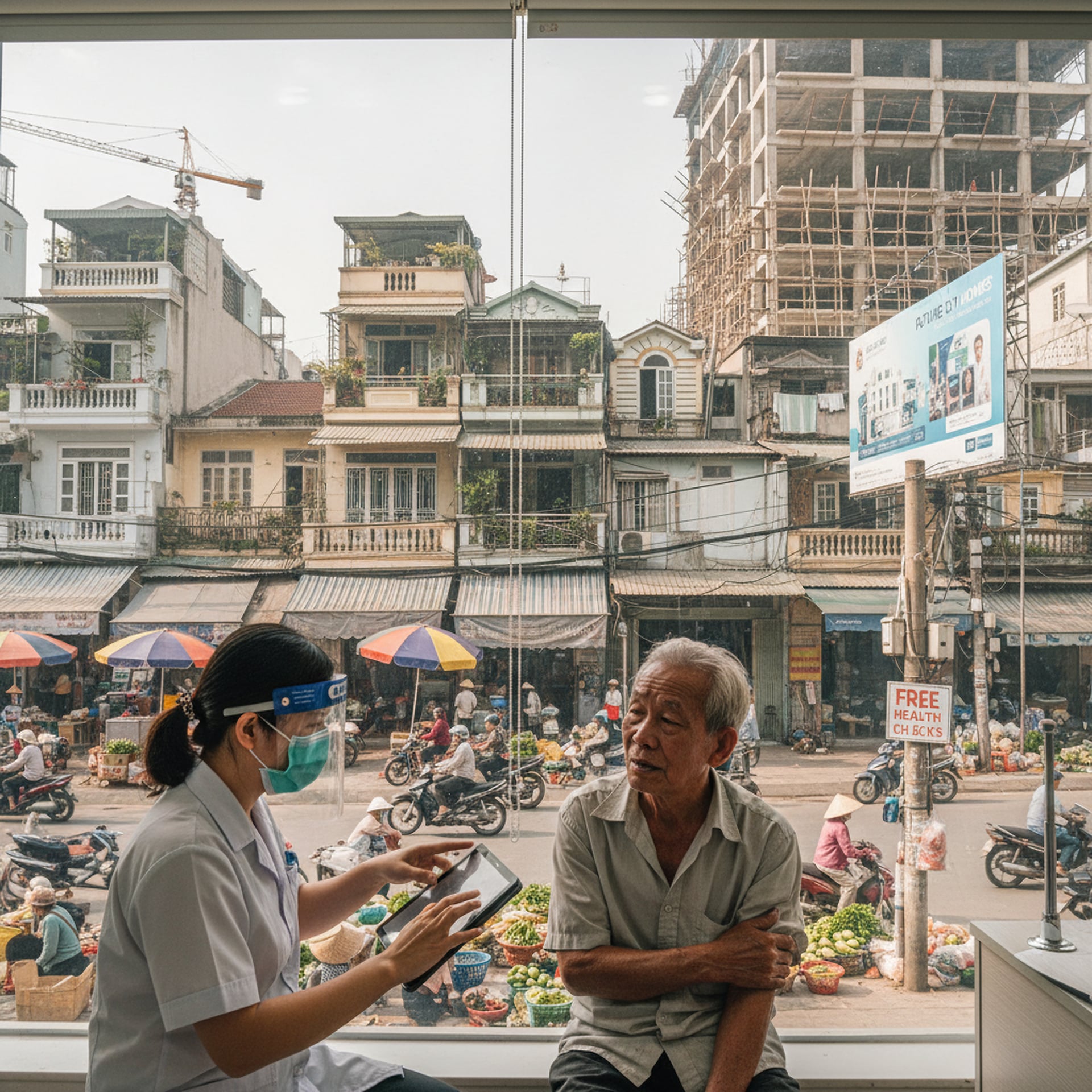
The journey of rapid economic development, while bringing undeniable benefits, often presents a complex set of challenges for public health. A recent analysis, focusing on Vietnam's experience from 1975 to 2025, illuminates this phenomenon, termed the “paradox of progress,” particularly in shaping the social determinants of infectious diseases. This critical insight, though initially subject to a publisher correction, underscores a profound global truth: societal advancement, if not carefully managed, can inadvertently create new vulnerabilities and exacerbate existing health disparities, particularly concerning the spread and control of infectious pathogens.
Vietnam’s post-war trajectory, marked by the "Doi Moi" economic reforms initiated in the mid-1980s, has been nothing short of transformative. The nation has transitioned from a centrally planned economy to a socialist-oriented market economy, achieving remarkable gains in poverty reduction, education, and overall living standards. Infrastructure development has surged, urbanization rates have accelerated, and global integration has deepened. These advancements have undeniably improved many aspects of public health, including access to basic healthcare services and improved nutrition for a significant portion of the population. However, beneath this veneer of progress lies a nuanced reality where the very drivers of development simultaneously create new pathways for disease transmission and complicate existing public health challenges.
One of the most significant facets of this paradox is rapid urbanization. As millions migrate from rural areas to burgeoning cities in search of economic opportunities, urban centers become densely populated. This often leads to the proliferation of informal settlements lacking adequate sanitation, clean water, and waste management infrastructure. Such conditions are ideal breeding grounds for vector-borne diseases like dengue fever and zika, as well as waterborne and foodborne illnesses. Overcrowding also facilitates the airborne transmission of respiratory infections, including tuberculosis and influenza. The sheer speed of urban growth often outpaces the capacity of public health systems to adapt, leading to strained resources and delayed responses to outbreaks. The change in human-environment interaction within these new urban landscapes also plays a crucial role, as natural habitats are replaced by concrete, altering vector ecology and human exposure patterns.
Beyond urban centers, the transformation of agricultural practices and land use patterns contributes significantly to the paradox. Intensive farming, deforestation for agricultural expansion, and changes in irrigation systems can alter ecosystems, bringing humans into closer contact with wildlife reservoirs of zoonotic diseases. The increased use of pesticides and antibiotics in agriculture also presents long-term public health concerns, contributing to antimicrobial resistance and potential environmental contamination. Furthermore, the globalized food supply chain, a hallmark of economic integration, introduces new risks for the rapid spread of foodborne pathogens across borders. The shift from subsistence farming to commercial agriculture can also impact nutritional diversity and food security for vulnerable rural populations, indirectly affecting their immune resilience.
The paradox extends to lifestyle changes accompanying economic growth. Increased disposable income often leads to shifts in dietary patterns, with a rise in consumption of processed foods and a more sedentary lifestyle, contributing to non-communicable diseases. While not directly infectious, these conditions can weaken immune systems and make individuals more susceptible to severe outcomes from infections. Moreover, increased domestic and international travel, a direct consequence of economic prosperity, dramatically accelerates the potential for rapid global dissemination of infectious agents. A pathogen emerging in one locale can, within hours, be transported across continents, challenging traditional containment strategies and demanding sophisticated, globally coordinated surveillance and response mechanisms.
Health equity emerges as a critical dimension of this paradox. While overall health indicators may improve nationally, the benefits of progress are often unevenly distributed. Marginalized communities, including rural populations, ethnic minorities, and migrant workers, frequently bear a disproportionate burden of infectious diseases. They may have limited access to quality healthcare, education, and essential services, making them more vulnerable to outbreaks and less able to recover from illness. The economic pressures that drive migration, for instance, can place migrant workers in precarious living and working conditions, exposing them to higher risks of infection and making them harder to reach with public health interventions. This highlights a fundamental challenge: ensuring that development is inclusive and equitable, rather than widening existing health gaps.
Addressing this "paradox of progress" requires a paradigm shift in public health strategy. It necessitates moving beyond a reactive disease-specific approach to a proactive, integrated, and intersectoral framework. Robust epidemiological surveillance systems are paramount, capable of detecting emerging threats early and tracking disease patterns in rapidly changing environments. Investment in resilient primary healthcare infrastructure, accessible to all populations, is crucial for both prevention and response. Furthermore, public health interventions must be integrated into urban planning, environmental policy, and economic development strategies. For example, sustainable urban development that prioritizes green spaces, efficient waste management, and access to clean water can mitigate many of the risks associated with rapid urbanization.
Education and community engagement are also vital components. Empowering communities with knowledge about disease prevention, hygiene, and healthy behaviors can significantly reduce transmission rates. This includes targeted health education campaigns that address the specific risks arising from new lifestyles and environmental interactions. Policy frameworks must also evolve to anticipate the health consequences of economic decisions, ensuring that development projects undergo thorough health impact assessments. International collaboration and knowledge sharing, as exemplified by the global health community's response to various epidemics, are indispensable for tackling diseases that recognize no borders.
In conclusion, Vietnam's experience serves as a powerful global case study, illustrating that progress, while desirable, is not inherently benign from a public health perspective. The "paradox of progress" compels nations worldwide to critically examine the unintended health consequences of their development trajectories. It underscores the urgent need for holistic, equitable, and adaptive public health strategies that can navigate the complexities of a rapidly changing world. For the Nivaran Foundation, this research reinforces the imperative to support integrated health and development initiatives that build resilience, promote equity, and ensure that the fruits of progress genuinely contribute to the well-being of all, rather than creating new vulnerabilities. The lessons from Vietnam resonate globally, urging a re-evaluation of how we define and pursue sustainable development in the 21st century, placing health at the very core of all progress.
Support Nivaran Foundation's global efforts to address complex health challenges arising from development and ensure equitable health outcomes worldwide.
Talk to Nivaran Global