
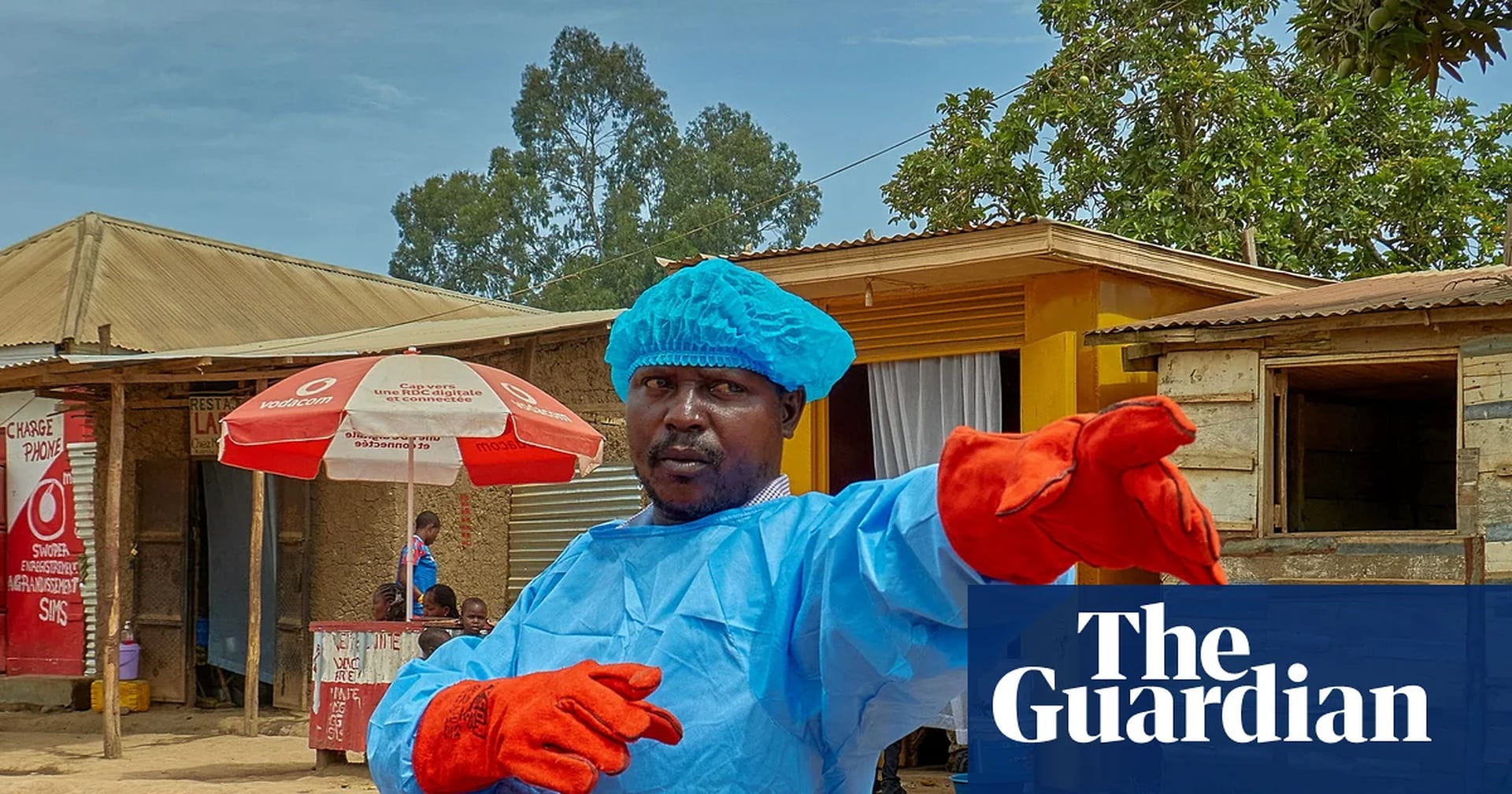
The Democratic Republic of Congo (DR Congo) is once again at the epicenter of a severe public health crisis, as the number of suspected Ebola cases in its eastern region has tragically surpassed 900. This escalating outbreak, characterized by significant challenges including direct attacks on health workers and critical resource deficits, has prompted the World Health Organization (WHO) to declare a "very high" risk level for the nation, underscoring the profound domestic threat. While the global risk of widespread transmission remains low, the situation within DR Congo demands urgent and sustained international attention to prevent further devastation.
The Congolese Ministry of Communication recently confirmed 904 suspected cases and 119 suspected deaths, painting a grim picture of the virus's relentless spread. These figures highlight not only the virulence of Ebola but also the complex interplay of factors that hinder effective containment in a region already grappling with decades of conflict, displacement, and underdevelopment. The current outbreak is not an isolated event; DR Congo has faced numerous Ebola epidemics since the virus was first identified near the Ebola River in 1976. Each recurrence serves as a stark reminder of the fragile health infrastructure and the persistent struggle to protect its vulnerable populations.
Ebola Virus Disease (EVD) is a severe, often fatal illness in humans, transmitted through direct contact with the blood, secretions, organs, or other bodily fluids of infected people, and from contaminated surfaces and materials. Its rapid onset, high fatality rate, and the fear it instills make it particularly challenging to manage, especially in communities where trust in external health interventions is low. The cornerstone of Ebola response includes rapid identification of cases, contact tracing, isolation, provision of supportive care, safe burial practices, and vaccination. However, the efficacy of these measures is heavily reliant on a secure environment and strong community cooperation, both of which are severely compromised in eastern DR Congo.
One of the most alarming aspects of the current crisis is the increasing frequency and intensity of attacks against health workers. These frontline heroes, often risking their lives to provide care and implement public health measures, have become targets of violence, intimidation, and misinformation. Such attacks are not random acts but stem from a complex web of factors, including deep-seated mistrust in government and international organizations, fueled by political instability, historical grievances, and the spread of rumors and conspiracy theories. In some instances, communities perceive health interventions as foreign impositions, or even as deliberate attempts to harm them, rather than as life-saving efforts. This hostility directly impedes critical activities such as vaccination campaigns, safe burials, and the identification of new cases, allowing the virus to spread unchecked in affected areas. When health workers are attacked, it not only endangers their lives but also forces the suspension of vital services, creating dangerous gaps in the response and eroding the very trust essential for disease control.
Beyond violence, the Ebola response is severely hampered by chronic resource shortages. The DR Congo's health system is chronically underfunded and understaffed, particularly in remote and conflict-affected areas. This means a lack of adequate personal protective equipment (PPE), essential medical supplies, diagnostic tools, and trained personnel. The logistical challenges of operating in eastern DR Congo are immense; poor road networks, vast distances, and insecurity make it incredibly difficult to transport supplies and deploy response teams quickly and efficiently. International aid, while crucial, often struggles to bridge these systemic gaps entirely, and its impact can be diluted by the volatile local context. The absence of robust, resilient local health infrastructure means that each outbreak becomes an emergency requiring an extraordinary, often unsustainable, external response.
Community engagement is perhaps the most critical, yet most challenging, component of any successful Ebola response. Without the active participation and trust of the affected communities, public health measures cannot succeed. This involves not just informing people about the virus but actively listening to their concerns, respecting local customs, and integrating traditional leaders and community health workers into the response strategy. Building this trust takes time, cultural sensitivity, and consistent effort, often in environments where years of conflict and neglect have fostered profound skepticism towards authority. When communities resist safe burial practices or vaccination, the virus finds new pathways for transmission, prolonging the outbreak and increasing its toll.
The global health community, led by the WHO, continues to support the Congolese government in its efforts. This support includes deploying rapid response teams, providing technical expertise, coordinating international aid, and facilitating access to experimental vaccines and therapeutics. The rVSV-ZEBOV vaccine, for instance, has proven highly effective in previous outbreaks and is a critical tool in containing the spread. However, even with effective vaccines, the challenges of distribution, cold chain maintenance, and administration in insecure areas remain formidable. Surveillance systems are being strengthened to detect new cases swiftly, and laboratories are working to confirm diagnoses, but these efforts are constantly battling against the backdrop of insecurity and mistrust.
The socio-economic impact of the Ebola outbreak extends far beyond the immediate health crisis. Families lose breadwinners, children are orphaned, and communities are stigmatized. Economic activities are disrupted as fear of contagion limits movement and trade. Education suffers as schools close or are repurposed, further exacerbating the long-term development challenges of the region. The psychological toll on survivors, their families, and health workers is immense, often leading to lasting trauma and mental health issues that receive insufficient attention. Addressing these broader impacts is essential for a holistic recovery and for building resilience against future health emergencies.
Lessons from previous major outbreaks, such as the devastating West African Ebola epidemic of 2014-2016, have significantly shaped current response strategies. There is a greater emphasis on early detection, rapid response, community engagement, and the use of advanced medical countermeasures. However, the unique complexities of eastern DR Congo—its ongoing armed conflicts, high population mobility, and deep-seated mistrust—present a distinct set of hurdles that test even the most refined strategies. The persistence of violence against health workers, in particular, highlights a critical gap in the global health security architecture: the inability to protect humanitarian responders in conflict zones.
Moving forward, a multi-pronged approach is essential. Firstly, there must be an unwavering commitment to protecting health workers, potentially through enhanced security measures and robust community dialogue aimed at fostering trust. Secondly, sustained and predictable international funding is crucial to ensure that the DR Congo's health system receives the necessary resources not just during an emergency but also for long-term strengthening. This includes investing in local capacity building, training more health professionals, and improving infrastructure. Thirdly, greater emphasis must be placed on community-led solutions, empowering local leaders and organizations to drive the response, ensuring that interventions are culturally appropriate and locally accepted. Finally, addressing the root causes of instability and conflict in eastern DR Congo is paramount, as peace and security are fundamental prerequisites for effective public health interventions and sustainable development.
The current Ebola outbreak in DR Congo is a profound humanitarian challenge, testing the resilience of its people and the resolve of the global health community. While the immediate focus remains on containment and saving lives, the broader imperative is to build a more robust, equitable, and secure health future for the region. The international community's continued solidarity and support are not merely acts of charity but strategic investments in global health security, recognizing that disease anywhere is a potential threat everywhere. The ongoing struggle in DR Congo serves as a powerful reminder of the interconnectedness of health, security, and human dignity, urging a collective and compassionate response.
Support Nivaran Foundation's global health initiatives to strengthen disease surveillance and protect frontline health workers in vulnerable regions.
Talk to Nivaran Global