The Democratic Republic of Congo (DRC) is grappling with one of the most persistent and challenging Ebola outbreaks in history, now recognized as the third-worst on record. While the medical and logistical complexities of containing such a virulent disease are immense, the primary obstacles to eradicating the virus in eastern DR Congo stem not just from its biological nature, but from a deeply entrenched landscape of community mistrust and rampant disinformation. These socio-cultural barriers have profoundly hampered public health interventions, turning what should be a straightforward medical response into a complex humanitarian and social battle.
The roots of this profound skepticism run deep within the affected communities. Eastern DR Congo has endured decades of conflict, political instability, and a history of external interventions that have often been viewed with suspicion. This backdrop of chronic insecurity and a fragile state presence has fostered an environment where trust in authorities, whether local or international, is scarce. Past Ebola outbreaks, while eventually contained, have sometimes left behind a legacy of fear and resentment, with aggressive containment measures occasionally clashing with local customs and beliefs, inadvertently fueling the very mistrust they sought to overcome.
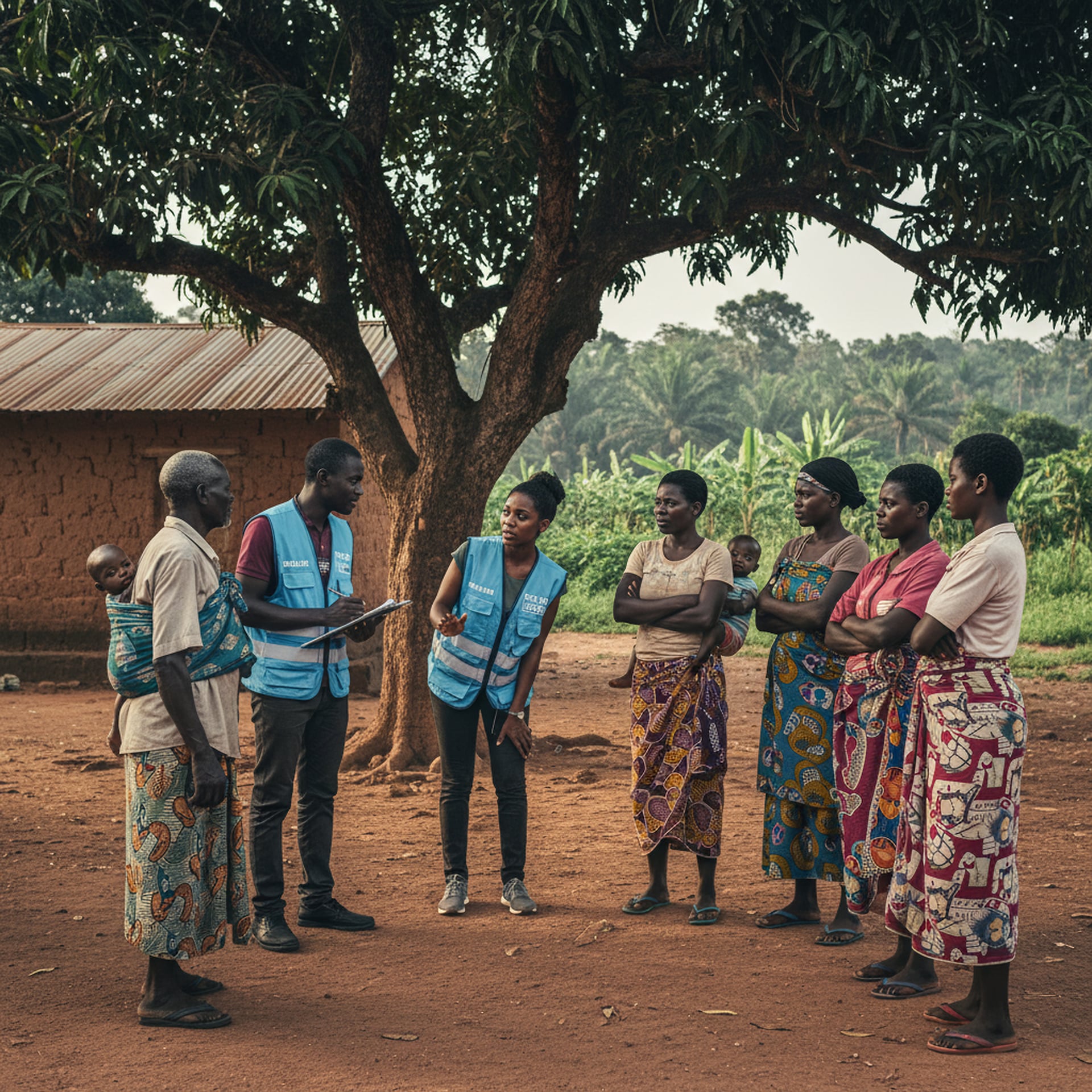
This mistrust manifests in various critical ways, directly undermining efforts to control the virus. Many residents, wary of outsiders and government initiatives, refuse to cooperate with contact tracers, hiding sick family members or delaying seeking treatment in official health facilities. Vaccination campaigns, a cornerstone of modern epidemic control, face significant resistance, with communities often refusing life-saving immunizations. Traditional burial practices, which involve close contact with the deceased, are particularly challenging to modify, yet are high-risk vectors for transmission, leading to dangerous clashes between health protocols and deeply held cultural norms.
Compounding this skepticism is a pervasive wave of disinformation. False narratives spread rapidly through word-of-mouth, local radio, and increasingly, social media. These fabrications often portray Ebola as a hoax, a foreign conspiracy, a political tool, or even a deliberate attempt to harm local populations. Such narratives are particularly potent in areas where literacy rates are low and access to reliable information is limited, allowing misinformation to take root and spread unchecked. This makes it incredibly difficult for health communicators to convey accurate information about the disease, its transmission, and the effectiveness of preventative measures and treatments.
The consequences for health workers and humanitarian operations are severe. Responders, often seen as extensions of a distrusted system, have faced threats, intimidation, and even violent attacks. Clinics have been vandalized, and vehicles ambushed, forcing aid organizations to operate under extreme security precautions. This not only endangers staff but also restricts access to affected areas, delaying critical interventions like contact tracing, safe burials, and the delivery of medical supplies. The constant threat of violence creates 'no-go zones' where the virus can circulate undetected, making containment exponentially more difficult.
Adding another layer of complexity is the volatile security situation in eastern DR Congo, a region plagued by numerous armed groups. These groups often exploit community grievances and mistrust for their own agendas, further fueling anti-Ebola sentiments. Their presence complicates logistics, endangers staff, and can cut off entire communities from vital health services. The need for security escorts and negotiations with various factions diverts resources and attention from the primary goal of disease containment, creating an environment where the virus can thrive amidst chaos.
The cycle of fear and resentment is a powerful impediment. While aggressive containment measures, such as mandatory quarantines and supervised burials, are medically necessary to halt transmission, they can be perceived as intrusive, disrespectful, or even punitive by communities already feeling marginalized. This perception can further alienate populations, driving them away from official health channels and into the arms of traditional healers or into hiding, inadvertently accelerating the spread of the disease within their social networks.
Recognizing these profound challenges, international and local health organizations have increasingly shifted their strategies towards more community-led and culturally sensitive approaches. Building trust is now understood as paramount, requiring sustained engagement with local leaders, religious figures, women's groups, and youth. This involves not just disseminating information but actively listening to community concerns, understanding their fears, and integrating their perspectives into the response strategy. Empowering trusted local voices to champion health messages has proven far more effective than top-down directives.
Tailored communication strategies are also vital. Moving away from generic public health announcements, responders are working to craft messages that resonate with local beliefs and values, delivered in local languages by people from the community. Transparency about the disease, its spread, and the response efforts is crucial to counter disinformation. Openly addressing community concerns, even when difficult, helps to dismantle the foundations of suspicion and build a more collaborative relationship between health providers and the populations they serve.
Furthermore, integrating broader health services alongside Ebola response can help build goodwill and demonstrate a long-term commitment to community well-being. Providing treatment for common ailments like malaria, offering maternal and child healthcare, or improving water and sanitation infrastructure can show communities that health organizations are invested in their overall welfare, not just in crisis intervention. This holistic approach fosters a sense of partnership, making communities more receptive to Ebola-specific interventions.
The implications of this protracted struggle in DR Congo extend far beyond its borders, posing a significant global health security concern. The longer the virus circulates, the greater the risk of it mutating, spreading to urban centers, or crossing international boundaries. A failure to control such an outbreak effectively strains global resources, diverts attention from other pressing health issues, and sets a dangerous precedent for future pandemics. The lessons learned in DR Congo about the critical role of trust and communication are invaluable for global preparedness.
Ultimately, the fight against Ebola in eastern DR Congo is not merely a medical challenge; it is a profound social and political one. It demands a sustained, patient, and collaborative effort that prioritizes community engagement, counters disinformation with empathy and truth, and navigates a complex landscape of insecurity and historical grievances. Only through such a holistic and human-centered approach can the world hope to bring this tenacious outbreak under control and prevent future health crises from being exacerbated by the very communities they seek to protect. The human cost of this struggle underscores the imperative for a global commitment to strengthening health systems and fostering trust in vulnerable regions worldwide regions worldwide regions worldwide regions worldwide.
Support Nivaran Foundation's global health initiatives to combat misinformation and strengthen community health systems worldwide.
Talk to Nivaran Global