
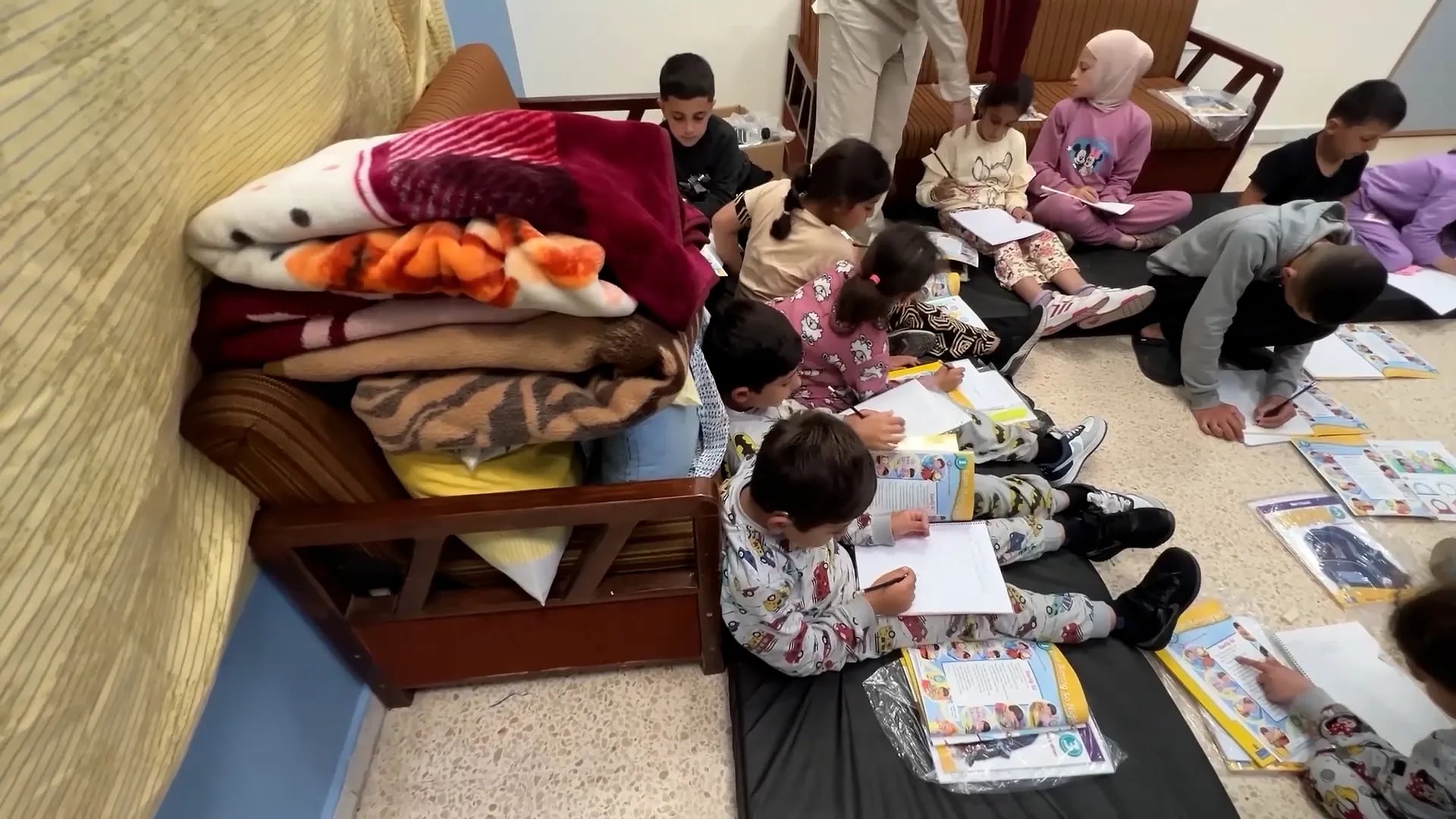
The humanitarian landscape in Lebanon continues to present profound challenges, particularly for families displaced by ongoing instability in the country's southern regions. As tensions persist along the border, thousands have been forced to abandon their homes, seeking refuge in safer areas further north. In the southern city of Sidon, approximately 40 kilometers from the flashpoints, a remarkable testament to resilience and the unwavering commitment to education is unfolding. What was once solely a learning institution has now transformed into a dual-purpose sanctuary, providing both shelter and continued schooling for children and families uprooted from their homes in southern Lebanon. This adaptive response underscores a critical global need: to safeguard the future of children by ensuring their right to education, even amidst the most severe crises and the profound disruption they bring.
The scenes within the Sidon school are a microcosm of the broader struggle and spirit of perseverance that characterizes communities facing displacement. Classrooms, once designed purely for academic instruction, now serve as temporary living quarters for families by night, only to be meticulously reconfigured for lessons each morning. Mattresses are stacked, personal belongings are neatly tucked away, and blackboards are wiped clean, ready for the day's lessons. This daily transformation is a powerful symbol of the community's determination to maintain a semblance of normalcy and purpose for its youngest members. Children, many of whom have witnessed unimaginable hardship, the destruction of their homes, and the disruption of their routines, gather with their books and pencils, eager to engage with their teachers and peers. In these makeshift classrooms, they find not only knowledge but also a vital sense of solace and structure in the rhythm of learning, a stark contrast to the chaos they have left behind.
The challenges faced by these schools and the families they serve are immense and multifaceted. Overcrowding is a constant issue, as resources are stretched thin to accommodate the influx of displaced individuals. Basic amenities like sanitation facilities and clean water, designed for a smaller student body, are now under severe strain. Educational materials, once adequate for a standard student population, are now insufficient, requiring creative solutions and often relying on donations. Teachers, many of whom are themselves affected by the crisis, having either been displaced or living with the constant threat of instability, operate under immense pressure. They are often dealing with students who carry the psychological scars of displacement, trauma, and uncertainty, manifesting as anxiety, difficulty concentrating, or behavioral issues. The curriculum must be adapted to cater to children who have missed significant periods of schooling, ensuring that no child is left further behind and that their diverse learning needs are met. Yet, despite these formidable obstacles, the commitment to education remains unwavering, driven by a profound understanding of its importance.
For displaced children, school is far more than just a place to acquire knowledge; it is a vital anchor in a sea of instability. The routine of attending classes, interacting with friends, and engaging in structured activities provides a sense of predictability and security that is often absent from their daily lives. This stability is crucial for their psychological well-being, helping to mitigate the long-term effects of trauma and displacement. Education offers a safe space where children can express themselves, process their experiences through creative outlets, and begin to heal. It fosters a sense of belonging and community, reminding them that they are not alone in their struggles and that there is a future beyond their current predicament. The simple act of learning can restore a sense of agency and hope, empowering children to envision possibilities beyond the immediate crisis.
Moreover, continued education is a powerful tool for protection. Children out of school are significantly more vulnerable to exploitation, child labor, early marriage, and recruitment by armed groups. In environments of crisis and displacement, these risks are amplified. By keeping children in classrooms, initiatives like the one in Sidon provide a protective environment, shielding them from these grave dangers and offering a pathway to a safer, more dignified future. It equips them with foundational literacy and numeracy skills, critical thinking abilities, and the knowledge necessary to rebuild their lives and contribute positively to their communities once stability returns. This investment in their cognitive and social development is an investment in the long-term health and stability of the entire region.
The dedication of the educators in these extraordinary circumstances cannot be overstated. These teachers often become de facto counselors, mentors, and parental figures, offering emotional support alongside academic instruction. They navigate complex classroom dynamics, manage limited resources, and adapt their teaching methods to suit children with varying levels of prior schooling and emotional needs. Their ability to create an engaging and nurturing learning environment, despite the scarcity of resources and the emotional toll of the crisis, is truly heroic. They embody the spirit of resilience, demonstrating that even in the darkest times, the light of knowledge and compassion can prevail. Their commitment extends beyond the classroom, often involving outreach to families and coordination with local NGOs and humanitarian aid efforts to address the holistic needs of the children, including access to food, medical care, and psychosocial support.
Parents, too, play a crucial role in supporting their children's education amidst displacement. Despite their own anxieties about housing, food security, and personal safety, they prioritize their children's schooling, understanding its profound importance for their future. They make immense sacrifices, often foregoing opportunities for work or stability elsewhere, to ensure their children have access to learning. This collective determination—from students, teachers, parents, and the broader community—forms the bedrock of these educational initiatives. Local community leaders and volunteers often step in to assist with the logistical challenges, from setting up temporary learning spaces to distributing supplies, highlighting the powerful role of local agency in crisis response.
The situation in Sidon is not unique to Lebanon; it reflects a global challenge of immense proportions. Across the world, millions of children are displaced by conflict, natural disasters, and political instability, facing immense barriers to accessing education. The United Nations estimates that a significant percentage of refugee children are out of school, a statistic that highlights the urgent need for sustained international attention and funding. The long-term consequences of an uneducated generation in crisis zones are dire, perpetuating cycles of poverty, instability, and vulnerability. When an entire generation misses out on foundational learning, the prospects for national recovery and sustainable development are severely hampered. Investing in education during emergencies is not merely a humanitarian act; it is a strategic investment in peace, stability, and sustainable development, laying the groundwork for future prosperity and social cohesion.
Nivaran Foundation recognizes that education is a fundamental human right and a cornerstone of human dignity, especially during times of crisis. The efforts in Sidon exemplify the kind of grassroots resilience that, with adequate support, can make a profound difference. By supporting initiatives that keep schools operational and children learning, we empower communities to build a brighter future for themselves, even in the face of overwhelming adversity. These initiatives require consistent funding for teacher salaries, learning materials, psychosocial support services, and the maintenance of safe learning environments. The stories emerging from Sidon are not just about survival; they are about thriving, about the enduring power of hope, and the transformative potential of education to shape lives and societies.
The continued operation of this school, serving as both shelter and learning hub, sends a powerful message: that even when homes are lost and lives are uprooted, the pursuit of knowledge and the promise of a future remain intact. It is a testament to the indomitable human spirit and a beacon for what can be achieved when communities refuse to let crisis extinguish the flame of learning. The global community must heed this call, ensuring that every displaced child, everywhere, has the opportunity to learn, grow, and contribute to a world that desperately needs their talents, resilience, and perspectives for a more peaceful and prosperous future.
Your support enables Nivaran Foundation to champion education and health initiatives for vulnerable communities worldwide.
Talk to Nivaran Global