
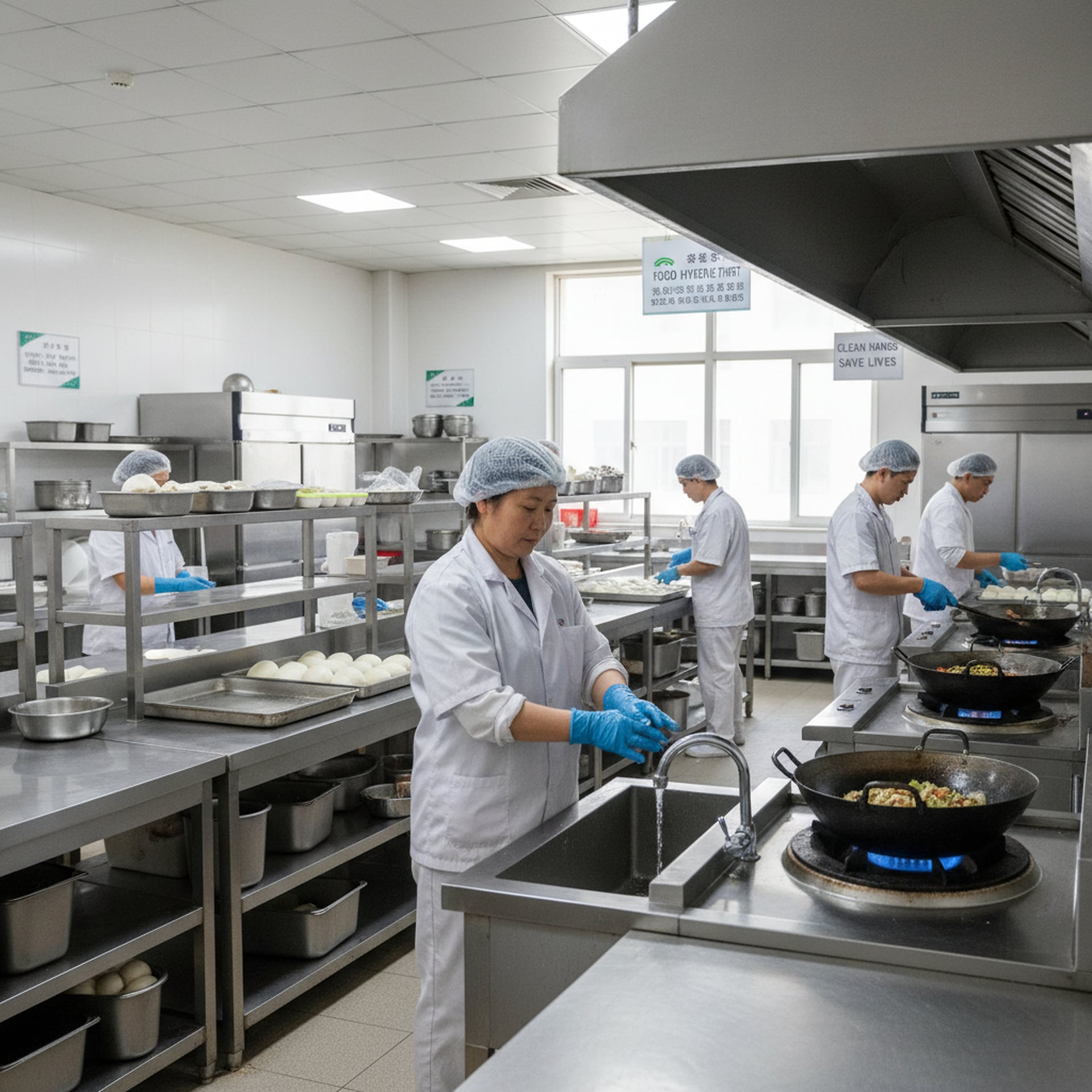
In an increasingly interconnected world, the health and well-being of students in higher education institutions represent a critical global concern. University canteens and food services play a pivotal role in daily student life, providing sustenance to thousands. Consequently, the safety of the food served in these environments is paramount, directly impacting public health, academic performance, and the overall educational experience. A recent study, focusing on food safety knowledge, attitudes, and practices among food handlers in higher education institutions in Northwestern China, offers valuable insights that resonate far beyond its regional scope, shedding light on universal challenges and opportunities for improvement in institutional food safety worldwide.
Foodborne illnesses pose a significant global health burden, affecting millions annually and leading to substantial economic losses. In institutional settings like universities, where large populations consume meals prepared in centralized kitchens, the risk of widespread outbreaks is particularly elevated. A single lapse in hygiene or food handling can quickly escalate into a major public health crisis, disrupting academic schedules, causing severe illness, and eroding trust in the institution. Therefore, understanding and enhancing the food safety landscape within these environments is not merely a regulatory compliance issue but a fundamental aspect of safeguarding student health and ensuring a conducive learning environment.
The study from Northwestern China, published in 2026, meticulously examined the crucial interplay between what food handlers know, how they feel about food safety, and what practices they actually implement. While the specific findings of such a study often highlight regional nuances, the overarching themes—such as gaps in knowledge regarding critical control points, discrepancies between positive attitudes and inconsistent practices, and the influence of training and experience—are commonly observed in similar research conducted across diverse geographical and socio-economic contexts. This makes the Chinese study a pertinent case study for a global discourse on improving food safety standards in educational institutions.
Common areas of concern often identified in such research include inadequate knowledge of proper handwashing techniques, insufficient understanding of safe cooking temperatures for various foods, and poor practices in preventing cross-contamination between raw and cooked ingredients. For instance, handlers might possess a general awareness of hygiene but lack specific, actionable knowledge regarding the precise temperatures required to eliminate pathogens or the correct protocols for sanitizing surfaces and equipment. These knowledge deficits, if unaddressed, can create significant vulnerabilities in the food preparation chain, increasing the risk of bacterial or viral contamination.
Furthermore, studies frequently reveal a complex relationship between attitudes and practices. Food handlers generally express positive attitudes towards food safety, acknowledging its importance for consumer health and their professional responsibility. However, these positive attitudes do not always translate into consistent, flawless practices in the demanding, fast-paced environment of a university canteen. Factors such as time pressure, heavy workloads, insufficient staffing, or a lack of immediate supervision can lead to shortcuts or lapses in adherence to established safety protocols, even among handlers who understand the risks involved. This disconnect underscores the need for not just knowledge dissemination but also a supportive operational environment that enables and reinforces safe practices.
Several factors typically influence food safety knowledge, attitudes, and practices. The level of formal education, the extent and frequency of food safety training, and years of experience in the food service industry are often identified as significant determinants. Handlers with higher levels of education or those who have undergone regular, comprehensive training tend to exhibit better knowledge and more consistent adherence to safety guidelines. Conversely, a lack of continuous professional development or reliance on informal, on-the-job learning can perpetuate outdated or insufficient practices. The study from Northwestern China likely explored these variables, offering insights into how educational institutions can strategically invest in their workforce to elevate food safety standards.
The implications of such findings are globally relevant. Universities in rapidly developing economies, much like those in Northwestern China, often face unique challenges, including managing rapid growth in student populations, diverse dietary needs, and varying levels of infrastructure development. However, even in highly developed nations, maintaining optimal food safety standards in large-scale institutional catering remains an ongoing challenge, requiring constant vigilance, adaptation, and investment. The lessons learned from one region can inform best practices and policy development across continents, fostering a global community committed to student health.
The economic and health burden of foodborne illnesses is substantial. Beyond the immediate costs of medical treatment and lost productivity, outbreaks can damage an institution's reputation, lead to legal liabilities, and, most importantly, cause immense suffering and long-term health complications for affected individuals. Investing in robust food safety programs, therefore, is not merely an expenditure but a strategic investment in human capital and institutional resilience. It protects students, staff, and the broader community, ensuring that educational pursuits are not derailed by preventable health crises.
To address these challenges effectively, a multi-faceted approach is essential. Firstly, continuous, targeted training programs are crucial. These programs should move beyond generic information to address specific knowledge gaps identified through assessments, focusing on practical skills and real-world scenarios relevant to the canteen environment. Refresher courses, particularly on emerging food safety threats or new technologies, are also vital to keep handlers updated. Secondly, robust supervision and monitoring mechanisms are indispensable. Regular audits, unannounced inspections, and the implementation of Hazard Analysis and Critical Control Points (HACCP) systems can help ensure that theoretical knowledge translates into consistent safe practices.
Furthermore, creating a strong culture of food safety within the institution is paramount. This involves leadership commitment, clear communication channels, and empowering food handlers to take ownership of their roles in safeguarding public health. When staff feel valued, supported, and understand the profound impact of their work, they are more likely to adhere to stringent safety protocols. Investment in modern kitchen infrastructure, appropriate equipment, and access to necessary hygiene supplies (like handwashing stations and sanitizers) also forms a foundational element of effective food safety management.
Policy and regulatory frameworks also play a critical role. Governments and educational authorities must establish clear, enforceable standards for institutional food service, coupled with effective oversight bodies. These policies should be regularly reviewed and updated to reflect scientific advancements and evolving public health needs. Institutions themselves must develop comprehensive internal policies that align with national and international best practices, ensuring that food safety is integrated into every aspect of their catering operations, from procurement to plate.
While the study from Northwestern China provides a specific lens, its findings serve as a powerful reminder of the universal commitment required to ensure food safety in higher education. The Nivaran Foundation, dedicated to advancing health and education globally, recognizes the profound impact that safe food environments have on student success and overall community well-being. By supporting research, advocating for evidence-based policies, and promoting best practices, we aim to contribute to a world where every student can pursue their education without the preventable threat of foodborne illness.
Ultimately, safeguarding the health of students through rigorous food safety practices is a shared responsibility. It requires the concerted efforts of institutional administrators, food service managers, individual food handlers, and regulatory bodies. The insights gleaned from studies like the one conducted in Northwestern China provide invaluable guidance, urging institutions worldwide to critically assess their current practices, identify areas for improvement, and implement proactive measures to protect the health and future of their student populations. The journey towards impeccable food safety is continuous, demanding unwavering dedication and a commitment to excellence for the benefit of all.
Support Nivaran Foundation's global initiatives to advance health and education standards worldwide.
Talk to Nivaran Global