
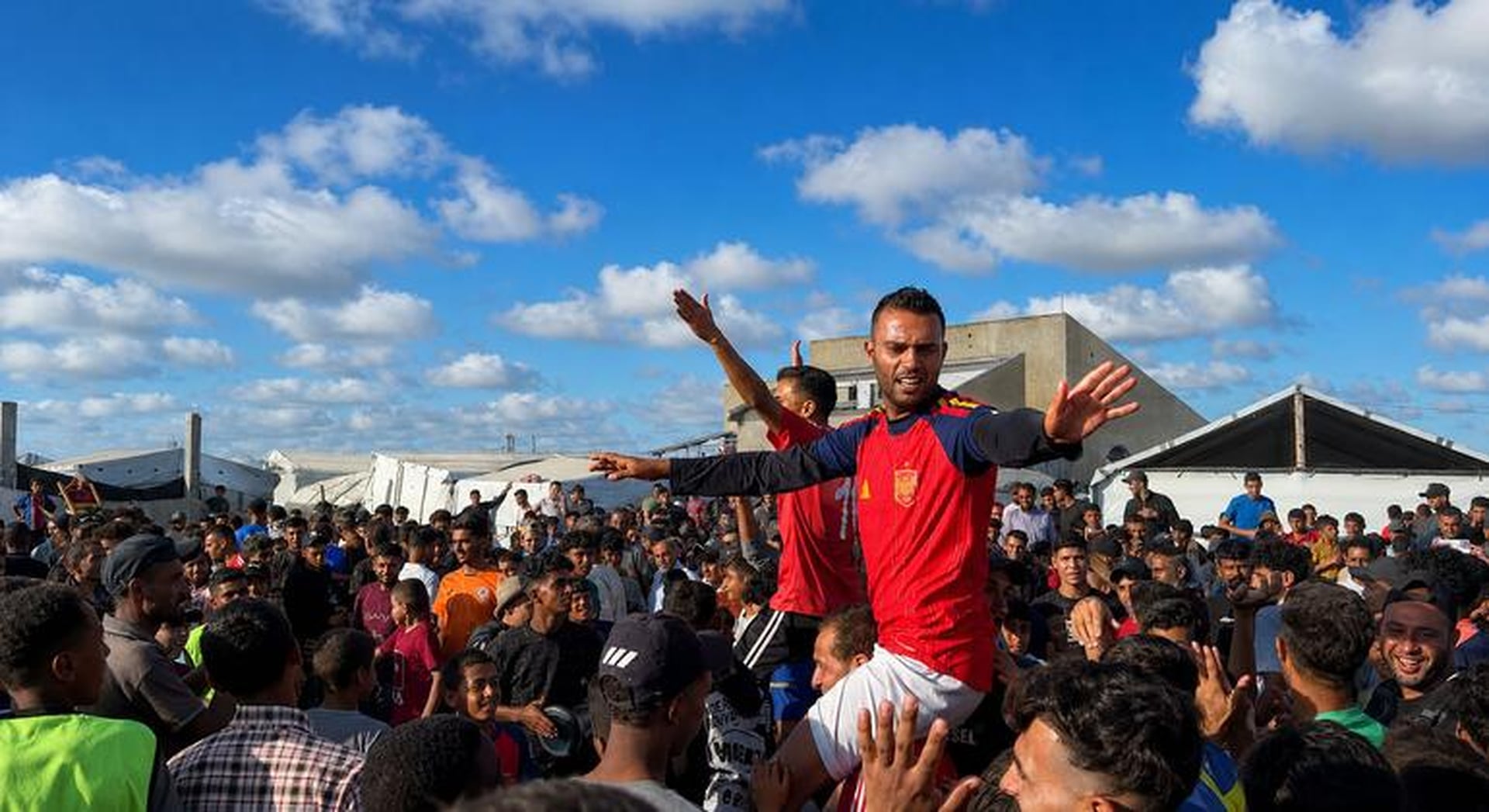
In the heart of the Occupied Palestinian Territory of Gaza, where the landscape bears the scars of prolonged conflict and displacement, an unexpected beacon of hope shines through the dust: the simple joy of football. Amidst the overwhelming challenges faced by thousands living in makeshift camps, overcrowded schools, and damaged structures, organized football matches are providing a crucial, albeit brief, respite. This initiative, spearheaded by a former professional player, transcends mere sport, offering vital psychological relief, fostering community spirit, and nurturing a sense of normalcy in an environment defined by profound hardship.
The human cost of the ongoing crisis in Gaza is immeasurable. Families have been uprooted multiple times, their homes reduced to rubble, and their daily lives marked by uncertainty and deprivation. The sheer scale of displacement has led to immense pressure on already strained resources, with basic necessities like clean water, sanitation, and adequate shelter becoming luxuries. For children and adults alike, the constant exposure to trauma, loss, and instability takes a severe toll on mental health. Anxiety, depression, and post-traumatic stress are pervasive, manifesting in various forms, from withdrawn behavior to heightened aggression. In such a desolate context, opportunities for safe play, social interaction, and emotional expression are not just recreational; they are fundamental to survival and well-being.
It is against this backdrop that the vision of a former professional footballer took root. Witnessing the despair and idleness, particularly among the youth, this individual recognized the transformative power of sport. Driven by a desire to offer more than just material aid, they embarked on organizing football matches, understanding that a sense of purpose and collective activity could be as vital as food and shelter. The initiative began organically, leveraging existing community networks and the universal appeal of the beautiful game. It was a grassroots effort, born from the community's own resilience and a deep understanding of its needs.
The arenas for these games are often far from ideal. Dusty, uneven patches of ground serve as pitches, marked out with stones or discarded fabric. Goals are fashioned from salvaged materials, and the footballs themselves are often worn, patched, or borrowed. Yet, in these humble settings, a vibrant energy ignites. Children and young adults, some donning mismatched boots or playing barefoot, converge with an enthusiasm that belies their circumstances. The air fills with shouts, laughter, and the rhythmic thud of the ball, creating a temporary bubble of normalcy that pushes back against the surrounding devastation. These are not just games; they are moments of pure, unadulterated joy, a collective exhale in a world that rarely allows for one.
The psychosocial impact of these football matches cannot be overstated. For individuals grappling with the deep-seated effects of trauma, engaging in structured play provides a crucial outlet. The physical exertion helps release pent-up stress and anxiety, while the focus required for the game offers a much-needed distraction from intrusive thoughts and memories. The predictability of rules and the routine of regular matches can help restore a sense of order and control in lives that feel utterly chaotic. Moreover, the collective experience of striving towards a common goal, celebrating victories, and learning from defeats fosters emotional resilience, helping participants process their experiences in a healthier, more constructive manner.
Beyond individual well-being, these football initiatives are instrumental in rebuilding the social fabric of shattered communities. In environments where trust can be eroded and social bonds strained by displacement and conflict, team sports offer a powerful mechanism for fostering cohesion. Players learn to communicate, cooperate, and rely on one another, transcending tribal or familial divisions. The shared identity of a team creates a sense of belonging, a vital antidote to the isolation and alienation often experienced by displaced populations. Spectators, too, become part of this collective experience, cheering on their makeshift teams, forging connections, and reinforcing community spirit.
From a physical health perspective, the benefits are equally significant. In conditions where physical activity might be limited due to cramped living spaces or safety concerns, organized football provides essential exercise. This is particularly crucial for children whose physical development can be hampered by sedentary lifestyles and poor nutrition. The games promote cardiovascular health, improve motor skills, and provide a healthy outlet for youthful energy. For many, it's one of the few opportunities to engage in vigorous physical activity, contributing to overall health and vitality in an otherwise challenging environment.
Furthermore, sport acts as a powerful informal classroom, imparting invaluable life skills that are directly relevant to education and future prospects. On the pitch, participants learn about discipline, fair play, and respecting authority—whether it's the referee's call or a coach's instruction. They develop strategic thinking, problem-solving abilities, and the capacity for conflict resolution, all of which are transferable skills vital for academic success and future employment. For youth who may have had their formal education disrupted, these lessons learned through play offer a critical foundation, keeping them engaged and providing a sense of purpose that can deter them from negative influences.
This localized effort in Gaza resonates with a broader global imperative. Across various conflict zones and humanitarian crises worldwide, from refugee camps in Africa to displaced communities in South America, the power of sport to heal, unite, and educate is increasingly recognized. It underscores the universal human need for play, for connection, and for moments of joy, even in the direst circumstances. The resilience demonstrated by the communities in Gaza, and the dedication of those organizing these matches, serves as a poignant reminder of the enduring human spirit and its capacity to find light amidst profound darkness.
However, sustaining such vital initiatives in an environment as challenging as Gaza requires continuous effort and support. Resources for equipment, safe playing spaces, and trained facilitators are often scarce. The ongoing instability poses logistical hurdles and safety concerns. This highlights the critical role of international organizations and NGOs in providing the necessary funding, training, and infrastructure to ensure these programs can continue and expand, reaching more individuals who desperately need them.
Nivaran Foundation, through its global desk, recognizes the profound intersection of health, education, and community well-being exemplified by these football initiatives. Such programs align perfectly with our mission to support holistic development in vulnerable regions, understanding that mental health and social cohesion are as crucial as physical health and formal schooling. They represent a sustainable, community-led approach to addressing complex humanitarian challenges, fostering resilience from within.
Ultimately, the football matches in Gaza are more than just games; they are a testament to hope's enduring power. They are a collective act of defiance against despair, a vibrant assertion of life amidst destruction. Each pass, each goal, each shared laugh on the dusty pitches represents a small victory – a moment of stolen joy, a flicker of normalcy, and a profound reminder that even in the most shattered landscapes, the human spirit can find ways to play, to connect, and to dream of a brighter future. These simple acts of humanity, amplified by global attention and support, offer a pathway not just to temporary respite, but to long-term healing and rebuilding.
Support Nivaran Foundation's global initiatives to bring health, education, and psychosocial support to communities facing extreme adversity.
Talk to Nivaran Global