
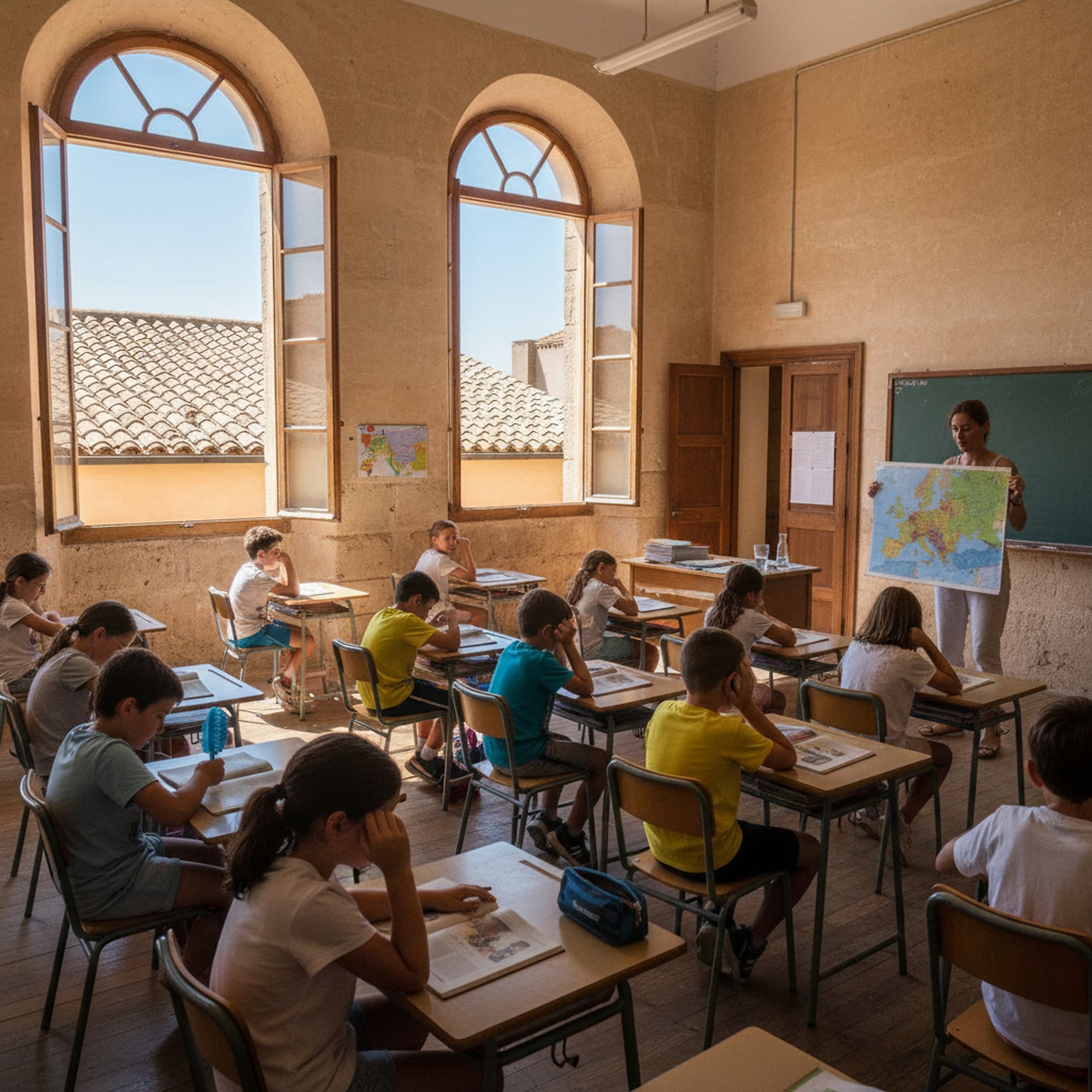
The escalating frequency and intensity of heatwaves, a stark manifestation of a changing global climate, are increasingly disrupting fundamental societal structures, none more critically than the education system. Across continents, but particularly evident in regions like Europe where traditional school infrastructure was not designed for prolonged periods of extreme heat, classrooms are transforming from sanctuaries of learning into stifling environments. As academic calendars, often set decades ago, clash with extended summer heat seasons, millions of students and educators face unprecedented challenges, compromising both health and educational outcomes. This global phenomenon demands urgent attention and adaptive strategies to safeguard the future of learning.
Historically, the European academic year was structured to align with temperate climates, allowing for summer breaks during the warmest months. However, climate change has irrevocably altered this pattern. What were once predictable, short heatwaves are now extended periods of high temperatures, often spilling into late spring and early autumn, precisely when schools are in session. This shift means that children are returning to classrooms or beginning their academic year under conditions that are not only uncomfortable but potentially hazardous. The problem is exacerbated by the prevalence of older school buildings, many constructed before the widespread availability of air conditioning or even adequate ventilation systems, leaving them ill-equipped to cope with sustained high temperatures.
The physiological impact on students and teachers is profound. Elevated classroom temperatures directly impair cognitive function, making concentration difficult and reducing memory retention. Children, whose thermoregulatory systems are still developing, are particularly vulnerable to heat stress, which can manifest as fatigue, headaches, dizziness, and in severe cases, heat exhaustion or heatstroke. Dehydration becomes a constant threat, further diminishing energy levels and focus. For educators, the challenge of maintaining an effective learning environment in oppressive heat is immense, leading to increased stress, burnout, and a potential decline in teaching quality. The cumulative effect is a significant impediment to learning and a detriment to overall well-being.
Beyond immediate health concerns, the prolonged exposure to heat within educational settings has serious implications for academic achievement and equity. When students are too hot to concentrate, learning outcomes inevitably suffer. This can lead to a widening of educational disparities, as schools in socio-economically disadvantaged areas often lack the resources to implement effective cooling solutions, such as air conditioning or comprehensive retrofitting. Such circumstances force difficult choices: either continue in suboptimal conditions, risking health and learning, or close schools, leading to lost instructional time and further disruption to families. The academic calendar, once a stable framework, is now subject to the erratic whims of a heating planet, requiring constant, reactive adjustments that undermine educational continuity.
The infrastructure challenge is monumental. Many existing school buildings worldwide, especially in older urban centers, were designed with minimal consideration for extreme heat. Thick walls, small windows, and poor ventilation, once seen as energy-efficient in cooler climates, now trap heat. Retrofitting these structures with modern cooling systems, such as air conditioning, is often prohibitively expensive, particularly for public school systems already grappling with tight budgets. Furthermore, relying solely on energy-intensive air conditioning raises concerns about increased carbon emissions, creating a paradoxical situation where the solution to a climate problem contributes to its root cause. Sustainable, passive cooling strategies, green infrastructure like shaded playgrounds and green roofs, and improved natural ventilation are vital, yet require significant upfront investment and long-term planning.
While the immediate focus often falls on Europe due to the novelty of such widespread heat impacting its traditional academic schedule, the issue is truly global. Regions in South Asia, Africa, and parts of the Americas have long grappled with extreme heat, and their existing educational infrastructure is often even less prepared. Schools in these areas frequently lack basic amenities like reliable electricity, let alone advanced cooling systems. The extension of heat seasons and the intensification of heatwaves mean that even regions accustomed to high temperatures are experiencing unprecedented conditions, pushing existing coping mechanisms to their breaking point. This global context underscores the urgency for international collaboration and knowledge sharing on climate-resilient school design and educational policy.
The disproportionate impact on vulnerable populations is a critical ethical dimension. Children from low-income families, often attending underfunded public schools, are more likely to be exposed to extreme heat in classrooms. Their homes may also lack adequate cooling, offering no respite. This creates a cycle where environmental injustice exacerbates educational inequality, potentially entrenching socio-economic disadvantages across generations. Addressing this requires not just technological solutions but also targeted funding and policy interventions that prioritize the most vulnerable communities, ensuring that every child has the right to learn in a safe and conducive environment, regardless of their family's economic standing.
In response to these escalating challenges, various short-term and long-term adaptation strategies are being explored and implemented globally. Immediate measures include adjusting school hours to avoid the hottest parts of the day, increasing hydration breaks, encouraging lighter clothing, and utilizing temporary cooling units where feasible. Some regions are even considering shifting academic calendars to align better with new climatic realities, though this presents its own set of logistical and social challenges for families and communities. These reactive measures, while necessary, highlight the systemic nature of the problem and the need for more proactive, comprehensive planning.
For sustainable, long-term resilience, a paradigm shift in school design and urban planning is essential. This involves integrating passive cooling techniques, such as strategic shading, cross-ventilation, and thermal massing, into new school constructions and major renovations. Incorporating green infrastructure, like tree planting around school grounds and green roofs, can significantly reduce ambient temperatures and provide natural insulation. Furthermore, investing in energy-efficient cooling systems that utilize renewable energy sources can mitigate the environmental footprint while ensuring comfort. These architectural and urban planning solutions require significant investment but offer durable, environmentally responsible answers to the heat crisis in schools.
Policy and planning must evolve to meet the demands of a changing climate. Governments and educational authorities worldwide need to develop comprehensive climate adaptation plans for the education sector, including updated building codes, funding mechanisms for retrofitting, and guidelines for managing heat-related emergencies. This also involves fostering a culture of climate literacy within schools, educating students and staff about heat safety, and empowering communities to participate in designing resilient learning environments. International bodies and NGOs have a crucial role to play in facilitating knowledge exchange, providing technical assistance, and advocating for policies that prioritize climate resilience in education globally.
The well-being of both students and educators must remain at the forefront of these discussions. Teachers are frontline workers in this climate crisis, often bearing the brunt of managing classrooms in challenging conditions. Providing them with adequate training, resources, and support to cope with heat stress is paramount. For students, ensuring a learning environment free from the debilitating effects of extreme heat is not just an educational imperative but a fundamental right. A child's ability to learn, grow, and thrive should not be compromised by the environmental consequences of a warming world.
Economically, the costs of inaction far outweigh the investments in adaptation. Learning loss, increased healthcare expenditures due to heat-related illnesses, and the long-term societal impacts of a less educated populace represent significant economic burdens. Proactive investment in climate-resilient school infrastructure and adaptive educational policies can safeguard human capital, promote sustainable development, and ensure that future generations are equipped to navigate a world increasingly shaped by climate change. This is not merely an educational challenge; it is a global development imperative.
In conclusion, the extension of heat seasons and the intensification of heatwaves are posing an unprecedented threat to education systems worldwide. From Europe's baking classrooms to already vulnerable schools in hotter climates, the imperative to adapt is clear and urgent. Addressing this challenge requires a multi-faceted approach encompassing infrastructure upgrades, policy reforms, innovative pedagogical strategies, and a global commitment to climate resilience. By prioritizing the creation of safe, comfortable, and conducive learning environments, we can ensure that climate change does not irrevocably diminish the educational prospects of millions of children, thereby securing a more resilient and equitable future for all.
Support Nivaran Foundation's efforts to advocate for climate-resilient education and health solutions globally.
Talk to Nivaran Global