
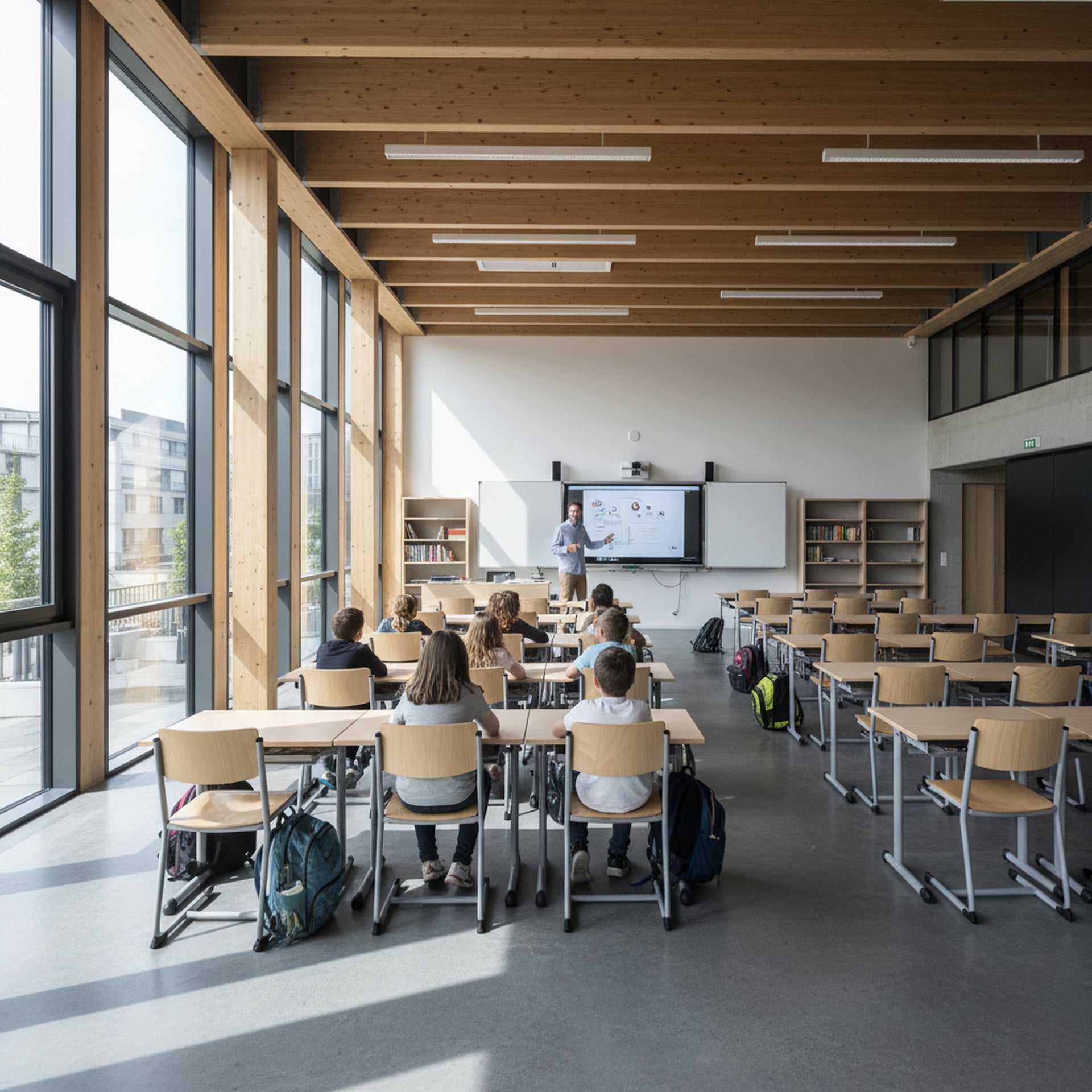
The landscape of global education is undergoing a profound transformation, marked by a paradox: a world with an ever-increasing demand for quality learning, yet simultaneously experiencing a significant decline in the number of students filling its classrooms. This demographic shift, driven primarily by falling birth rates and evolving migration patterns, presents a complex challenge for educational systems worldwide, mirroring localized struggles in metropolitan areas that are now echoing across continents.
From the bustling urban centers of North America to the rapidly aging societies of East Asia and the economically diverse nations of Europe, school districts are confronting the reality of underutilized buildings and dwindling student populations. This phenomenon is not merely a localized administrative headache but a systemic issue with far-reaching implications for funding models, community cohesion, and the very future of educational provision. The core of the problem lies in the shifting demographics that have seen birth rates plummet in many developed and even some developing nations over the past few decades. Factors such as increased access to education and employment for women, rising costs of living, changing societal norms regarding family size, and improved access to family planning have all contributed to this global trend.
The Roots of Decline: A Global Demographic Story
The decline in student numbers is a multi-faceted issue. In many high-income countries, the total fertility rate has fallen well below the replacement level of 2.1 children per woman. Countries like Japan, South Korea, Italy, and Germany have been grappling with this for years, leading to a shrinking pool of young people entering the education system. This trend is now extending to other regions, creating a ripple effect that impacts school planning and resource allocation. Economic uncertainties, including housing affordability and job security, also play a significant role in family planning decisions, often leading couples to delay parenthood or opt for smaller families.
Beyond birth rates, internal migration patterns further complicate the picture. Rural areas in many countries are experiencing an exodus of younger families seeking better economic opportunities or urban amenities, leaving behind aging populations and schools with critically low enrollment. Conversely, while some urban centers might initially see an influx, even these areas eventually feel the pinch as their own birth rates decline or as families move to suburban areas. This uneven distribution of populations creates pockets of overcapacity in some regions and continued pressure in others, making a coherent national education strategy difficult to implement.
Consequences for Educational Infrastructure and Quality
One of the most immediate and visible consequences of shrinking enrollments is the proliferation of empty classrooms and underutilized school buildings. Maintaining these structures incurs significant costs for heating, cooling, repairs, and security, diverting precious resources that could otherwise be invested directly into teaching and learning. School districts are faced with difficult choices: keep schools open with very few students, leading to inefficient resource use and potentially limited program offerings, or consolidate schools, a decision often met with strong community resistance.
Consolidation, while potentially more efficient financially, can have profound social impacts. Schools are often vital community hubs, especially in smaller towns or neighborhoods. Their closure can erode community identity, increase travel times for students, and reduce local access to services. Moreover, the decline in student numbers can lead to a reduction in the diversity of educational programs offered. With fewer students, schools may struggle to justify or fund specialized courses in arts, music, advanced sciences, or vocational training, potentially limiting the educational breadth available to the remaining students. This can create a downward spiral, making shrinking schools less attractive to families and accelerating enrollment decline.
Funding mechanisms often exacerbate these challenges. Many education systems operate on a per-pupil funding model, meaning fewer students directly translate to less funding. This can lead to difficult decisions regarding staffing, potentially resulting in teacher layoffs or an inability to attract and retain high-quality educators. The morale of staff in perpetually under-enrolled schools can also suffer, impacting the overall learning environment. Ensuring equitable access to quality education becomes a significant challenge when resources are stretched thin across a system designed for a larger student body.
Policy Responses and Innovative Solutions
Governments and educational authorities globally are exploring various strategies to address this multifaceted crisis. One common approach involves the repurposing of underutilized school buildings. These facilities, often well-maintained and centrally located, can be transformed into community centers, affordable housing, senior living facilities, vocational training hubs, or even shared spaces for non-profit organizations. Such initiatives not only breathe new life into dormant infrastructure but also integrate the buildings more deeply into the community fabric, offering new services.
Another strategy involves strategic consolidation, though this remains contentious. When implemented, it often requires extensive community engagement and careful planning to mitigate negative impacts. Some districts are exploring innovative educational models, such as multi-age classrooms or specialized magnet programs, to attract students and optimize resource use within existing structures. Investment in technology and distance learning platforms can also help ensure that a broad curriculum remains accessible, even for students in smaller, more remote schools.
Furthermore, some regions are implementing policies aimed at attracting and retaining young families. This can include housing incentives, improved childcare provisions, and enhanced community services. Countries like France have historically invested heavily in family support policies, which, while not solely aimed at school enrollment, have broader demographic impacts. In areas with significant immigration, new arrivals can help stabilize or even boost student numbers, though this also requires robust integration support and planning for diverse student needs.
Looking Ahead: A Call for Proactive Planning
The challenge of shrinking enrollments is not a temporary blip but a long-term demographic trend that requires sustained, proactive planning. Educational systems must move beyond reactive measures and embrace comprehensive strategies that consider future population projections, urban development plans, and community needs. This involves fostering greater collaboration between education departments, urban planners, social services, and local communities to develop integrated solutions.
Ultimately, the goal is to ensure that every student, regardless of where they live or the size of their school, has access to a high-quality, enriching education. This global demographic shift, while presenting significant hurdles, also offers an unprecedented opportunity to rethink and innovate within the education sector. It compels us to consider how schools can evolve to serve not just students, but entire communities, becoming adaptable hubs that respond to the changing needs of society. By embracing flexibility, creativity, and community-centric approaches, nations can transform the challenge of shrinking classrooms into an opportunity for stronger, more resilient educational futures for all.
Support Nivaran Foundation's mission to highlight critical global education challenges and foster informed solutions.
Talk to Nivaran Global