
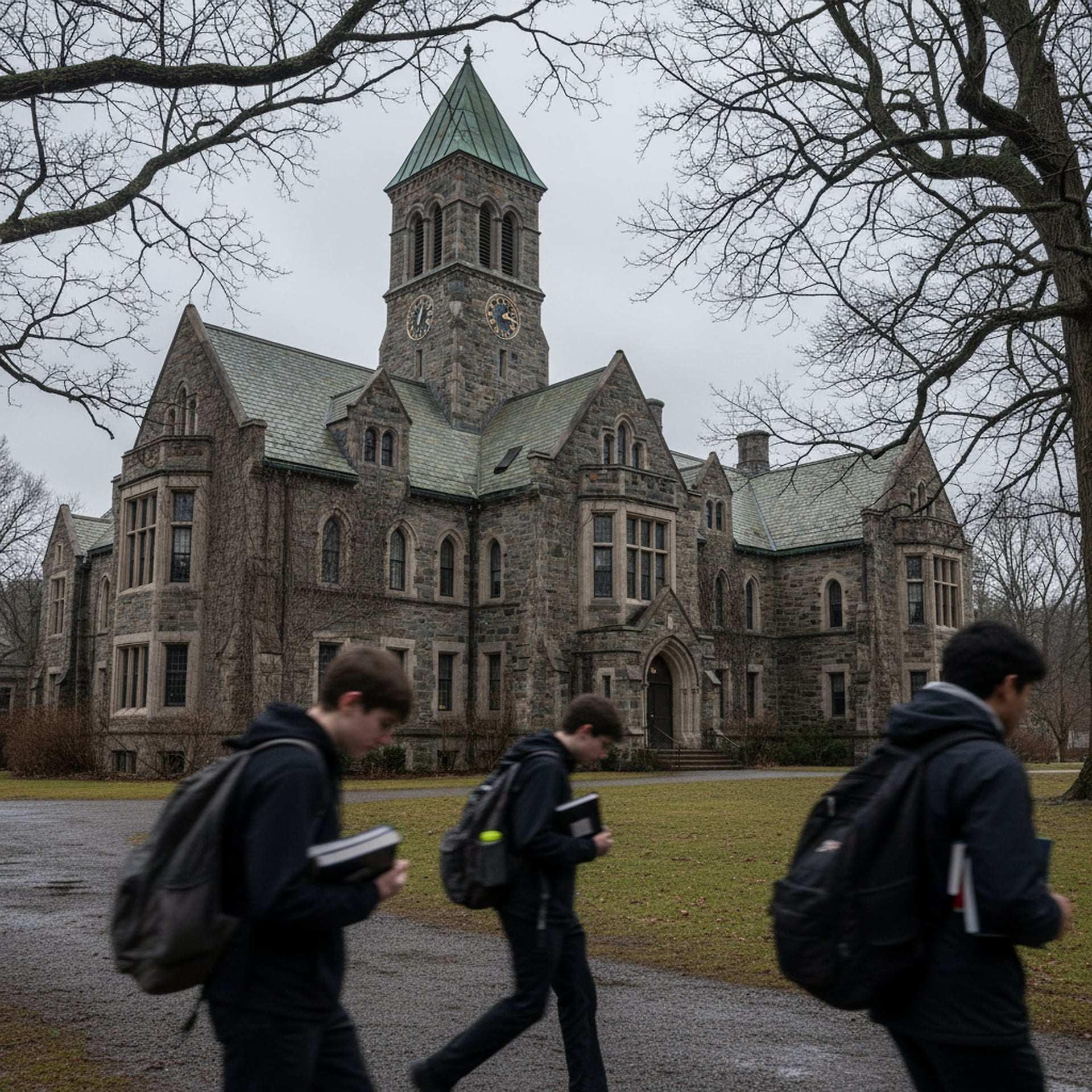
The recent charges filed against a former educator at a prestigious boarding school in Massachusetts have sent ripples of concern far beyond the United States, reigniting urgent global conversations about student safety, teacher accountability, and the pervasive issue of abuse within educational institutions. While the specific allegations involve a former teacher at Miss Hall’s, a well-known boarding school, accused of sexually assaulting two students, the underlying themes resonate universally. These accusations, which detail a pattern of grooming and sexual contact with students as young as sixteen – an age considered legally consensual in Massachusetts – underscore a complex and deeply troubling challenge faced by educational systems across continents: how to adequately protect vulnerable young people from those in positions of trust and authority.
Incidents of teacher misconduct and student abuse are unfortunately not confined to any single nation or type of school. From elite private boarding schools to large public institutions and community learning centers, the inherent power imbalance between educators and students creates fertile ground for exploitation if not rigorously managed and monitored. Globally, countless children spend significant portions of their formative years within school environments, entrusting their safety and well-being to the adults responsible for their education. When this trust is violated, the consequences are profound, affecting not only the immediate victims but also eroding public confidence in educational systems as a whole. The global nature of education, with international students and diverse cultural contexts, further complicates the implementation of uniform safeguarding measures and reporting mechanisms.
The Massachusetts case, particularly its reference to the age of consent, highlights a critical and often contentious aspect of child protection: the legal framework surrounding consent versus the ethical reality of power dynamics. While many jurisdictions set a legal age of consent, the concept of 'consent' itself becomes highly problematic when an an adult in a position of authority, such as a teacher, engages in sexual activity with a minor under their care. Such relationships frequently involve a sophisticated process of 'grooming,' where the adult manipulates, isolates, and emotionally exploits the young person over time, making genuine, uncoerced consent virtually impossible regardless of legal age thresholds. This ethical dilemma challenges legal systems worldwide to consider not just the age of the individuals involved, but also the context of authority, influence, and the potential for psychological manipulation. Different countries grapple with these definitions, leading to varied protections and enforcement, but the moral imperative to protect children from exploitation remains constant.
The long-term repercussions for survivors of such abuse are devastating and far-reaching. Beyond the immediate trauma, victims often grapple with profound psychological distress, including anxiety, depression, post-traumatic stress disorder, and difficulties forming healthy relationships later in life. Their educational trajectories can be severely disrupted, impacting academic performance, future career prospects, and overall personal development. The betrayal by a trusted adult can shatter a young person's sense of safety and self-worth, leading to a prolonged and arduous healing process. Many survivors carry the burden of shame and secrecy for years, often struggling to come forward due to fear of not being believed, societal stigma, or institutional retaliation. The very institutions meant to nurture their growth can become sources of immense pain and distrust, fundamentally altering their worldview.
Addressing this global crisis necessitates a robust and unwavering commitment from educational institutions to implement comprehensive safeguarding policies. This includes rigorous background checks for all staff, mandatory and regular training on child protection and abuse prevention, clear codes of conduct that define appropriate teacher-student boundaries, and transparent reporting mechanisms that empower students, staff, and parents to voice concerns without fear of reprisal. Schools must foster a culture where student well-being is paramount, and any allegations of abuse are taken seriously, investigated promptly, and reported to the appropriate authorities. Furthermore, institutions have a moral and often legal obligation to provide support services for victims, including counseling and access to legal aid, ensuring that the focus remains on the survivor’s healing and justice, rather than institutional reputation.
Despite the existence of policies, the reality of reporting and achieving accountability remains fraught with challenges. Students, especially those in boarding school environments where the institution serves as both home and school, may feel isolated and lack external support networks. The fear of disrupting their education, facing social ostracization, or discrediting a respected figure can be overwhelming. Institutions themselves sometimes face accusations of prioritizing their reputation over student safety, leading to delayed investigations, inadequate responses, or even attempts to silence victims. Legal processes can be lengthy, emotionally draining, and often fail to deliver the sense of justice survivors seek, particularly when local laws, like the age of consent, complicate prosecution. This global pattern of delayed justice and institutional reluctance to fully confront abuse perpetuates a cycle of harm and impunity.
Effective prevention strategies are crucial in breaking this cycle. This involves not only safeguarding policies but also proactive educational initiatives. Comprehensive, age-appropriate education on personal safety, healthy relationships, digital literacy, and consent empowers young people to recognize and report inappropriate behavior. Schools must also educate parents and guardians on the warning signs of abuse and how to support their children. Fostering an open and communicative environment where students feel heard and respected is fundamental. Beyond the classroom, broader societal conversations about power dynamics, accountability, and the protection of children are essential to create a collective vigilance that extends beyond school gates.
The charges in Massachusetts serve as a stark reminder of the continuous vigilance required to protect children in educational settings globally. This is not merely a legal issue but a profound societal challenge demanding a coordinated, compassionate, and unwavering response. Every child deserves to learn and grow in an environment free from fear, exploitation, and abuse. As communities worldwide strive to uphold the highest standards of education, they must simultaneously commit to establishing impenetrable safeguards, fostering cultures of accountability, and ensuring that the trust placed in educators is never betrayed. The collective responsibility to protect the most vulnerable among us is a global imperative that transcends borders and legal technicalities, demanding constant re-evaluation and proactive measures to secure the safety and well-being of all students.
Support Nivaran Foundation's efforts to advocate for safer educational environments and robust child protection policies globally.
Talk to Nivaran Global