
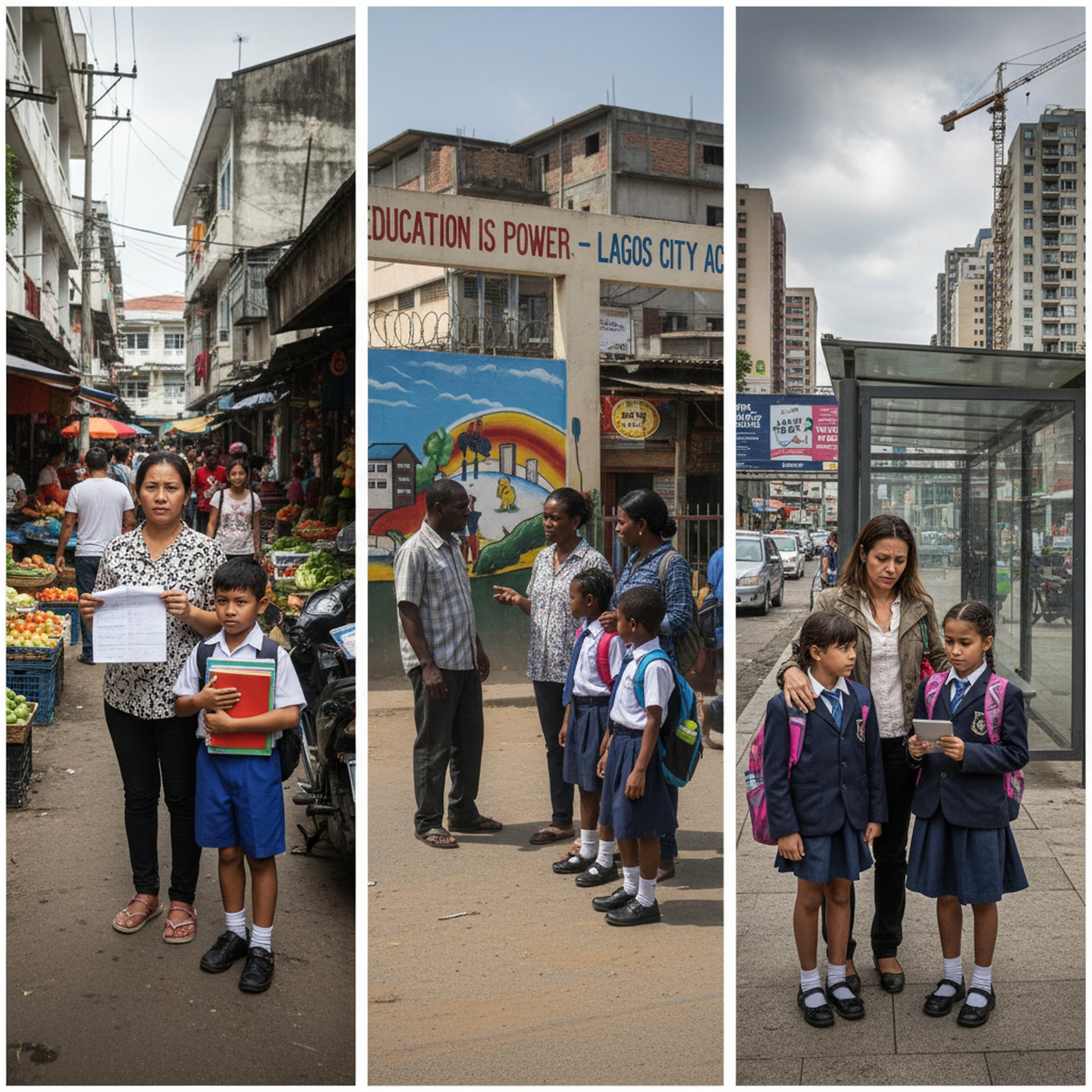
The global landscape of education is increasingly defined by a paradox: while the demand for quality learning has never been higher, the escalating costs associated with it are creating an unprecedented affordability crisis. This challenge, once primarily discussed in specific regional contexts, has now become a universal concern, threatening to deepen existing economic divides and redefine access to opportunity across continents. From bustling metropolises to remote rural communities, families are grappling with the immense financial burden of securing a robust education for their children, leading to widespread anxiety and a growing fear that a child's potential is increasingly tied to their parents' economic standing rather than their inherent talent or dedication. This pervasive issue is not merely an economic problem; it is a fundamental threat to social mobility, national development, and the very promise of an equitable future.
The rising cost of education is a multifaceted phenomenon driven by a confluence of factors. At the primary and secondary levels, even in systems traditionally considered public, hidden costs such as uniforms, textbooks, transportation, and supplementary tutoring can accumulate to become prohibitive for low-income families. In many developing nations, the shift towards private schooling, often perceived as offering superior quality due to better resources and smaller class sizes, has created a two-tiered system where only the affluent can afford the best. Globally, the demand for specialized programs, advanced technology integration, and highly qualified educators further drives up operational expenses, which are inevitably passed on to students and their families. At the tertiary level, tuition fees for universities have soared in numerous countries, often outpacing inflation and wage growth. This is compounded by living expenses, international student fees, and the increasing necessity for postgraduate qualifications in competitive job markets. The result is a generation facing daunting student loan debts or, worse, being entirely priced out of higher education, regardless of their academic merit.
This escalating financial barrier is profoundly deepening economic divides, exacerbating inequalities that already plague societies worldwide. For the wealthiest segments of the population, the rising costs are manageable, allowing them to invest heavily in elite institutions, private tutors, and extracurricular activities that provide a significant advantage in competitive admissions processes. This creates a self-perpetuating cycle where privilege begets further privilege, concentrating educational and subsequent economic opportunities within a narrow band of society. For middle-income families, the pressure is immense. Many are forced to make significant sacrifices, diverting funds from other essential needs, taking on substantial debt, or working multiple jobs to afford what they perceive as a necessary investment in their children's future. This "middle-class squeeze" is a global phenomenon, leading to widespread financial strain and psychological stress. Meanwhile, low-income families often face insurmountable obstacles, forcing them to settle for under-resourced public schools or, in the worst cases, withdraw children from education altogether, particularly girls, who are often the first to be pulled out to contribute to household income or care for younger siblings. This stark disparity undermines the very principle of education as an equalizer and a pathway to upward mobility.
The global educational landscape has also become an arena of intense competition, further fueled by the scarcity of genuinely high-quality, affordable options. Parents and students worldwide are caught in a relentless race for admission to prestigious schools and universities, believing these institutions hold the key to future success. This competitive environment manifests in various ways: from rigorous entrance exams and interviews for even primary school admissions in some Asian countries to the elaborate application processes and extracurricular "arms race" seen in Western nations. The pressure extends beyond academics, encompassing sports, arts, and community service, all aimed at creating a standout profile. This intense competition often leads to significant mental health challenges for students, including stress, anxiety, and burnout, as they navigate an educational system that increasingly values performance and credentials over holistic development. The demand for supplementary education, such as private tutoring and test preparation services, has exploded globally, creating a multi-billion-dollar industry that further advantages those who can afford it, effectively privatizing access to competitive edge.
The long-term societal ripples of this educational inequality are profound and far-reaching. Nations that fail to provide equitable access to quality education risk stifling their human capital development, leading to a "brain drain" as talented individuals seek opportunities elsewhere, or a loss of potential from those who never get the chance to develop their skills. This can hinder economic growth, innovation, and overall societal progress. Furthermore, a widening educational gap can exacerbate social stratification, leading to increased social unrest and political instability as segments of the population feel marginalized and deprived of opportunities. It perpetuates cycles of poverty across generations, making it incredibly difficult for individuals and communities to break free from economic disadvantage. The promise of education as a cornerstone of democracy and an engine for shared prosperity remains elusive if access is dictated by wealth rather than merit.
Addressing this global crisis requires a concerted, multi-faceted approach involving governments, international organizations, civil society, and the private sector. Policy discussions worldwide are exploring various solutions, including increased public investment in education infrastructure and teacher training, the expansion of scholarship and financial aid programs for disadvantaged students, and the implementation of innovative financing models that make quality education more accessible. The potential of digital learning platforms and open educational resources is also being explored as a means to democratize access, though challenges related to digital divides and quality assurance remain. Vocational training and skills-based education are gaining renewed importance as pathways to employment, offering alternatives to traditional academic routes. International cooperation and knowledge sharing are crucial, allowing countries to learn from successful models and adapt strategies to their unique contexts. Ultimately, a global commitment to viewing education as a fundamental human right and a public good, rather than a commodity, is essential to reverse these troubling trends.
The Nivaran Foundation stands at the forefront of advocating for and supporting initiatives that champion equitable access to education and health across the globe. We believe that every individual, regardless of their socioeconomic background or geographical location, deserves the opportunity to receive a quality education that empowers them to realize their full potential and contribute meaningfully to their communities. The current global affordability crisis in education is a stark reminder of the urgent need for collective action, innovative solutions, and unwavering commitment to ensure that education remains a beacon of hope and a pathway to a brighter future for all, not just a privileged few. It is a challenge that demands our immediate attention and sustained effort to build a world where learning truly knows no bounds.
Support Nivaran Foundation's efforts to champion equitable access to education and health for communities worldwide.
Talk to Nivaran Global