
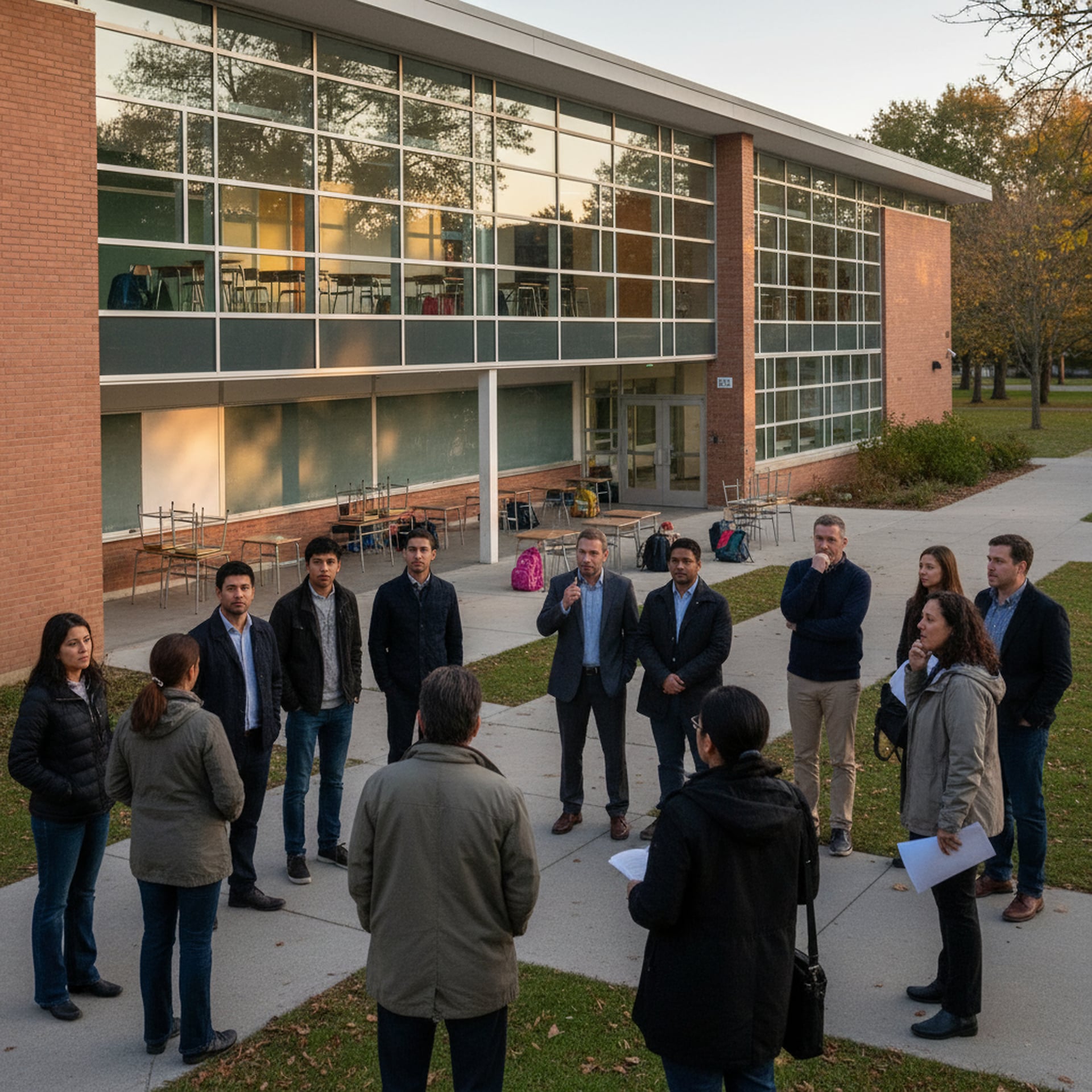
A silent demographic shift is sweeping across continents, profoundly reshaping the landscape of public education. From bustling metropolises to quiet rural towns, declining birth rates are leading to a stark reality: fewer children in classrooms. This global phenomenon, vividly illustrated by the challenges now confronting school districts in nations like the United States, demands urgent attention and innovative solutions as education systems worldwide grapple with underutilized infrastructure, budget shortfalls, and the difficult decisions surrounding school closures.
The roots of this educational crisis lie deep within evolving societal structures and economic realities. Globally, a confluence of factors contributes to falling fertility rates. Economic pressures make child-rearing increasingly expensive, with costs for housing, healthcare, and education escalating. Increased access to education and career opportunities for women in many parts of the world has empowered them to delay parenthood or choose smaller families, prioritizing personal and professional aspirations. Urbanization, leading to smaller living spaces and different lifestyle choices, also plays a role. Furthermore, widespread access to family planning and changing societal values regarding family size and personal autonomy have contributed to a sustained decline in birth rates across diverse cultures and economies.
This demographic shift places immense strain on educational systems designed for a bygone era of higher enrollment. One of the most immediate and significant impacts is financial. Many public education systems, particularly in regions like North America and parts of Europe, rely heavily on per-pupil funding models. Fewer students directly translate to substantial budget deficits, forcing districts to make agonizing choices. This can mean cutting essential services, reducing the number of teachers and support staff, or, in some cases, attempting to raise local taxes, often an unpopular and challenging proposition for communities already facing economic pressures.
Beyond immediate financial woes, the infrastructure burden is considerable. Maintaining large school buildings, often decades old and designed for a much larger student body, becomes an unsustainable drain on resources. Empty classrooms, underutilized wings, and sprawling campuses still require heating, cooling, lighting, and structural upkeep. These operational costs divert funds that could otherwise be invested in enhancing educational programs, technology upgrades, or professional development for educators. The sheer physical presence of these underutilized assets represents a significant challenge for long-term planning.
The staffing dilemmas are equally complex. A sustained decline in student numbers inevitably leads to reduced demand for teachers. This can result in hiring freezes, difficult layoffs, and a less attractive environment for new educators entering the profession. Such conditions risk creating a 'brain drain' within the education sector, particularly in areas already struggling to attract and retain qualified talent. The loss of experienced educators not only impacts the quality of instruction but also diminishes institutional knowledge and mentorship opportunities for newer staff.
Programmatic erosion is another critical consequence. With smaller student populations, schools often struggle to offer a diverse range of electives, advanced placement courses, arts programs, sports, and specialized support services. The economies of scale that once allowed for a rich and varied curriculum disappear, potentially diminishing the quality and breadth of education available to the remaining students. This can exacerbate educational inequities, as students in shrinking districts may have fewer opportunities compared to their peers in more stable or growing areas.
Perhaps most profoundly, the closure of a school can unravel the very fabric of a community. Schools are often more than just places of learning; they are the heart of communities, serving as social hubs, polling stations, emergency shelters, and centers for local events. Their closure can lead to a profound loss of community identity, reduced property values, and a pervasive sense of abandonment. This impact is particularly acute in rural or underserved areas, where a school might be the last remaining public institution, its closure signaling a broader decline. Furthermore, school closures often disproportionately affect marginalized communities, low-income families, or students with special needs, who may face longer commutes, disruption to established support networks, and reduced access to vital resources.
This phenomenon is not unique to any single nation. While countries like the United States are now grappling with its visible effects, many nations in Europe and East Asia have been navigating similar demographic shifts for decades. Countries such as Japan, South Korea, Italy, and Germany have long faced the challenges of aging populations and declining youth cohorts, leading to extensive school consolidations and innovative approaches to repurposing educational infrastructure. These varied global experiences offer valuable lessons, highlighting that there is no single solution, but rather a need for context-specific, adaptable strategies that prioritize both fiscal responsibility and educational quality.
In response, educational leaders and policymakers worldwide are exploring a range of strategies for adaptation and resilience. School consolidation and mergers, while often facing strong community resistance, are being pursued to optimize resources by combining smaller schools or even entire districts. Another innovative approach involves repurposing empty school buildings. These facilities can be transformed into community centers, affordable housing, vocational training hubs, senior living facilities, or even commercial spaces, generating much-needed revenue for the district or local government. Such initiatives require careful planning and strong community engagement to ensure the new uses align with local needs and aspirations.
Innovative funding models are also being explored, moving beyond strict per-pupil counts to incorporate broader community support or state-level stabilization funds that can buffer against demographic fluctuations. Curriculum innovation, paradoxically, can also emerge from this challenge; smaller class sizes, while financially demanding, can open opportunities for more personalized learning approaches, project-based learning, and stronger teacher-student relationships, potentially enhancing educational outcomes. Proactive community engagement is paramount, involving parents, local leaders, and residents early in discussions about potential changes to build consensus and foster community-driven solutions. Broader governmental policies aimed at supporting families, such as improved childcare, parental leave, and housing subsidies, could also indirectly influence birth rates over the long term, though their impact is often slow and complex.
Looking ahead, the educational crisis stemming from declining birth rates is a harbinger of broader societal transformations. Fewer young people will impact future workforces, strain social security systems, and alter the economic dynamism of nations. The challenges faced by schools today are a microcosm of these larger demographic shifts, demanding comprehensive, forward-thinking policy responses. It is imperative for global dialogue and shared learning to navigate these unprecedented demographic changes effectively, ensuring that every child, regardless of population trends, continues to receive a high-quality education that prepares them for a rapidly evolving world.
Support Nivaran Foundation's mission to foster resilient communities and equitable education systems worldwide amidst evolving global challenges.
Talk to Nivaran Global