
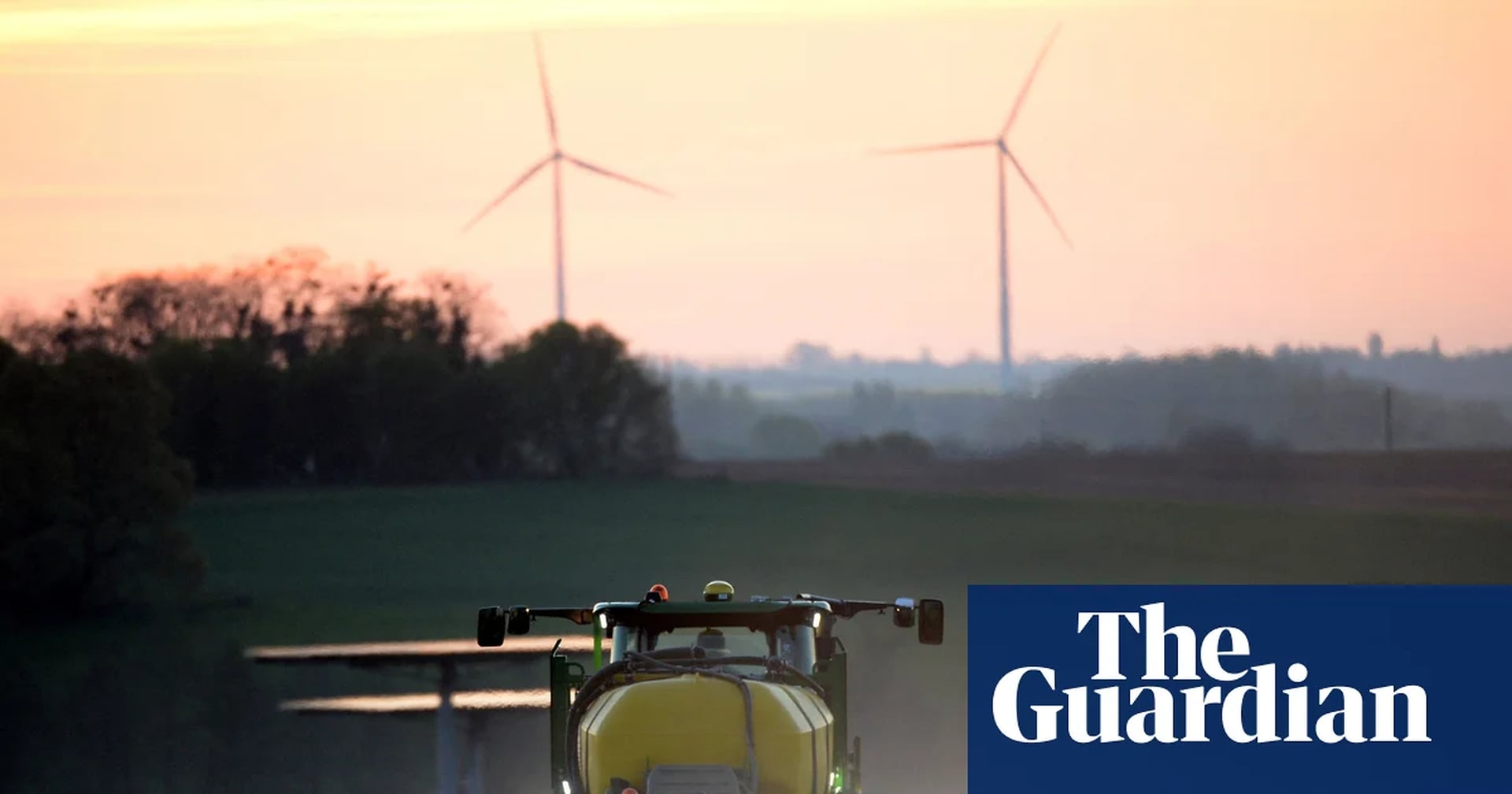
Across vast agricultural landscapes worldwide, a potent chemical has become an indispensable tool for farmers, yet its pervasive use is now ringing alarm bells among public health advocates and environmental scientists. Glyphosate, the active ingredient in many popular herbicides, has seen its global application skyrocket tenfold over the past three decades, transforming farming practices but simultaneously igniting a fierce debate over its long-term implications for human health and ecological balance. What began as an innovative solution for crop management in specific regions has evolved into a global dependency, prompting campaigners to demand urgent action to break what they term an 'addiction' to this controversial chemical. Concerns extend beyond individual fields, touching upon global food systems, public health policy, and the very fabric of sustainable agriculture.
The story of glyphosate's widespread adoption traces back to the damp glens of Scotland in the 1980s. Faced with the perennial challenge of uneven crop drying in their often-soggy climate, Scottish farmers pioneered a novel technique: applying glyphosate to their wheat fields a week or two before harvest. This practice, known as pre-harvest desiccation, effectively killed the crop, accelerating drying and ensuring a more uniform harvest. At the time, glyphosate was hailed as a revolutionary herbicide, celebrated for its broad-spectrum efficacy against most plant life while purportedly sparing animal organisms. Its apparent selectivity made it ideal for this new application. The success observed in Scotland quickly caught the attention of agricultural communities in other wetter, colder regions across the globe, laying the groundwork for glyphosate's eventual dominance in modern agriculture and setting the stage for its current global scrutiny.
The initial success and subsequent global diffusion of pre-harvest desiccation marked only the beginning of glyphosate's ascent. Over the past 30 years, its overall use has escalated dramatically, witnessing a staggering tenfold increase. This surge is not solely attributable to desiccation but also to the widespread adoption of genetically modified (GM) crops engineered to be glyphosate-resistant. These 'Roundup Ready' crops allowed farmers to spray herbicides directly over their fields, killing weeds without harming the cash crop, thereby simplifying weed management and increasing yields. The economic incentives for farmers were compelling: reduced labor costs, enhanced efficiency, and greater crop predictability. For large-scale industrial agriculture, glyphosate offered a seemingly perfect solution to complex weed control challenges, contributing to the intensification of farming practices globally. This economic imperative cemented glyphosate's position as the world’s most widely used herbicide, embedding it deeply into the fabric of global food production.
Despite its agricultural ubiquity, glyphosate's safety profile has become a subject of intense and often contentious scientific and public debate. While industry studies have consistently maintained its safety when used as directed, a growing body of independent research and public health advocacy groups have raised serious concerns. A pivotal moment came in 2015 when the International Agency for Research on Cancer (IARC), a specialized cancer agency of the World Health Organization (WHO), classified glyphosate as 'probably carcinogenic to humans.' This classification, based on 'limited evidence' of cancer in humans and 'sufficient evidence' in experimental animals, ignited a global firestorm, leading to numerous lawsuits, regulatory reviews, and heightened public anxiety. Beyond carcinogenicity, other health concerns have emerged, including potential links to endocrine disruption and adverse effects on the human gut microbiome. Critics argue that exposure, particularly chronic low-level exposure through diet or environmental contact, warrants far greater scrutiny. The complexity of these health claims makes definitive conclusions challenging, yet accumulating evidence fuels calls for precautionary action.
The environmental footprint of glyphosate extends beyond direct human health concerns, impacting ecosystems and biodiversity on a global scale. Its broad-spectrum nature means it indiscriminately kills a wide range of plants, not just target weeds. This can lead to a significant reduction in plant diversity in agricultural areas and surrounding habitats, subsequently affecting insect populations, particularly pollinators like bees, which rely on diverse flora for food. The decline of pollinator populations is a critical global issue with profound implications for food security and ecosystem health. Furthermore, concerns have been raised about glyphosate's persistence in soil and water, its potential to impact soil microbial communities essential for nutrient cycling, and its runoff into aquatic environments. While proponents argue that glyphosate is quickly degraded, its widespread and continuous application means that environmental exposure remains a constant and evolving challenge, contributing to broader concerns about the long-term sustainability of current agricultural practices.
Navigating the regulatory landscape surrounding glyphosate has proven to be a complex and often contradictory endeavor. While some jurisdictions, particularly in Europe, have moved towards restricting or banning its use, others, including major agricultural powers, continue to approve its application, often citing a lack of conclusive evidence of harm from their own assessments. This global divergence creates a fragmented regulatory environment, making it difficult to establish unified international standards for chemical safety. Campaigners worldwide are increasingly vocal, demanding that governments and international bodies take decisive action to break the 'addiction' to glyphosate. They advocate for a precautionary principle, urging policymakers to prioritize public health and environmental protection over short-term agricultural efficiencies. These demands include more stringent independent research, transparent risk assessments, and a clear roadmap for phasing out the herbicide. The challenge lies not only in overcoming powerful industry lobbying but also in providing viable, economically feasible alternatives for farmers.
The intensifying debate around glyphosate has spurred a renewed focus on developing and implementing sustainable agricultural alternatives that can maintain productivity without relying on controversial chemical inputs. Regenerative agriculture, a holistic approach emphasizing soil health, biodiversity, and ecosystem resilience, offers promising pathways. Practices such as no-till farming, cover cropping, and diverse crop rotations can significantly reduce weed pressure and the need for herbicides. Mechanical weeding, though more labor-intensive, provides a chemical-free option for weed control. Integrated Pest Management (IPM) strategies combine various biological, cultural, physical, and chemical tools to minimize risks to human health and the environment, often drastically reducing reliance on broad-spectrum herbicides. While transitioning to these methods may require initial investments, proponents argue that the long-term benefits—healthier soils, reduced environmental impact, and potentially higher quality produce—outweigh the challenges. Supporting farmers through this transition is crucial for widespread adoption and fostering a truly sustainable global food system.
The global reliance on glyphosate represents a critical juncture for public health and environmental policy. What began as an agricultural innovation has evolved into a complex challenge, pitting economic efficiencies against growing concerns for human well-being and ecological integrity. As campaigners continue to press for action, the imperative is clear: to foster agricultural practices that are both productive and truly sustainable, safeguarding the health of populations and the planet for future generations. The ongoing scientific scrutiny, coupled with public demand for safer food systems, underscores the urgent need for a global re-evaluation of our relationship with chemical agriculture and a concerted shift towards more resilient and health-conscious alternatives.
Support Nivaran Foundation's independent journalism on critical global health issues like pesticide impact and sustainable agriculture.
Talk to Nivaran Global