
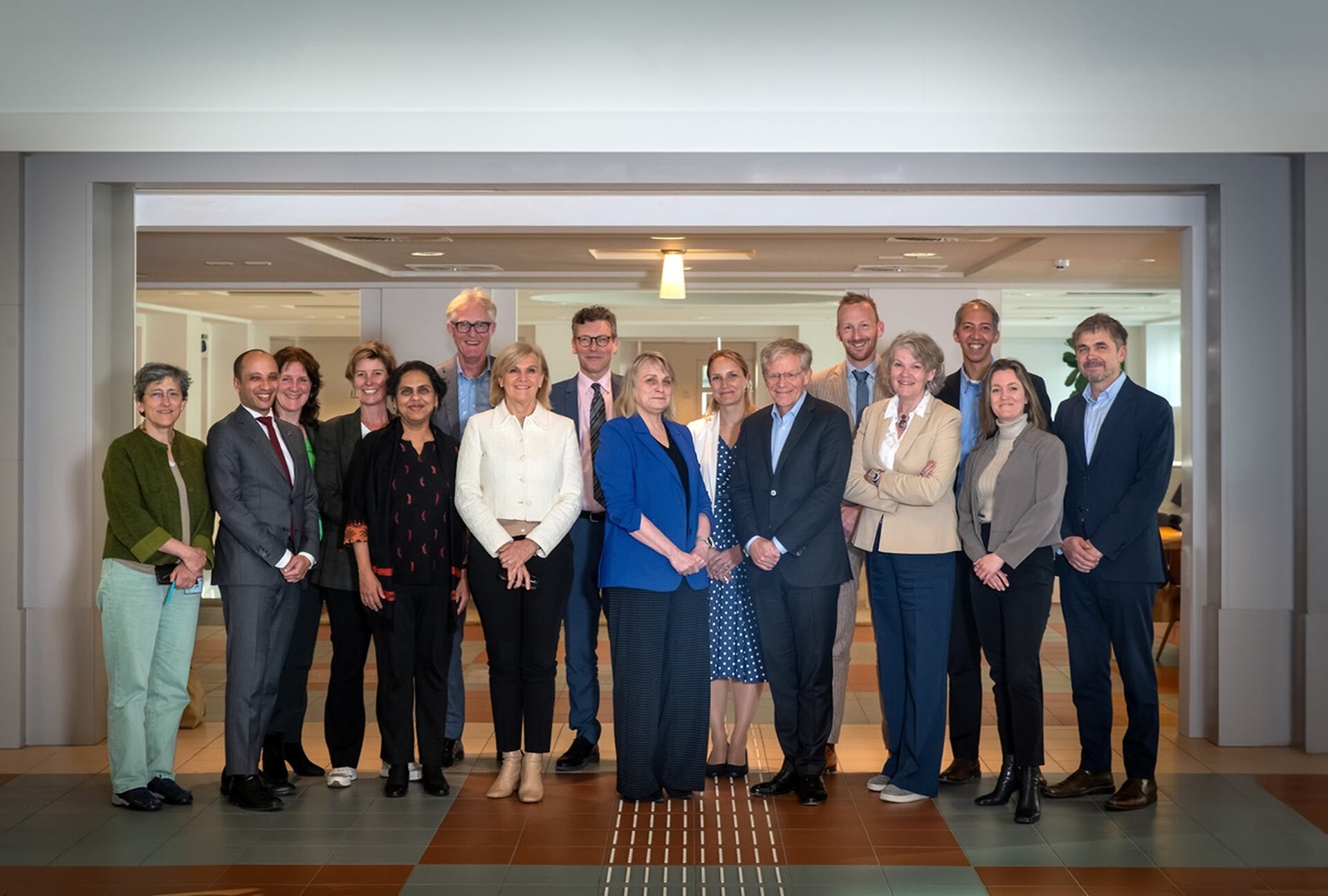
On August 02, 2026, one of the clearest global signals came through WHO.INT: Enhancing Global Health and Well-Being: WHO and the Netherlands strengthen their Partnership. The line may read like a headline, but the implications are operational. WHO and Netherlands Strategic Dialogue in The Hague, Netherlands 10 April 2024. Credit: Michel Mees Photography The WHO and the Netherlands convened in The Hague on 10 April 2024, to discuss joint priorities and alignment between the Dutch Global Health Strategy and WHO’s key strategic goals, marking a new milestone in their longstanding partnership. Rooted in the Netherlands' unwavering commitment to global health, human rights, and universal access to comprehensive health services, the collaboration between the WHO and the Netherlands is instrumental in addressing global health challenges and fostering health and well-being, worldwide and in the country. Against the backdrop of ongoing conflicts, disasters, and the escalating impact of climate change, and the interconnectedness of the Dutch public health landscape in the Netherlands with global health challenges, this year’s Strategic Dialogue emerged as a critical platform for reflecting on this partnership’s long-term vision. “In this Strategic Dialogue, throughout all sessions, WHO and the Netherlands showed a commitment to cooperation and to deepening their partnership based on the strong alignment between their respective priorities and objectives”, said Ms Marjolijn Sonnema, Director General for Public Health at the Netherlands’ Ministry of Health, Welfare and Sport. A key outcome of the Strategic Dialogue was the recognition of the alignment between the Dutch Global Health Strategy and the WHO's forthcoming 14th General Programme of Work, paving the way for synergies in areas such as health system strengthening, pandemic preparedness, climate change and health, anti-microbial resistance (AMR) and mental health support. "At a time when inequity in health and in access to essential health services and financial protection is increasing, disproportionately impacting the poor and most vulnerable, the Netherlands stands as a global health leader and trusted WHO partner. With shared priorities and commitment to sexual and reproductive rights, gender equity, health systems, security, climate resilience, and mental health, we look forward to strengthening our partnership to enhance the health and well-being of all, globally and in the Netherlands", said Dr Bruce Aylward, WHO Assistant Director-General, Universal Health Coverage, Life Course. WHO acknowledged the Netherlands' global leadership as a flexible donor, with an agreement around the imperative to ensure WHO's financing is more sustainable, through the inaugural WHO Investment Round. This WHO initiative aims to mobilize predictable, sustainable and flexible resources essential for the WHO to respond swiftly and effectively to global health challenges and improve health outcomes, particularly for vulnerable populations. Addressing contemporary challenges such as geopolitical tensions while seizing opportunities for advancing global health objectives were also on the table during the dialogue. Both parties stressed the importance of sustained collaboration to address pressing health issues comprehensively. Taking stock of the joint achievements since the previous strategic dialogue in 2022 In 2022, the Strategic Dialogue between the Netherlands and WHO called on both partners to enhance synergies between WHO priorities and the new Dutch Global Health Strategy. Implementing this approach, the Netherlands and WHO: Expanded their cooperation to new areas of joint interest, e.g., climate change and health; Renewed their longstanding cooperation on Water, Sanitation and Hygiene and Mental Health and Psychosocial Support in health emergencies and humanitarian settings; Improved the flexibility and predictability of the Netherlands’ financial support through renewed General Arrangements with the Ministry of Foreign Affairs (2022-2025) and the Ministry of Health, Welfare and Sport (2024–2028) demonstrating the Netherlands’ commitment to WHO’s sustainable financing; Hosted together the 2nd World Local Production Forum in the Netherlands; Continued and deepened their technical cooperation through secondments, Junior Professional Officers and the Collaborative Centres. Show less Show more The outcomes of the 2024 dialogue will inform future collaboration between the Netherlands and the WHO, so that efforts are aligned, and the optimal use of resources is helps achieve improved health outcomes worldwide. The enduring partnership between the Netherlands and the WHO stands as a cornerstone in the global health landscape, reflecting a shared commitment to advancing health and well-being globally. ----------------- The Netherlands is a key supporter and strategic partner of the WHO. In 2022- 2023, the Netherlands was one of the top five flexible WHO contributors with nearly US$ 19 million in core voluntary contributions. Overall, the Netherlands contributed more than US$ 106 million to the WHO in 2022 - 2023, of which US$ 93 million, nearly 90%, was voluntary funding. The Netherlands also supports the WHO's technical expertise through secondments of staff and helps boost young people's careers in public health via the WHO's Junior Professional Officer Programme. This demonstrates the Netherlands' commitment through its Ministry of Foreign Affairs and Ministry of Health, Welfare and Sport to the WHO’s central role in the global health architecture. Through this support, the Netherlands contributes to crucial activities in the areas of sexual and reproductive health, water and sanitation, mental health in emergencies, emergency preparedness, tuberculosis, One Health, primary health care, antimicrobial resistance, while facilitating cooperation with top Dutch institutions. See more information on the partnership between Netherlands and WHO. In moments like this, the real question is not only what happened, but what gets delayed next: a vaccination schedule, a school meal chain, a maternal referral, or a teacher posting in a district where one interruption can close an entire service corridor.
Health and education are often discussed in separate policy rooms, yet in real communities they are a single daily system. When healthcare access weakens, school attendance drops because children are sick, caregivers are absent, and household budgets are redirected to emergency treatment. When education continuity weakens, health outcomes decline because prevention messages, early warning communication, and basic protective behaviors lose reach. A global development therefore has local consequences long before ministries issue formal guidance.
This is why credibility of source matters as much as speed. Information that is merely loud can push organizations toward reaction theater, while verified reporting supports disciplined action. For frontline teams, discipline means triaging what to monitor first, what to communicate publicly, and which operating assumptions must change before the next shift. The value of a strong signal is not drama. The value is lead time. Lead time is what converts uncertainty into preparedness.
The current signal from WHO.INT sits at the intersection of financing pressure, workforce strain, and uneven access. In many countries, the same local institutions are expected to expand services while absorbing budget volatility, higher caseload complexity, and growing public expectations. That mismatch does not fail all at once. It fails in sequence: first wait times, then coverage reliability, then trust. Once trust breaks, both clinical care and learning continuity become harder to stabilize.
A major blind spot in global commentary is the assumption that policy announcements automatically become implementation reality. Field operations show the opposite. Every policy has a translation gap between central intent and frontline execution. In health, that gap appears as stockouts, referral friction, and uneven triage quality. In education, it appears as absenteeism, content discontinuity, and widening attainment differences. Reporting that ignores this translation gap misses where people actually experience risk.
Another overlooked layer is time. Communities do not experience policy on quarterly timelines. They experience it in daily routines: whether a clinic opens on schedule, whether medicines are available, whether children can safely stay in class, and whether transport remains affordable. A global update matters when it changes those routines, even subtly. Repeated small disruptions accumulate into long-term harm, especially for households already operating with narrow margins.
From a preparedness perspective, the correct response is not panic publishing. It is structured scenario work. If the signal intensifies, what fails first? If it stabilizes, what recovery actions can reduce future fragility? If it reverses, what should remain because it improved resilience anyway? Organizations that pre-define these branches make better decisions under pressure because they are not starting from zero each time a new headline appears.
The public conversation also needs a sharper equity lens. The same global trend can produce very different outcomes depending on geography, income, disability status, migration status, and gender. In better-connected regions, shocks are absorbed by redundancy. In underserved regions, shocks are absorbed by people. Families pay with time, missed wages, deferred treatment, and interrupted learning. That transfer of burden from systems to households is where policy failure becomes social injustice.
For health systems, practical safeguards include tighter early-warning loops, transparent stock monitoring, and referral pathways that remain usable during stress. For education systems, safeguards include continuity plans that protect attendance, reduce dropout risk, and preserve teacher support. Neither set of safeguards is expensive compared with the long-run cost of unmanaged disruption. What is expensive is waiting until service collapse becomes visible in national indicators.
For institutions communicating with the public, clarity is a core intervention. Communities can absorb bad news when information is precise, honest, and actionable. They struggle when messaging alternates between reassurance and alarm with no operational detail. Good communication states what changed, what has not changed, who is affected first, and what concrete steps are available now. That structure reduces fear and improves compliance without sacrificing truth.
For Nivaran's global desk, the standard is simple: follow credible sources, translate implications into human outcomes, and keep the analysis grounded in service continuity. We do not treat health and education as abstract sectors. We treat them as the core infrastructure of dignity. When global signals indicate stress, our responsibility is to map consequence early and publish with enough depth that teams, partners, and readers can act intelligently.
The strongest reporting is not the loudest reporting. It is the reporting that helps decision-makers protect people before systems drift into preventable failure. This update should be read in that spirit: as an early operational map, not a passing headline. If the world is entering a more volatile cycle for public services, then speed must be paired with rigor, and urgency must be paired with accountability. That is how public trust is earned and how outcomes are defended.
There is also a governance lesson here. Governments and institutions that publish assumptions, thresholds, and contingency plans before disruption tend to recover faster than those that communicate only after failure becomes visible. Transparency is not a communications style; it is an operating model. It gives clinicians, school leaders, and local administrators the confidence to escalate early, share constraints, and coordinate across sectors without waiting for perfect certainty. In complex systems, delayed candor is often more damaging than early caution.
The financing side deserves equal attention. A short-term fiscal squeeze can trigger long-term losses when prevention programs are paused, school support services are narrowed, or frontline staffing is treated as variable cost instead of core capacity. The savings appear immediate, but the liabilities arrive later as higher disease burden, lower learning outcomes, and deeper inequality. A resilient approach protects the lowest-cost, highest-impact interventions first, then rebuilds around continuity rather than visible optics.
Digital infrastructure is frequently presented as a silver bullet, but it only helps when paired with human systems that can absorb and act on information. Dashboards do not treat patients. Platforms do not teach children by themselves. Technology is an amplifier: it can strengthen good coordination, or it can scale confusion when governance is weak. The practical test is simple: does new data trigger faster, better decisions at facility and school level, or does it remain trapped in reporting loops disconnected from service?
For readers tracking global developments, the priority is to watch for convergence. When multiple trusted signals point in the same direction, the risk is no longer theoretical. Convergence is the moment to act: tighten continuity plans, protect essential services, strengthen local communication, and measure whether the most vulnerable groups are seeing better outcomes or deeper exclusion. This is where careful reporting becomes practical protection. The objective is not to predict every shock. The objective is to reduce avoidable harm.
Sustained field reporting and accountable publishing are what keep critical global signals visible before they become humanitarian emergencies.
Talk to Nivaran Global