
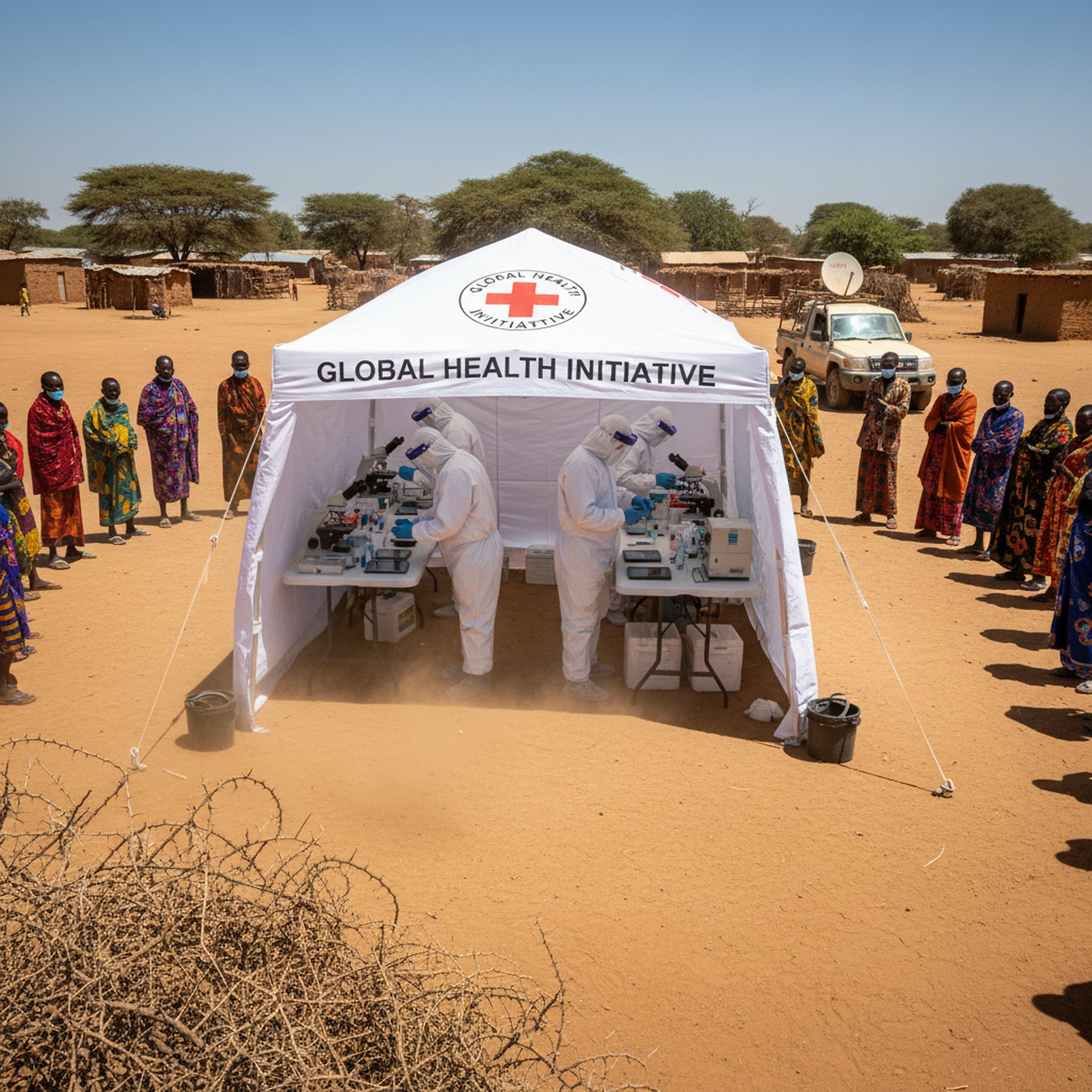
A virulent new outbreak of the Ebola virus disease is gripping several regions, prompting an urgent international scramble for advanced vaccine solutions. In response to this escalating public health emergency, the World Health Organization (WHO) has convened an extraordinary assembly of its leading scientific and medical experts. Their crucial mandate is to meticulously evaluate and recommend the most promising candidate vaccines for expedited clinical trials, aiming to swiftly bolster global defenses against this deadly pathogen. This concerted effort underscores the profound interconnectedness of global health and the collective resolve to confront infectious threats head-on.
Ebola, a severe and often fatal illness in humans, is caused by the Ebola virus, transmitted from wild animals and spreading through direct contact with bodily fluids of infected people or contaminated materials. The disease typically manifests with sudden onset of fever, intense weakness, muscle pain, headache, and sore throat, followed by vomiting, diarrhoea, rash, impaired organ function, and sometimes internal and external bleeding. With an average fatality rate of around 50%, and in some outbreaks reaching up to 90%, Ebola represents one of the most formidable challenges to global public health. The devastating West African epidemic of 2014-2016, which claimed over 11,000 lives, and subsequent outbreaks in the Democratic Republic of Congo, served as stark reminders of the virus's destructive potential and the critical need for robust preparedness and response mechanisms.
While significant strides have been made in vaccine development, notably with the rVSV-ZEBOV vaccine (Ervebo) highly effective against the Zaire ebolavirus strain, the current outbreak highlights a persistent need for a broader and more adaptable arsenal. The emergence of new viral strains, or the resurgence of less common ones, often necessitates tailored vaccine candidates. Furthermore, logistical challenges inherent in deploying existing vaccines, such as stringent cold chain requirements in remote, resource-limited settings, underscore the demand for innovations offering greater stability, easier administration, and potentially longer-lasting or broader spectrum immunity. The global scientific community is therefore seeking a suite of solutions capable of addressing the multifaceted nature of Ebola outbreaks across diverse geographical and epidemiological landscapes.
At the heart of this urgent quest is the World Health Organization, acting as the central coordinating body. The WHO’s expert panel, comprising leading virologists, epidemiologists, public health specialists, and ethicists, is tasked with sifting through a growing pipeline of experimental vaccines. Their rigorous evaluation criteria focus on scientific merit, preclinical data, safety profiles, potential efficacy against circulating strains, and feasibility of rapid production and deployment. The process involves an accelerated pathway, distinct from routine drug development, reflecting the emergency context. This means fast-tracking regulatory approvals, streamlining trial protocols, and fostering unprecedented collaboration between researchers, pharmaceutical companies, and national health authorities to compress timelines without compromising safety or scientific integrity. The panel's recommendations will pave the way for critical Phase 1 and Phase 2 clinical trials, potentially moving directly into Phase 3 efficacy trials in affected populations if initial safety data are promising.
The global scientific community has responded with unparalleled urgency, with research institutions, biotechnology firms, and major pharmaceutical companies dedicating vast resources to the vaccine hunt. Various technological platforms are being explored, including viral vector, mRNA-based, and protein subunit candidates, each offering distinct advantages in speed of development, manufacturing scalability, and immune response profiles. The experience gained from rapid COVID-19 vaccine development has provided invaluable lessons, demonstrating that scientific innovation can be significantly accelerated under emergency conditions. However, conducting clinical trials during an active outbreak presents unique ethical and logistical considerations, requiring meticulous planning to ensure informed consent, equitable access for trial participants, and high-quality care, all while operating in high-risk environments.
Beyond scientific breakthroughs, successful deployment of any new Ebola vaccine hinges on overcoming formidable logistical hurdles. Many regions prone to outbreaks lack robust healthcare infrastructure, reliable electricity, and adequate cold chain facilities essential for storing temperature-sensitive vaccines. Reaching remote villages, often accessible only by challenging terrain, requires innovative distribution strategies and significant investment in local capacity building. Crucially, community engagement and trust are paramount. Past outbreaks highlighted how misinformation, fear, and cultural sensitivities can impede public health efforts, including vaccination campaigns. Building rapport with local leaders, engaging traditional healers, and ensuring transparent communication are vital to fostering acceptance and maximizing vaccine uptake, transforming scientific solutions into tangible protection for vulnerable populations.
Equitable access stands as a cornerstone of the global response. Ensuring that vaccines, once proven safe and effective, are distributed fairly and reach those most at risk, regardless of nationality or economic status, is a moral and strategic imperative. This necessitates substantial international funding, coordinated procurement, and robust partnerships between high-income and low-income countries. Preventing a repeat of 'vaccine nationalism,' where wealthier nations hoard supplies, is crucial for effective global health security. Initiatives like COVAX, though initially designed for COVID-19, offer a blueprint for collaborative frameworks ensuring broad and equitable access to essential medical countermeasures during future health crises. The current Ebola vaccine quest is therefore not just a scientific race, but also a test of global solidarity and shared responsibility.
The shadow of recent global pandemics, particularly COVID-19, looms large over the current Ebola response, serving as both a cautionary tale and a source of accelerated learning. The unprecedented speed with which COVID-19 vaccines were developed and deployed demonstrated the immense potential of focused scientific investment and international collaboration. This experience has fundamentally reshaped expectations for emergency vaccine development, pushing regulatory bodies and research institutions to adopt more agile and adaptive frameworks. Lessons learned in rapid trial design, manufacturing scale-up, and global distribution logistics are now directly applied to the Ebola challenge, aiming to shorten the typical decade-long vaccine development cycle into months or a few years, thereby saving countless lives and mitigating economic disruption.
While the immediate focus remains on containing the current outbreak and developing new vaccines, the broader implications for long-term global health preparedness cannot be overstated. Sustained investment in disease surveillance systems, particularly in regions identified as high-risk for zoonotic spillover, is critical for early detection and rapid response. Furthermore, continuous research and development into a wide spectrum of pathogens, even those not currently causing major outbreaks, is essential to build a resilient pipeline of countermeasures. Strengthening local health systems, training healthcare workers, and establishing robust public health infrastructure in vulnerable communities are foundational steps towards building a world better equipped to prevent, detect, and respond to future infectious disease threats. The Ebola crisis serves as a powerful reminder that preparedness is not a one-time effort but an ongoing commitment.
The urgent international quest for a new Ebola vaccine is a testament to humanity's enduring capacity for innovation and cooperation in the face of existential threats. As WHO experts deliberate on the most promising candidates, the world watches with apprehension and hope. The path ahead is fraught with scientific, logistical, and ethical complexities, yet the collective will to overcome them is palpable. This endeavor is more than just developing a vaccine; it is about reinforcing global health security, demonstrating solidarity, and reaffirming the fundamental right to health for all. The success of this mission will not only save lives in the immediate future but will also lay crucial groundwork for a more resilient and prepared global community against the inevitable emergence of future pathogens.
Support Nivaran Foundation's vital work in global health security and disease prevention worldwide.
Talk to Nivaran Global