
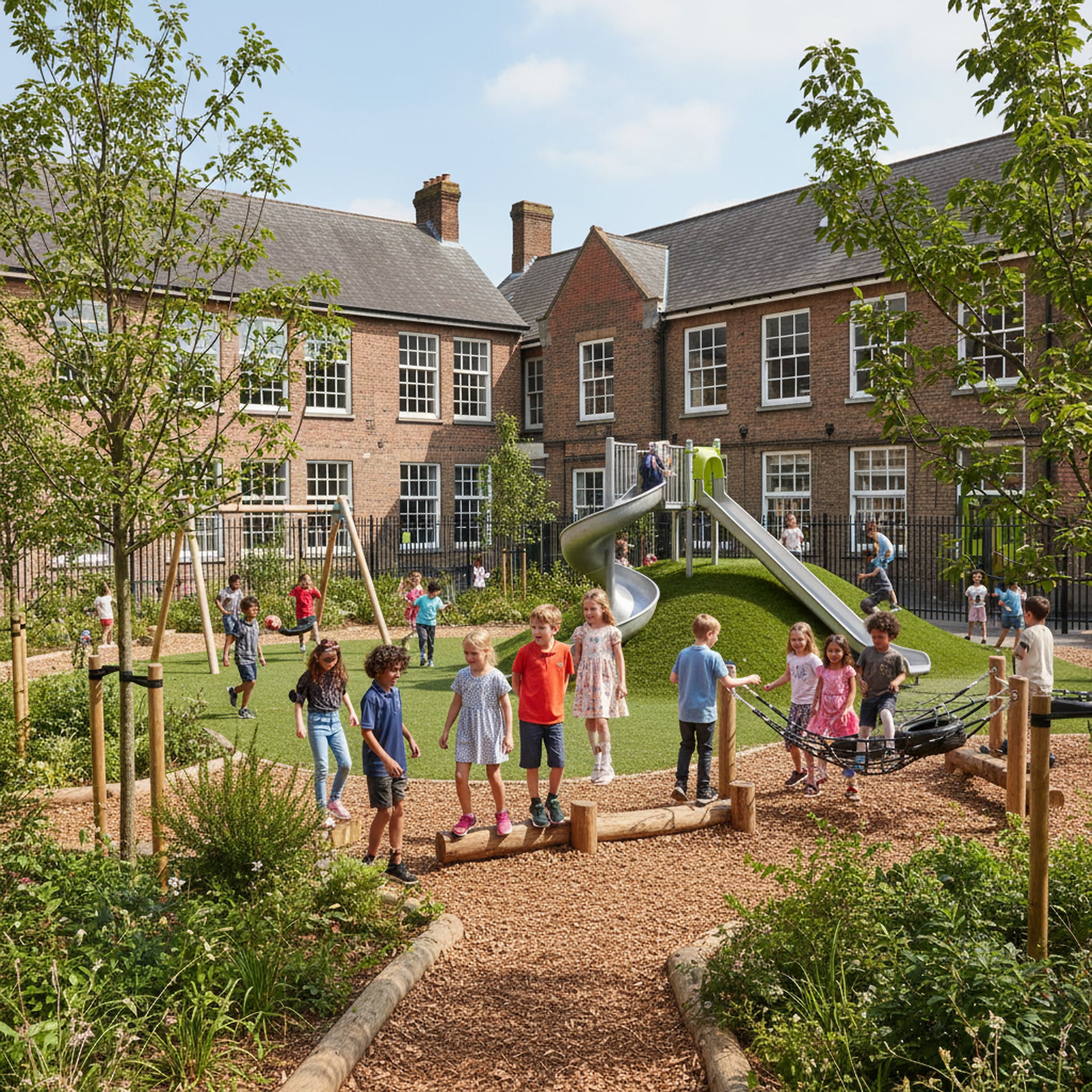
The abrupt cancellation of a significant grant from the U.S. Environmental Protection Agency (EPA), intended to support research into the health benefits of improved school playgrounds, has sent ripples through the global community dedicated to children's well-being and environmental education. The project, led by researcher Kirsten Beyer, aimed to assess the tangible advantages of transforming traditional, often barren schoolyards in Milwaukee into vibrant, healthier play spaces. This specific setback, while localized, illuminates a far broader and more pressing global challenge: the precarious nature of funding for initiatives that link environmental sustainability with public health and educational outcomes for the world's youth.
Beyer's work was not merely about aesthetics; it was a rigorous scientific endeavor designed to quantify the positive impacts of green infrastructure on children's health and development. The research sought to understand how elements like natural shade, permeable surfaces, and diverse plant life could mitigate urban heat island effects, improve air quality, reduce exposure to harmful pollutants, and encourage physical activity. Such interventions are increasingly recognized as crucial in a world grappling with climate change and rapid urbanization, where many children spend significant portions of their day in school environments that are often devoid of natural elements and exposed to environmental stressors. The potential findings from this study could have provided invaluable data to inform policy and investment in similar projects across diverse global contexts, from bustling megacities to underserved rural communities.
Globally, millions of children attend schools situated in areas vulnerable to environmental hazards. From schools near industrial zones with poor air quality to those in rapidly urbanizing areas lacking green spaces, the environmental conditions of learning environments directly impact student health and academic performance. The concept of 'green schools' or 'healthy schools' is gaining traction internationally, advocating for designs and retrofits that prioritize natural light, ventilation, non-toxic materials, and access to nature. However, the implementation of these ideals often hinges on robust funding mechanisms, governmental support, and sustained political will. The cancellation of a project like Beyer's, even in a developed nation, serves as a stark reminder of how easily such vital initiatives can be derailed, leaving communities and children to bear the brunt of environmental degradation without adequate protective measures.
The benefits of connecting children with nature, particularly within their daily educational settings, are well-documented. Studies from various continents consistently demonstrate that access to green spaces improves cognitive function, reduces stress, enhances social skills, and promotes physical activity, thereby combating rising rates of childhood obesity and related health issues. Furthermore, natural playgrounds can offer diverse sensory experiences that support holistic development, fostering creativity and a deeper connection to the natural world. When these opportunities are curtailed due to lack of funding or shifting policy priorities, it represents a missed opportunity to invest in the foundational health and resilience of future generations, with long-term societal costs that far outweigh the immediate financial savings.
Consider the global landscape: in many developing countries, schools often lack even basic amenities, let alone sophisticated green infrastructure. Yet, these are precisely the regions where children are most vulnerable to the impacts of climate change, pollution, and inadequate public health infrastructure. Initiatives that aim to integrate environmental solutions into school design can provide dual benefits: improving local environmental quality and educating children about sustainability from an early age. The global push for sustainable development goals, including those related to good health and well-being (SDG 3) and quality education (SDG 4), inherently relies on creating safe, healthy, and environmentally sound learning environments. The case in Milwaukee, therefore, resonates as a microcosm of a larger global struggle to align policy and resources with these critical objectives.
The economic rationale for investing in healthier school environments is also compelling. While initial costs for green infrastructure might seem higher, the long-term benefits in terms of reduced healthcare expenditures, improved academic attainment leading to higher earning potential, and enhanced community resilience often provide a significant return on investment. Moreover, such projects can foster local employment, stimulate green economies, and build community cohesion. The decision to withdraw funding from a project designed to quantify these very benefits undermines the evidence base necessary for advocating for broader adoption and investment. It sends a chilling message about the perceived value of preventative health measures and environmental stewardship within educational systems.
Across Europe, Asia, Africa, and Latin America, various organizations and governments are experimenting with innovative approaches to greening schoolyards, from urban gardening projects that teach food literacy to rainwater harvesting systems that conserve resources. These efforts, often driven by local communities and non-governmental organizations, frequently face an uphill battle for sustained funding and institutional support. The U.S. EPA grant cancellation serves as a cautionary tale, highlighting the need for more resilient and diversified funding streams, as well as stronger international collaboration, to ensure that such vital projects can continue and expand, regardless of shifting national political tides or economic pressures.
Ultimately, the health and educational outcomes of children are inextricably linked to the quality of their immediate environment. Schools are not just places of learning; they are critical community hubs that shape physical, mental, and social development. Denying children access to healthy, green play and learning spaces is not merely an administrative oversight; it is a profound disservice to their fundamental right to a healthy childhood and a quality education. The global imperative remains clear: to prioritize and protect initiatives that transform school environments into beacons of health, sustainability, and learning, ensuring that every child, everywhere, has the opportunity to thrive.
The incident in Milwaukee should prompt a global reflection on the vulnerability of environmental health research and implementation projects. It underscores the urgent need for international bodies, national governments, philanthropic organizations, and local communities to forge stronger partnerships and commit to long-term investment in creating healthy school environments. Without sustained dedication and resources, the vision of a generation of children growing up in spaces that nurture both their minds and bodies will remain an aspiration rather than a widespread reality. The lessons from this specific case must inform a renewed global commitment to safeguarding the environmental health of our educational institutions, recognizing their pivotal role in shaping a sustainable and healthy future for all.
Support Nivaran Foundation's global efforts to advocate for healthier, more sustainable learning environments for children worldwide.
Talk to Nivaran Global