
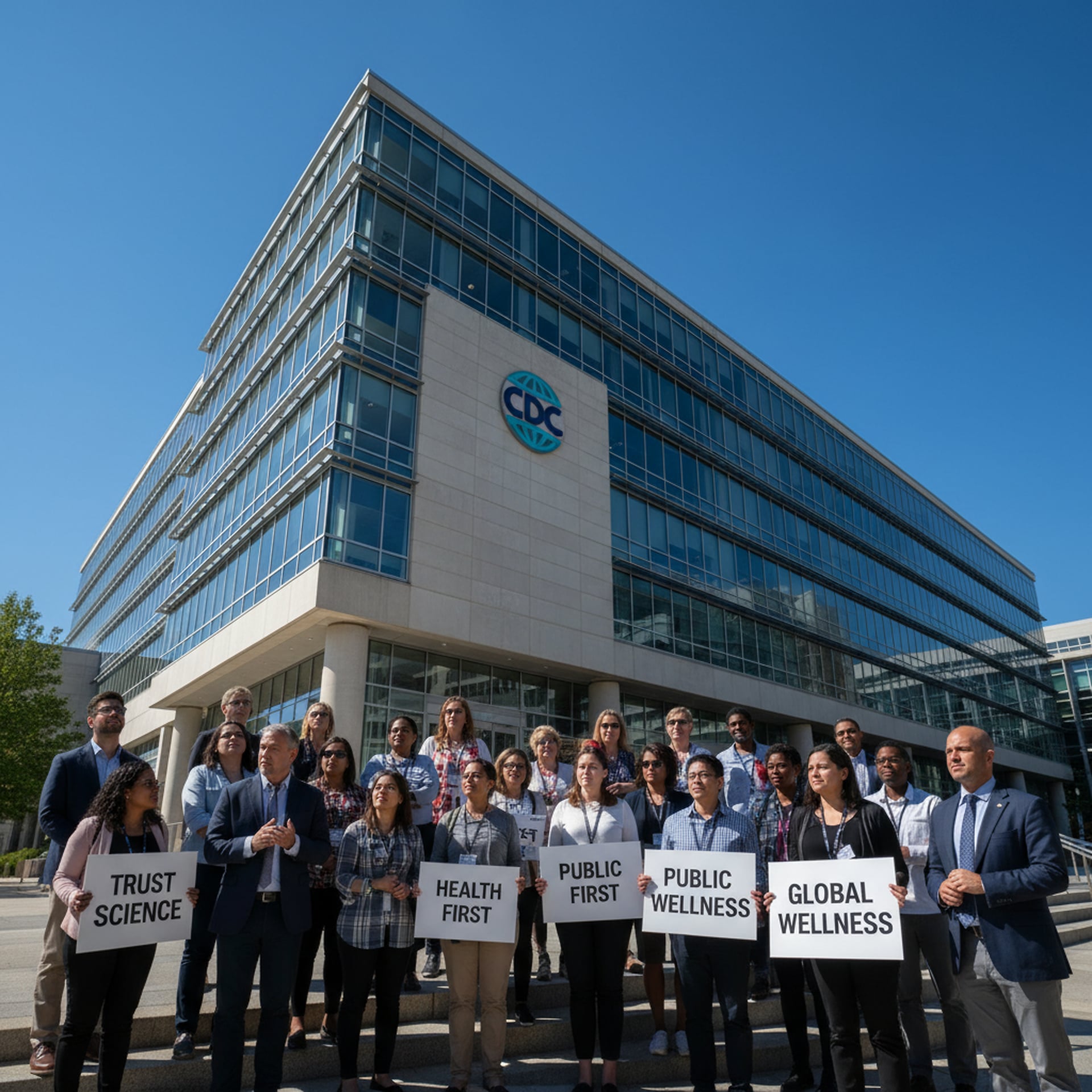
The United States administration has reportedly postponed the crucial nomination of a new Director for the Centers for Disease Control and Prevention (CDC), a move that reverberates with significant implications for global public health. This delay, emerging amidst a complex political landscape, underscores the challenges inherent in appointing leadership to one of the world's foremost health agencies. The CDC, recognized globally for its pivotal role in disease surveillance, prevention, and response, requires steady, scientifically grounded leadership, especially in an era marked by persistent global health threats and the ever-present risk of emerging pathogens. A protracted vacancy at its helm can create a vacuum in international health coordination and potentially undermine the agency's capacity to act decisively on the global stage.
Reports indicate that the primary obstacle to a swift appointment lies in the administration's struggle to identify a candidate who can effectively bridge divergent policy philosophies. Specifically, the search is focused on finding an individual capable of aligning with the broader health agenda championed by Health Secretary Robert F. Kennedy Jr., while simultaneously navigating away from his more controversial and widely criticized positions, particularly concerning vaccine efficacy and public health interventions. This delicate balancing act highlights a fundamental tension between political alignment and the imperative of upholding established scientific consensus, a tension that carries profound weight for an institution whose credibility rests on its unwavering commitment to evidence-based public health practices.
The Centers for Disease Control and Prevention is not merely a domestic health agency; it is a cornerstone of the global health architecture. Its influence extends far beyond national borders, providing critical expertise, resources, and leadership in addressing infectious diseases, chronic conditions, and health emergencies worldwide. From tracking novel viruses in remote regions to assisting nations in developing robust public health infrastructures, the CDC's work is intrinsically global. The Director of the CDC serves as a key ambassador for scientific integrity and public health best practices, engaging with international bodies like the World Health Organization (WHO) and collaborating with health ministries across continents. A strong, respected leader is vital for maintaining these intricate networks and ensuring a coordinated global response to health crises.
A prolonged leadership void or the appointment of a director perceived as lacking scientific independence could significantly erode trust among international partners. Global health cooperation relies heavily on mutual respect for scientific expertise and a shared commitment to evidence-based policy. Any perceived politicization of the CDC's leadership could lead other nations and international organizations to question the agency's guidance or its reliability as a partner. This erosion of trust could manifest in reduced collaboration on critical initiatives, such as global immunization campaigns, pandemic preparedness drills, or joint research efforts into emerging diseases, ultimately weakening the collective capacity to safeguard global health.
The reported difficulty in reconciling the Health Secretary's stance on vaccines with a candidate's public health credentials is particularly concerning. Vaccines represent one of the most successful and cost-effective public health interventions in history, having eradicated smallpox, dramatically reduced polio, and controlled numerous other infectious diseases globally. The scientific consensus on vaccine safety and efficacy is overwhelmingly strong. For the CDC Director, a role that inherently involves championing preventive health measures, any perceived ambiguity or divergence from this consensus would be deeply problematic. Such a leader would face immense challenges in communicating vital public health information, both domestically and internationally, and could inadvertently fuel vaccine hesitancy, a growing global threat to public health.
Beyond policy, the CDC Director plays a crucial operational role in global disease surveillance and rapid response. The agency maintains extensive networks for monitoring disease outbreaks, deploying rapid response teams, and sharing critical epidemiological data with international partners. A leader who is not fully empowered or whose scientific authority is questioned could hamper the speed and effectiveness of these operations. In a world where a novel pathogen can spread across continents in days, any impediment to swift, coordinated action poses a severe risk to global health security. The absence of clear, decisive leadership at the CDC could delay crucial decisions during an emerging crisis, with potentially catastrophic consequences.
This situation also highlights a broader, concerning trend where scientific institutions, traditionally bastions of independent research and evidence-based policy, become increasingly subject to political pressures. While accountability to elected officials is a given, the integrity of scientific agencies depends on their ability to operate free from undue political interference in their scientific assessments and recommendations. When the selection of a top scientific leader becomes entangled in a search for ideological alignment rather than purely scientific merit and public health experience, it risks compromising the institution's core mission and its ability to serve the public effectively, both nationally and globally.
The ideal candidate for CDC Director in the current global climate must possess an exceptional blend of scientific acumen, extensive public health experience, and robust leadership skills. They must be a respected epidemiologist or public health physician with a proven track record of navigating complex health challenges. Crucially, they must also be an adept communicator, capable of articulating complex scientific information clearly and persuasively to diverse audiences, from policymakers to the general public, and to international partners. Furthermore, the ability to uphold scientific integrity fiercely while engaging constructively with political leadership is paramount, ensuring that the agency's recommendations remain grounded in the best available evidence, irrespective of political currents.
Historically, CDC Directors have been figures of immense scientific standing, often chosen for their deep expertise and ability to command respect across the scientific and public health communities. Their appointments have typically emphasized a commitment to public service and a non-partisan approach to health challenges. This tradition has allowed the CDC to maintain its reputation as a trusted authority, even during times of political change. The current challenge in finding a suitable candidate suggests a departure from this traditional emphasis, raising questions about the future direction and independence of the agency, and by extension, its global standing.
From an international perspective, the stability and scientific independence of institutions like the CDC are closely watched. Global health security is a collective endeavor, and the strength of its individual components, particularly those from leading nations, is critical. Delays or controversies in leadership appointments at such agencies can be interpreted by the global community as signs of internal instability or a weakening commitment to established public health principles. This can complicate multilateral efforts to address shared health threats and may prompt other nations to reassess their reliance on the affected institution for guidance and collaboration.
The imperative for the administration to resolve this leadership vacuum swiftly and with principled consideration for scientific integrity cannot be overstated. The world faces ongoing and emerging health challenges, from antimicrobial resistance to climate-sensitive diseases, and the constant threat of new pandemics. A fully functional, scientifically credible CDC, led by an uncompromised director, is indispensable for both national and global preparedness and response. The selection process must prioritize a candidate who can unequivocally champion evidence-based public health, restore confidence, and effectively lead the agency in its vital mission to protect health worldwide.
The outcome of this nomination process will send a powerful signal about the administration's commitment to scientific independence and global public health. It will determine whether the CDC continues to operate as a beacon of scientific authority or becomes further entangled in political debates. For the millions globally who rely on the CDC's research, guidance, and collaborative efforts, the stakes are profoundly high. The world watches, hoping for a resolution that reinforces the foundational principles of public health and ensures robust leadership for future health challenges.
Support Nivaran Foundation's independent journalism to illuminate critical global health governance issues.
Talk to Nivaran Global