
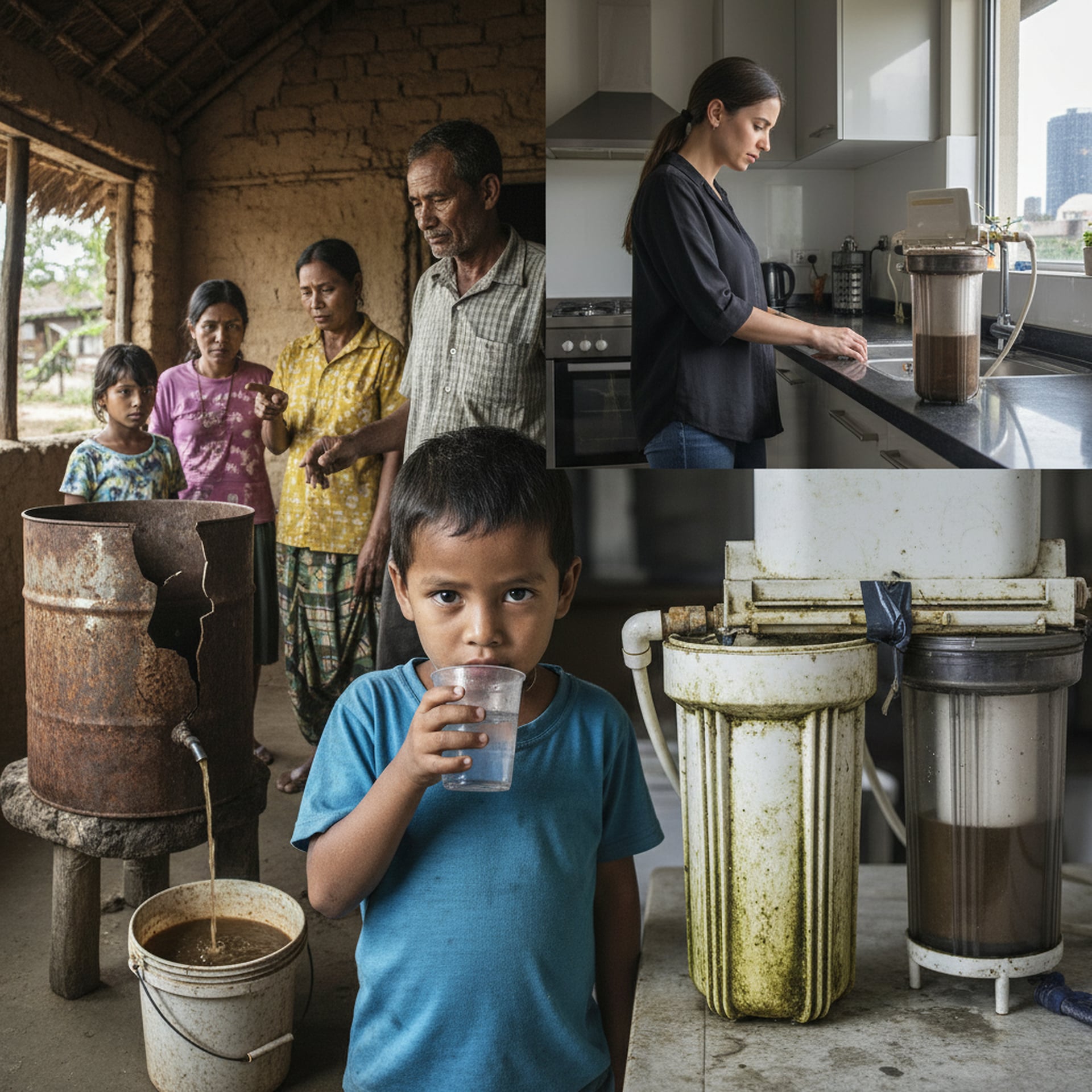
Across the globe, the quest for clean drinking water is a fundamental human right and a cornerstone of public health. While significant strides have been made in ensuring the safety of municipal water supplies in numerous countries, a growing concern is emerging from an unexpected quarter: the very domestic water filters many households rely on. A recent warning from a global health watchdog underscores that poorly maintained or neglected household water filtration systems are inadvertently putting millions at risk, even in regions where the public water infrastructure is robust and meticulously regulated.
This paradox highlights a critical global health challenge. In many developed nations, public water systems are subject to stringent regulations, continuous monitoring, and advanced treatment processes designed to eliminate pathogens and contaminants before water reaches the tap. These systems represent a monumental public health achievement, providing safe, potable water to vast populations. Yet, consumer perception, taste preferences, or lingering doubts about tap water quality often lead individuals to install point-of-use filters in their homes. While these filters can enhance water quality by removing residual chlorine or improving taste, they become a significant health liability if not regularly serviced or replaced according to manufacturer guidelines.
The Peril of Neglected Filtration
The primary danger with domestic water filters, whether pitcher filters, faucet-mounted units, or whole-house systems, lies in their potential to become breeding grounds for bacteria and other microorganisms. Filters work by trapping impurities, but over time, these trapped substances, combined with the moist environment inside the filter cartridge, create an ideal habitat for bacterial growth, forming biofilms. When a filter is past its recommended lifespan, it not only loses its efficacy in removing contaminants but can actively release a concentrated dose of harmful bacteria, heavy metals, or chemicals back into the supposedly purified water. This can lead to gastrointestinal illnesses, skin irritations, and other health complications, particularly for vulnerable populations such such as young children, the elderly, and individuals with compromised immune systems.
Furthermore, the materials used in older or degraded filters can themselves leach harmful substances into the water. Activated carbon filters, commonly used to remove chlorine and organic compounds, can degrade, releasing carbon particles. Plastic components can break down, potentially introducing microplastics or other chemical compounds. The very device intended to safeguard health can, through neglect, become a silent source of contamination, undermining the extensive efforts made by public health authorities to deliver safe water.
Global Disparities in Water Access and Filtration
The issue takes on a different, often more critical, dimension in regions with less developed public water infrastructure. In many parts of the world, access to reliably safe tap water is not a given. Here, domestic water filters are not a choice for improved taste but a necessity for basic safety. Households often rely on a patchwork of solutions, including boiling water, using ceramic filters, or purchasing bottled water. The market for domestic water filters in these areas is often less regulated, leading to a proliferation of substandard or counterfeit products that offer little to no protection, and in some cases, exacerbate the problem by introducing new contaminants.
In such contexts, the lack of consistent quality control, coupled with limited public awareness about proper filter maintenance, creates a heightened risk. Families, often with limited financial resources, may extend the life of a filter far beyond its capacity, unaware of the accumulating dangers. Educational campaigns on water safety and filter maintenance are often lacking, leaving communities vulnerable to misinformation and preventable diseases. The economic burden of waterborne illnesses, from lost productivity to healthcare costs, further strains already stretched resources in these communities, perpetuating a cycle of poverty and poor health.
Understanding the Health Risks
Exposure to contaminated water from neglected filters can manifest in various health issues. Bacterial pathogens like E. coli, Salmonella, and Giardia, which can thrive in unmaintained filters, are common culprits behind acute gastroenteritis, characterized by severe diarrhea, vomiting, and abdominal pain. In more severe cases, or among immunocompromised individuals, these infections can lead to dehydration, malnutrition, and even be life-threatening. Chemical contaminants, such as lead or other heavy metals, if not effectively removed or if leached from old filter components, can accumulate in the body over time, leading to chronic health problems affecting neurological development, kidney function, and cardiovascular health.
The insidious nature of these risks lies in their often-invisible progression. Unlike a sudden power outage or a visible pollutant, the degradation of a water filter and the subsequent contamination of water can occur gradually, without immediate sensory cues. This makes public education and proactive maintenance all the more vital in preventing widespread health impacts.
The Unsung Heroes: Public Water Systems
In stark contrast to the risks posed by unmaintained domestic filters, well-regulated public water systems worldwide stand as a testament to effective public health engineering. These systems employ multi-barrier approaches, typically involving coagulation, flocculation, sedimentation, filtration, and disinfection, often using chlorine or UV light. This comprehensive treatment process is followed by continuous monitoring at various points, from the source to the tap, ensuring that water meets stringent national and international safety standards. Regulatory bodies conduct regular audits and enforce compliance, providing a robust safety net that most domestic filters cannot replicate.
Investment in public water infrastructure is, therefore, not merely a matter of convenience but a critical investment in national health and economic stability. It provides a foundational layer of protection that individual household solutions, no matter how well-intentioned, struggle to match in terms of scale, consistency, and reliability.
Empowering Consumers Through Education
Addressing the global challenge of unsafe domestic water filters requires a multi-pronged approach centered on education and awareness. Public health campaigns must clearly communicate the limitations of household filters and the critical importance of adhering to replacement schedules. These campaigns should be culturally sensitive and accessible, reaching diverse populations through various media channels.
Furthermore, there is a need for greater transparency and regulation within the domestic water filter market, particularly in regions where oversight is weak. Consumers need clear, understandable labeling on products, indicating their efficacy, lifespan, and proper maintenance instructions. Governments and international organizations could play a role in developing universal standards for filter performance and safety, helping consumers make informed choices and protecting them from ineffective or harmful products.
Ultimately, while domestic water filters can offer supplementary purification and improve the aesthetic qualities of drinking water, they are not a substitute for a safe, well-maintained public water supply. The recent warnings serve as a global reminder that the responsibility for water safety extends beyond the municipal treatment plant into every home. By understanding the risks, embracing proper maintenance, and advocating for robust public health infrastructure, communities worldwide can ensure that their quest for clean water does not inadvertently compromise their health.
Support Nivaran Foundation's work in advocating for global water safety and health education initiatives.
Talk to Nivaran Global