
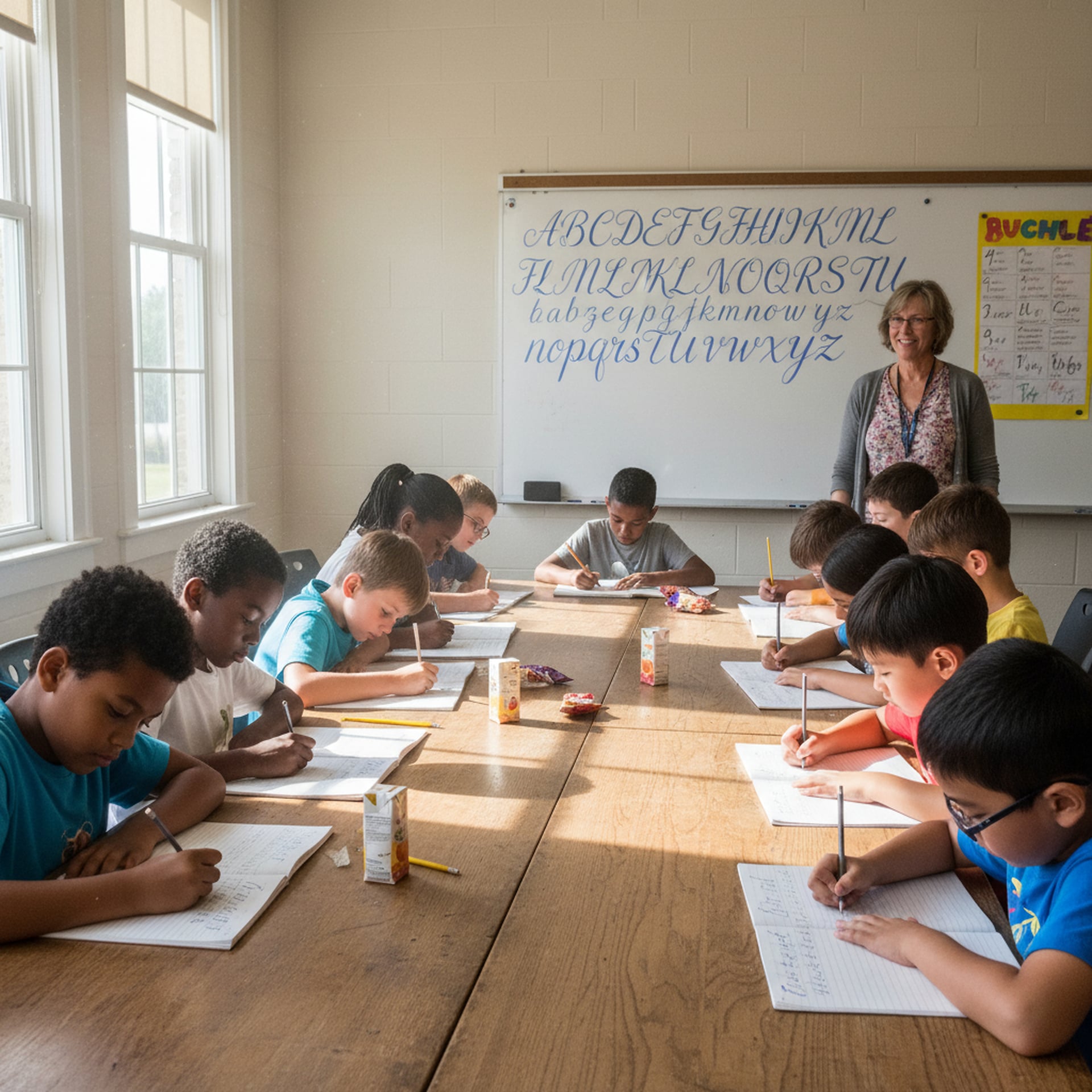
The digital age has brought unprecedented changes to education, yet a quiet resurgence is underway globally, focusing on a skill many thought obsolete: cursive handwriting. Across continents, from community libraries to after-school programs, students are once again learning to connect letters with a flourish, driven by a growing recognition of its profound benefits beyond mere penmanship. This revival, often happening outside traditional school curricula, highlights a broader educational debate about foundational skills in an increasingly digital world.
For decades, the emphasis in education shifted dramatically towards digital literacy. As keyboards and touchscreens became ubiquitous, the intricate art of cursive writing began to fade from school curricula, particularly after the adoption of standardized frameworks that prioritized typing over penmanship. The argument was compelling: in a world dominated by emails, word processors, and instant messaging, the practical utility of cursive seemed diminished. Resources and instructional time, always at a premium, were reallocated to subjects deemed more relevant for the 21st-century workforce. This global trend saw generations of students grow up with limited or no exposure to cursive, leading to concerns about their ability to read historical documents, sign their names, or even appreciate the aesthetics of handwritten communication.
However, the narrative is shifting. Educators, parents, and developmental psychologists worldwide are increasingly advocating for cursive's return, citing a wealth of cognitive and developmental benefits. Learning cursive is not merely about forming elegant letters; it is a complex motor skill that engages multiple areas of the brain. The continuous flow of cursive strokes, unlike the segmented movements of print, demands sustained attention and fine motor control. This process strengthens neural pathways, enhancing hand-eye coordination, dexterity, and spatial reasoning – skills critical for a wide range of academic and daily tasks. Research indicates that the act of writing by hand, especially in cursive, activates different brain regions compared to typing, potentially leading to deeper processing and better retention of information. The physical act of forming letters helps solidify learning, particularly for spelling and vocabulary, as the brain creates a motor memory of each word.
The benefits extend beyond fine motor development. Studies suggest a correlation between cursive writing and improved reading comprehension. The continuous nature of cursive helps children recognize words as whole units rather than individual letters, which can be particularly advantageous for early readers. Furthermore, the unique demands of cursive writing, which requires students to remember complex letter formations and connect them seamlessly, can bolster memory and sequencing skills. For students with certain learning differences, such as dyslexia, cursive has shown promise. The continuous strokes reduce the likelihood of letter reversals common in print, and the distinct shapes of cursive letters can make them easier to differentiate, providing an alternative pathway to literacy that can be highly effective. This therapeutic aspect of cursive is gaining recognition in specialized educational settings globally.
The re-emphasis on cursive also touches upon broader themes of cultural preservation and personal identity. Handwriting is a tangible link to history, allowing individuals to read original historical documents, personal letters, and family heirlooms. Without cursive literacy, access to vast swathes of human history and personal narratives becomes restricted, creating a disconnect with the past. Moreover, a signature in cursive is a unique mark of identity, a personal brand that signifies agreement, authenticity, and individuality in a way that a typed name cannot replicate. In an increasingly digital and often impersonal world, the ability to produce a distinctive handwritten signature maintains a crucial element of personal expression and legal validation. This aspect resonates across diverse cultures, where handwritten documents often hold significant ceremonial or legal weight.
With formal school systems often slow to adapt, the resurgence of cursive is frequently spearheaded by community initiatives. After-school clubs, often run by dedicated volunteers, retired teachers, or passionate parents, are becoming vibrant hubs for cursive instruction. Libraries, traditionally centers of learning and literacy, are also stepping up, offering workshops and resources that cater to both children and adults eager to learn or relearn this skill. These informal settings provide a flexible, engaging environment where students can explore cursive without the pressure of standardized testing, fostering a love for the craft itself. These grassroots movements demonstrate a powerful bottom-up demand for skills that are perceived as valuable, even if they are not prioritized in mainstream education. This global phenomenon underscores the adaptability and responsiveness of community-based learning models in addressing educational gaps.
The groundswell of interest is also prompting policy re-evaluations. Several regions and countries, having previously removed cursive from their mandatory curricula, are now reconsidering its importance. Educational authorities are weighing the benefits of cognitive development and cultural literacy against the demands of digital proficiency. This is not a simple either/or proposition but rather a complex discussion about achieving a balanced curriculum that equips students with a diverse set of skills. The debate often centers on how to integrate cursive effectively without overburdening an already packed school day, and how to train educators who may themselves have limited experience with teaching penmanship. The global conversation reflects a broader pedagogical shift towards recognizing the value of foundational skills alongside technological advancements, aiming for a more holistic educational experience.
While the benefits of cursive are compelling, its reintroduction is not without its challenges. Critics argue that valuable instructional time could be better spent on digital literacy, coding, or other skills deemed more immediately relevant to future careers. They point to the declining frequency of handwritten communication in daily life and the increasing reliance on digital tools for almost all forms of documentation and correspondence. However, proponents argue that these are not mutually exclusive skills. A comprehensive education should ideally equip students with both the ability to navigate the digital world proficiently and the foundational cognitive and motor skills fostered by traditional practices like cursive writing. The goal is not to replace digital literacy but to complement it, ensuring a well-rounded individual capable of engaging with the world in multiple ways.
The global conversation surrounding cursive writing is a microcosm of a larger debate in education: how to balance tradition with innovation, foundational skills with future demands. The Nivaran Foundation believes that a holistic approach to education is paramount, one that values diverse learning pathways and recognizes the multifaceted benefits of various disciplines. The resurgence of cursive clubs and the re-evaluation by educational bodies worldwide underscore the enduring human need for connection, expression, and cognitive development that goes beyond the purely utilitarian. By supporting initiatives that foster a broad spectrum of skills, from digital fluency to the elegant strokes of cursive, we empower students to become adaptable, critical thinkers who are well-prepared for any future. This commitment to comprehensive learning ensures that no valuable skill is lost in the pursuit of progress, and that every child has the opportunity to develop their full potential.
The quiet revolution of cursive's return is more than just about handwriting; it's about re-evaluating what constitutes a complete education in the 21st century. It signals a global recognition that while technology propels us forward, certain foundational skills offer unique cognitive, developmental, and cultural advantages that remain irreplaceable. As communities and educational systems worldwide grapple with this balance, the flourishing of cursive clubs and the renewed policy interest serve as a powerful reminder that sometimes, the oldest tools offer the newest insights into how we learn, grow, and connect with our shared human heritage.
Support Nivaran Foundation's initiatives for holistic global education, ensuring access to diverse learning opportunities for all students.
Talk to Nivaran Global