
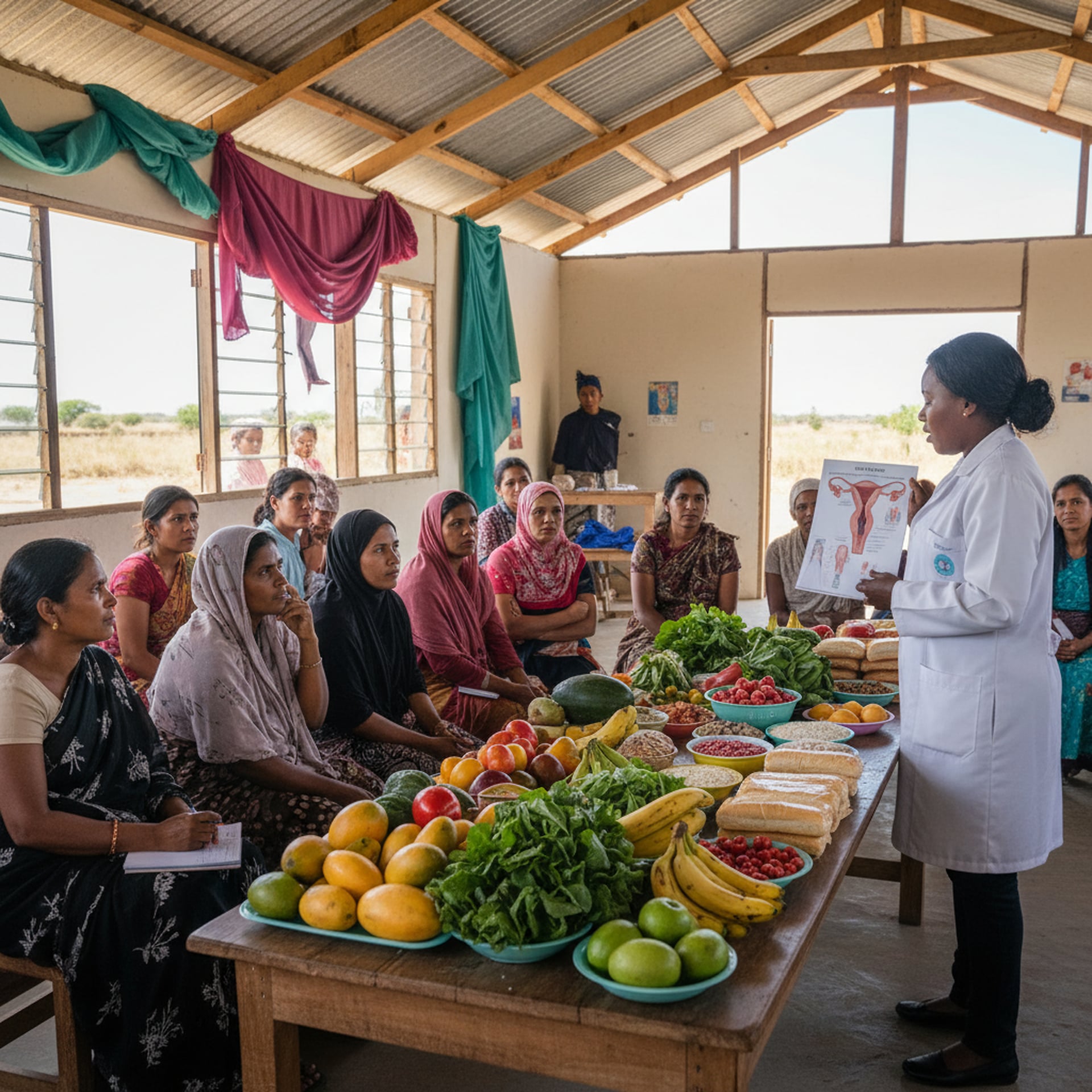
Infertility, a condition affecting millions of individuals globally, presents a profound challenge with far-reaching social, emotional, and economic implications. While numerous factors contribute to its prevalence, recent groundbreaking research published in Nature shines a critical light on an often-underestimated aspect: the intricate relationship between dietary nutrient intake, overall nutritional status, and female reproductive health. This comprehensive cross-sectional study offers invaluable insights into how specific dietary patterns and nutrient deficiencies may significantly impact a woman's ability to conceive, underscoring the universal importance of nutrition in addressing this complex global health issue.
The study meticulously investigated the dietary habits and nutritional profiles of women experiencing infertility, comparing them against those with no known fertility issues. Researchers employed a robust methodology, utilizing detailed dietary assessments to quantify the intake of both macronutrients (proteins, carbohydrates, fats) and a wide array of micronutrients (vitamins and minerals). Alongside dietary analysis, participants underwent thorough nutritional status evaluations, including anthropometric measurements and biochemical markers, to provide a holistic view of their physiological state. The global scope of this research ensures its findings are relevant across diverse populations, transcending geographical and socioeconomic boundaries to highlight common nutritional threads impacting fertility worldwide.
One of the study's most striking revelations pertained to macronutrient intake. While the overall consumption of energy-yielding nutrients was assessed, the quality and balance of these macronutrients emerged as critical. For instance, diets characterized by a high intake of refined carbohydrates and unhealthy fats, often prevalent in modern global diets, were more frequently observed among women with infertility. Conversely, a balanced intake of complex carbohydrates, lean proteins, and healthy fats (such as monounsaturated and polyunsaturated fatty acids) was associated with better reproductive outcomes. This suggests that it is not merely the quantity but the type of macronutrients consumed that plays a pivotal role in supporting hormonal balance and ovulatory function, essential components of fertility.
The investigation into micronutrients yielded particularly compelling data. Deficiencies in several key vitamins and minerals were found to be significantly more prevalent in women experiencing infertility. Among these, Vitamin D emerged as a prominent factor, with lower levels consistently observed in the infertile cohort. Vitamin D is crucial for various physiological processes, including hormone regulation and immune function, both of which are intimately linked to reproductive health. Similarly, inadequate intake of B vitamins, particularly folate (Vitamin B9) and Vitamin B12, was frequently identified. These vitamins are vital for DNA synthesis and cellular division, processes fundamental to egg development and early embryonic growth. The study reinforces the long-held understanding that sufficient folate intake is not only critical during pregnancy but also in the preconception period.
Furthermore, the research highlighted the importance of antioxidant vitamins, such as Vitamin E and Vitamin C, and essential minerals like iron, zinc, and selenium. Oxidative stress, an imbalance between free radicals and antioxidants in the body, is known to negatively impact egg quality and uterine receptivity. Women with lower dietary intake of antioxidant-rich foods and corresponding lower levels of these vitamins were more susceptible to infertility. Iron deficiency, a widespread nutritional problem globally, was also linked to fertility challenges, likely due to its role in oxygen transport and overall cellular metabolism. Zinc and selenium, critical for hormone production and reproductive organ function, also showed significant associations, with deficiencies correlating with increased rates of infertility.
Beyond specific nutrients, the study also examined broader indicators of nutritional status, such as Body Mass Index (BMI). Both underweight and overweight/obesity were found to be significant risk factors for infertility. Women with BMIs outside the healthy range often exhibited hormonal imbalances, ovulatory dysfunction, and altered menstrual cycles, directly impacting their fertility potential. This reinforces the global public health message that maintaining a healthy weight through balanced nutrition and regular physical activity is a cornerstone of reproductive health. The study’s findings underscore that nutritional status is not just about avoiding deficiencies but also about preventing excesses and achieving an optimal physiological state for conception.
The biological mechanisms underpinning these associations are multifaceted. Nutritional deficiencies can disrupt the delicate hormonal cascade that governs the menstrual cycle, leading to anovulation or irregular ovulation. For instance, severe energy restriction can suppress gonadotropin-releasing hormone (GnRH) pulsatility, impairing the production of follicle-stimulating hormone (FSH) and luteinizing hormone (LH), which are essential for ovarian function. Conversely, obesity can lead to insulin resistance and increased androgen production, further disrupting ovulation. Micronutrients play specific roles in egg maturation, fertilization, and implantation. For example, adequate levels of B vitamins are crucial for methylation processes, which are vital for gene expression and epigenetic modifications in developing eggs. Antioxidants protect reproductive cells from damage, preserving their integrity and function.
The global implications of this research are profound. In many low- and middle-income countries, where nutritional deficiencies are endemic due to food insecurity, poverty, and inadequate dietary diversity, the burden of infertility may be compounded by poor nutritional status. Simultaneously, in high-income countries, the prevalence of processed foods and sedentary lifestyles contributes to micronutrient deficiencies and obesity, also impacting fertility. The study thus provides a universal framework for understanding and addressing infertility through a nutritional lens, highlighting that while specific dietary challenges may vary by region, the fundamental biological links between nutrition and reproduction remain consistent.
Based on these compelling findings, public health strategies must prioritize comprehensive nutritional interventions as a core component of reproductive health programs. This includes promoting diverse, nutrient-rich diets emphasizing whole foods, fruits, vegetables, lean proteins, and healthy fats. Educational campaigns can raise awareness about the critical role of specific nutrients like folate, Vitamin D, iron, and zinc in preconception health. Food fortification programs, where feasible and appropriate, can help address widespread micronutrient deficiencies. Furthermore, integrating nutritional counseling into routine healthcare, particularly for women of reproductive age, can empower individuals to make informed dietary choices that support their fertility journey. A holistic approach that combines dietary guidance with lifestyle modifications is essential.
While this cross-sectional study provides strong correlational evidence, it also paves the way for future research. Longitudinal studies are needed to establish definitive causal links between specific dietary interventions and improved fertility outcomes. Further investigation into the optimal dosages and forms of nutrient supplementation for women struggling with infertility, as well as research into the efficacy of specific dietary patterns (e.g., Mediterranean diet, plant-based diets) in diverse populations, will be invaluable. Understanding the genetic and epigenetic interactions with nutrition in the context of fertility also represents a promising avenue for future exploration.
In conclusion, the Nature study offers a powerful reminder that nutrition is not merely about sustenance but is a fundamental determinant of health, including reproductive health. For women globally, understanding and optimizing dietary intake and nutritional status represents a tangible and impactful pathway towards improving fertility outcomes. The Nivaran Foundation is committed to amplifying such critical research, advocating for evidence-based public health policies, and supporting initiatives that empower women to achieve optimal health and well-being worldwide, recognizing that a healthy population begins with healthy beginnings.
Support Nivaran Foundation's efforts to empower women's health globally through informed research and community programs.
Talk to Nivaran Global