
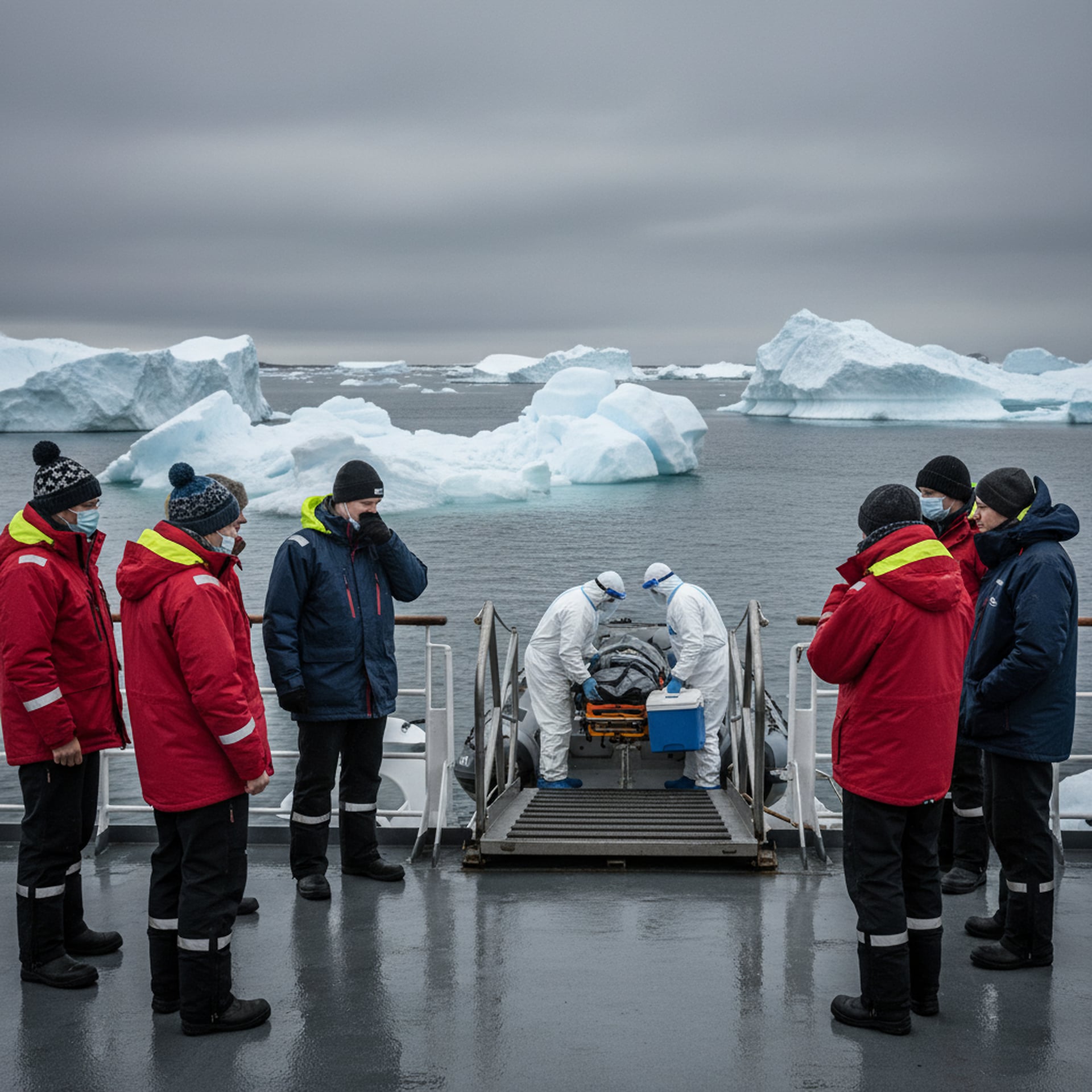
The allure of the Antarctic Peninsula, with its pristine landscapes and unique wildlife, draws adventurers from across the globe seeking unparalleled natural beauty. For the passengers aboard the MV Hondius, a state-of-the-art expedition vessel, their journey in early 2026 promised an unforgettable encounter with one of Earth's last true wildernesses. However, what began as a dream voyage quickly devolved into a harrowing ordeal, as a mysterious illness swept through the ship, ultimately revealing itself as a hantavirus outbreak that sent ripples of alarm through a world still grappling with the long shadow of the Covid-19 pandemic.
The initial symptoms were insidious, easily mistaken for common travel fatigue or a mild cold. A passenger would complain of headaches, muscle aches, and fever, followed by others exhibiting similar, escalating discomfort. The confined environment of a cruise ship, typically a concern for respiratory viruses, became a crucible for a different kind of pathogen. As more individuals fell ill, a palpable sense of unease permeated the vessel. The ship's medical team, accustomed to treating minor injuries and seasickness, found themselves confronting a rapidly unfolding health crisis with an unknown etiology, far from the nearest sophisticated medical facilities.
As the MV Hondius navigated the remote, icy waters, the situation grew increasingly dire. The decision was made to divert course, seeking a port capable of providing advanced medical diagnostics and care. Upon reaching a Chilean port, a battery of tests confirmed the terrifying diagnosis: hantavirus. This zoonotic virus, primarily transmitted to humans through contact with rodent droppings, urine, or saliva, is known to cause severe, sometimes fatal, respiratory and renal syndromes. The revelation sent a chilling wave through the global health community, as the specter of another novel pathogen, emerging from an unexpected source, resurfaced with alarming clarity.
Understanding the precise source of the hantavirus on the MV Hondius became an immediate priority for international health organizations. While hantaviruses are endemic in various rodent populations worldwide, their presence in the pristine, largely rodent-free environment of Antarctica was perplexing. Investigators began to piece together the puzzle, examining potential points of exposure prior to embarkation or during brief shore excursions in regions where rodents might be present. The incident underscored the intricate and often unpredictable pathways through which zoonotic diseases can emerge and spread, even in seemingly isolated settings, challenging conventional assumptions about disease geography.
For those aboard the MV Hondius, the diagnosis brought not only physical suffering but also profound psychological distress. Trapped on a vessel that had transformed from a symbol of adventure into a potential contagion zone, passengers and crew faced uncertainty, fear, and the anxiety of an unknown future. The isolation of the Antarctic environment, once a draw, now amplified their vulnerability, highlighting the critical importance of robust emergency response protocols for remote expeditions. Evacuation and medical care in such extreme conditions present immense logistical challenges, requiring meticulous coordination between multiple national and international agencies.
The global response to the MV Hondius outbreak was swift and multifaceted, reflecting lessons learned from recent pandemics. Public health authorities across continents initiated contact tracing for all passengers and crew, establishing quarantine measures for those potentially exposed. Enhanced surveillance protocols were activated, and research efforts intensified to better understand the specific hantavirus strain involved and its potential implications. This coordinated effort demonstrated the growing capacity for rapid international collaboration in the face of emerging health threats, yet it also exposed persistent vulnerabilities in global health infrastructure, particularly in resource-limited settings.
The hantavirus incident on the MV Hondius served as a stark reminder of the delicate balance between human activity and the natural world. As human populations expand and increasingly encroach upon wild habitats, the interface between humans and animals becomes more frequent, creating fertile ground for zoonotic spillover events. Climate change, too, plays a critical role, altering ecosystems and potentially expanding the geographical range of disease vectors. This interconnectedness necessitates a 'One Health' approach, integrating human, animal, and environmental health disciplines to proactively address emerging threats.
Beyond the immediate crisis, the outbreak on the MV Hondius reignited crucial conversations about pandemic preparedness. While hantavirus is not typically transmitted person-to-person in the same way as respiratory viruses like SARS-CoV-2, the initial confusion and rapid spread within a confined space underscored the need for adaptable and scalable response strategies. Governments and international bodies are now reassessing protocols for identifying novel pathogens, accelerating diagnostic development, and ensuring equitable access to medical countermeasures, regardless of a nation's economic standing or geographical location.
The long-term implications for survivors of the hantavirus infection can be severe, ranging from chronic respiratory issues to kidney damage, necessitating ongoing medical care and support. This highlights the human cost of such outbreaks, extending far beyond the initial acute phase. Furthermore, the incident cast a shadow over the expedition tourism industry, prompting a re-evaluation of health and safety protocols for travel to remote and ecologically sensitive areas. The balance between offering unique experiences and safeguarding public health is a complex one that requires continuous vigilance and adaptation.
Nivaran Foundation emphasizes that the MV Hondius incident, while alarming, offers invaluable insights into strengthening global health resilience. It underscores the imperative for continuous investment in scientific research, particularly in understanding zoonotic disease ecology and developing effective vaccines and treatments. Equally important is fostering robust public health education, ensuring that communities worldwide are equipped with accurate information and best practices for disease prevention and control. The global community must remain vigilant, collaborative, and proactive in its approach to emerging infectious diseases, transforming every challenge into an opportunity to build a healthier, more secure future for all. The lessons from the Antarctic cruise underscore that in an interconnected world, a health crisis anywhere can quickly become a concern everywhere, demanding a unified and sustained global response.
This event serves as a powerful testament to the ongoing threat posed by zoonotic diseases and the critical need for sustained global health preparedness. It reinforces the understanding that no region, however remote or seemingly pristine, is immune to the complex dynamics of pathogen emergence and spread. The world must continue to invest in early warning systems, rapid diagnostic capabilities, and robust public health infrastructures to effectively mitigate the impact of future outbreaks, ensuring that the next unexpected health crisis does not escalate into another global catastrophe.
Support Nivaran Foundation's vital work in global health surveillance and education to prevent future outbreaks.
Talk to Nivaran Global