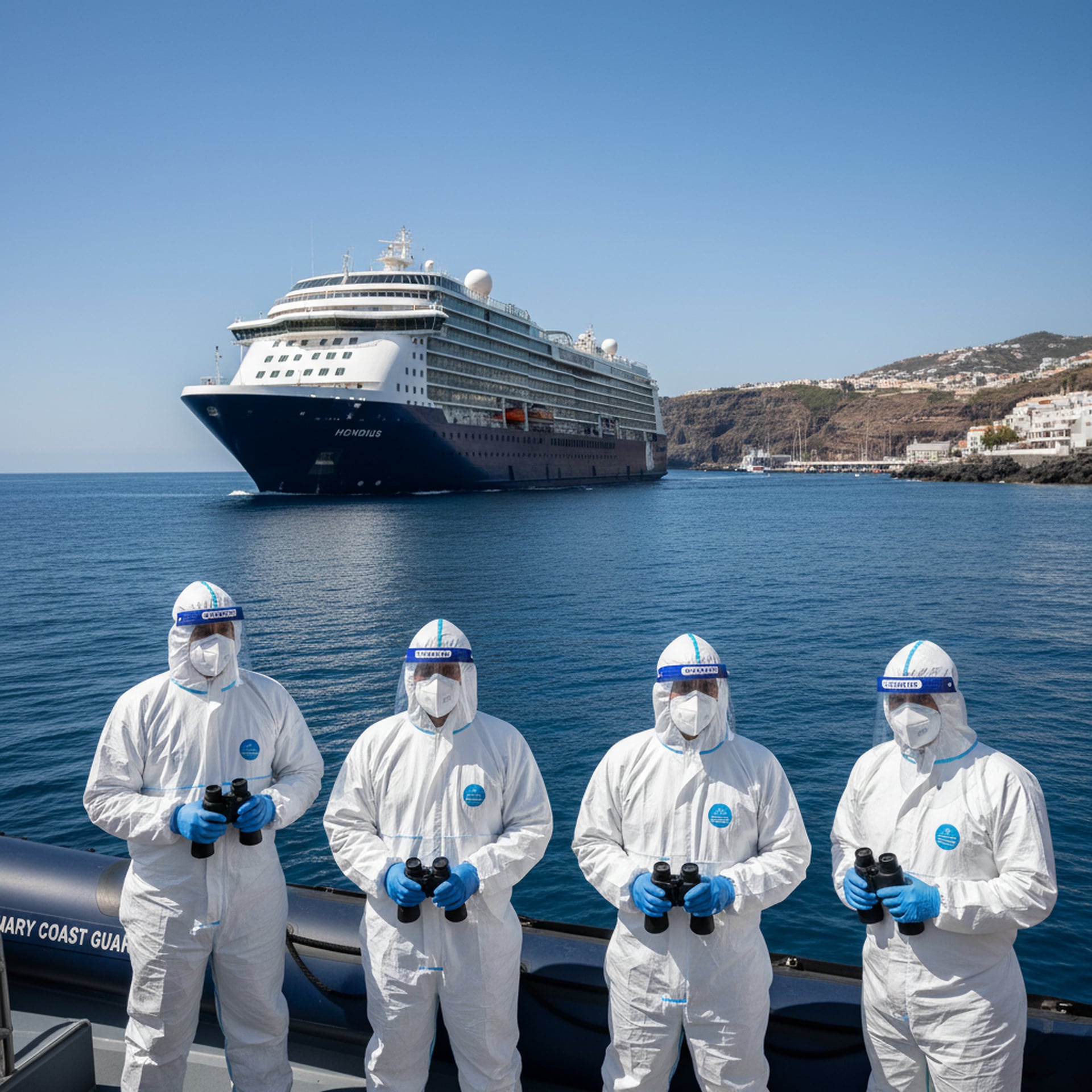
In a developing global health incident, a cruise ship identified as the Hondius, currently grappling with an outbreak of Hantavirus, is making its way towards the Canary Islands. Spanish authorities have indicated that a decision regarding the vessel's port of call will only be made following a thorough inspection by disease experts, underscoring the serious nature of the health challenge at hand. Adding a layer of complexity to the situation, the World Health Organization (WHO) has highlighted the unusual possibility that human-to-human transmission may have contributed to the spread of the virus within the ship, a departure from the typical understanding of Hantavirus epidemiology.
The Hondius, a vessel known for its expeditionary voyages, found itself at the center of international attention after reports of Hantavirus cases emerged among its passengers and crew. While the precise number of affected individuals remains under close scrutiny, the very presence of this rodent-borne virus on a cruise ship, coupled with the WHO's preliminary assessment of potential person-to-person spread, has triggered a coordinated global health response. The ship's journey towards the Canary Islands, a popular tourist destination and a gateway to Europe, necessitates stringent protocols to prevent any further dissemination of the virus and ensure the safety of both those onboard and the wider public.
Hantavirus, a family of viruses carried by rodents, can cause severe and sometimes fatal illnesses in humans. The specific symptoms and severity vary depending on the particular hantavirus strain. In general, infections manifest as either Hantavirus Pulmonary Syndrome (HPS), primarily found in the Americas, or Hemorrhagic Fever with Renal Syndrome (HFRS), more common in Europe and Asia. HPS typically begins with flu-like symptoms, including fever, muscle aches, and fatigue, rapidly progressing to respiratory distress as fluid fills the lungs. HFRS, on the other hand, involves fever, headaches, back and abdominal pain, and can lead to kidney failure. Transmission to humans usually occurs when individuals inhale aerosolized particles from rodent urine, droppings, or saliva. Direct contact with rodents or their nests can also pose a risk. Crucially, human-to-human transmission of Hantavirus is exceedingly rare and has only been documented in very specific circumstances, primarily with certain strains like Andes virus in South America. The WHO's statement regarding the Hondius outbreak, therefore, signals a potentially significant epidemiological development that warrants urgent investigation and could reshape understanding of the virus's transmissibility.
The confined and communal environment of a cruise ship presents unique challenges for managing infectious disease outbreaks. The close proximity of passengers and crew, shared dining facilities, ventilation systems, and the transient nature of the population create an ideal setting for rapid pathogen transmission. When an outbreak occurs, it triggers a complex logistical and public health dilemma involving isolation of cases, contact tracing, potential quarantine of unaffected individuals, and the safe disembarkation and medical care of those who are ill. International travel further complicates matters, as a ship can visit multiple ports in different countries, each with its own health regulations and capacities. The coordination required between the ship's medical staff, the flag state, port authorities, and international health bodies like the WHO is immense, demanding seamless communication and adherence to established global health protocols.
Spain's cautious approach to the Hondius's arrival in the Canary Islands is a testament to the gravity of the situation and the commitment to public health safety. The decision to delay port entry until a comprehensive expert assessment can be conducted aligns with international best practices for managing potential biohazards. Disease experts will likely evaluate the health status of all individuals on board, assess the effectiveness of infection control measures implemented by the ship, and determine the precise strain of Hantavirus involved. Their findings will be critical in informing subsequent actions, including the need for further isolation, medical treatment, and potential decontamination procedures. This incident underscores the critical role of national health agencies in safeguarding their borders against the importation of infectious diseases, particularly in an era of extensive global travel.
The involvement of the World Health Organization highlights the global implications of such an outbreak. The WHO plays a pivotal role in coordinating international responses to public health emergencies, providing technical guidance, and facilitating information sharing among member states. Their interest in the potential for human-to-human transmission on the Hondius is particularly noteworthy. If confirmed, this would represent a significant epidemiological shift for Hantavirus, potentially necessitating a re-evaluation of public health strategies for containment and prevention. The WHO's surveillance mechanisms are designed to detect such anomalies, ensuring that emerging threats are identified early and addressed collaboratively on an international scale, preventing localized outbreaks from escalating into wider epidemics.
Beyond the immediate health concerns, the incident carries broader implications for the global cruise industry and public confidence in travel. Cruise lines have invested heavily in health and safety protocols, particularly in the wake of previous infectious disease outbreaks. An event like the Hondius Hantavirus outbreak, especially with the added concern of person-to-person spread, can erode consumer trust and lead to economic repercussions for the industry. It serves as a stark reminder that despite advanced medical facilities on board, cruise ships remain vulnerable to infectious agents, and continuous vigilance, robust preparedness plans, and transparent communication are paramount to mitigating both health risks and reputational damage.
This evolving situation with the Hondius cruise ship and the Hantavirus outbreak underscores the interconnectedness of global health and the constant need for preparedness against emerging and re-emerging infectious diseases. The collaborative efforts between national health authorities, international organizations, and the shipping industry are vital in navigating such crises. As the Hondius approaches the Canary Islands, the world watches closely, awaiting the expert assessment that will guide the next steps in containing this unusual outbreak and providing critical insights into the complex dynamics of viral transmission in a globalized world. The lessons learned from this incident will undoubtedly contribute to strengthening international health regulations and enhancing global capacities to respond effectively to future public health challenges, ensuring the safety and well-being of communities worldwide. The ongoing vigilance and scientific inquiry into the potential for human-to-human transmission will be crucial in shaping future public health advisories and preventative measures against Hantavirus and other zoonotic pathogens.
Support Nivaran Foundation's vital work in global health surveillance and education, helping communities understand and combat emerging infectious diseases worldwide.
Talk to Nivaran Global