
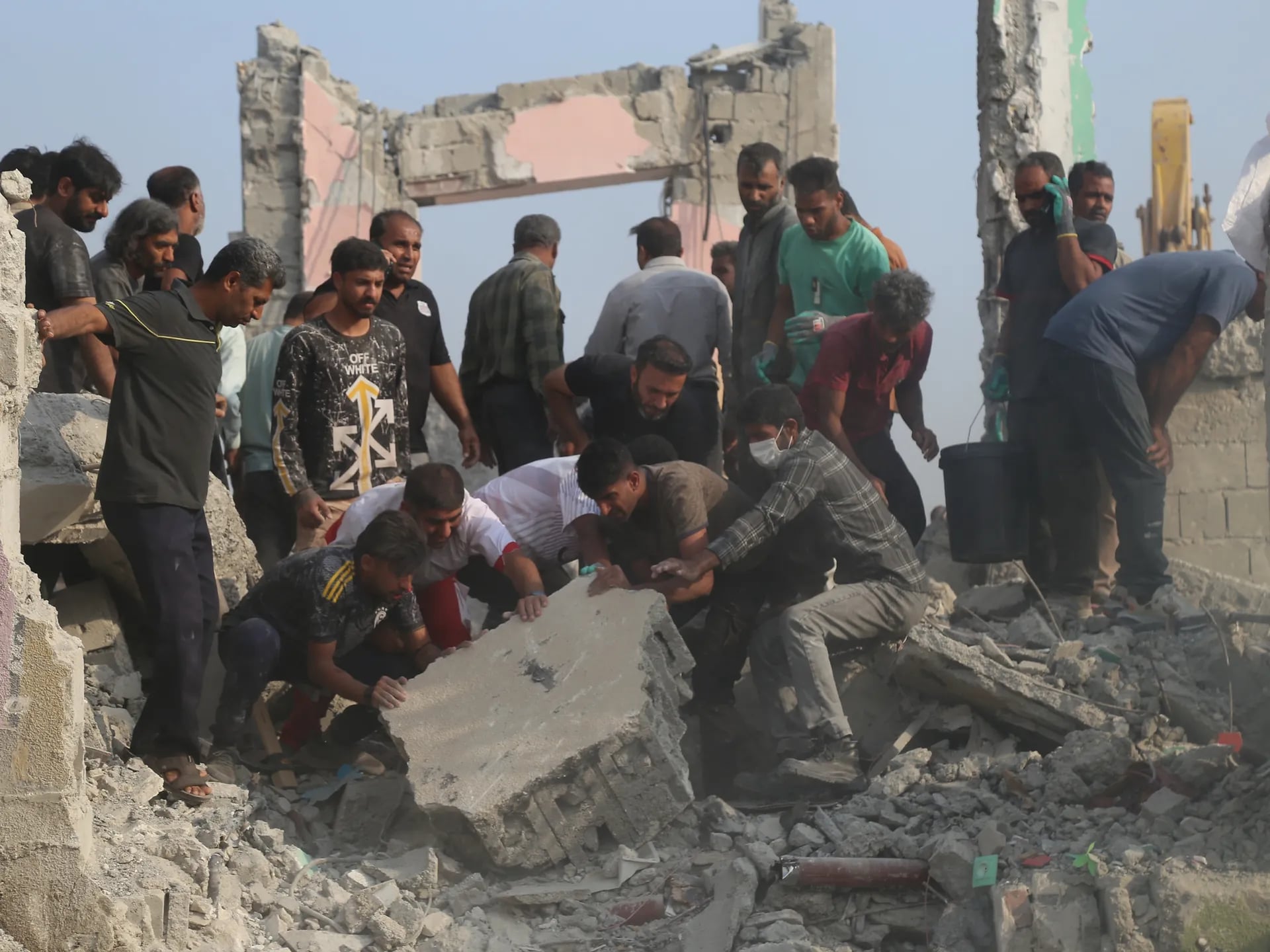
The search for Makan Nasiri, a seven-year-old boy, has officially concluded, leaving his parents in Minab, Iran, grappling with an agonizing lack of closure. Nearly seven weeks after the school he attended was bombed, authorities informed his family that the case is now closed, with no remains identified. Makan's disappearance from the aftermath of such a horrific event serves as a stark and painful reminder of the devastating toll that conflict exacts on the most vulnerable members of society – children – and the sanctity of their educational spaces. His story, while deeply personal to his grieving family, resonates with a universal tragedy unfolding in conflict zones across the globe, where schools, once havens of learning and growth, are increasingly becoming targets, shattering futures and leaving indelible scars on communities.
The targeting of educational institutions is a grave violation of international humanitarian law, yet it remains a persistent and alarming feature of modern conflicts. From the Middle East to Africa, and parts of Asia, schools are deliberately attacked, occupied by armed groups, or caught in the crossfire, turning classrooms into battlegrounds and playgrounds into scenes of devastation. These assaults not only claim innocent lives and cause physical destruction but also inflict profound psychological trauma on survivors, disrupting the very foundation of societal progress. The systematic destruction of educational infrastructure and the terrorization of students and teachers create a ripple effect that can cripple a nation's development for generations, denying millions of children their fundamental right to learn and thrive in a safe environment.
Children like Makan are often the silent victims, their lives irrevocably altered by violence they neither understand nor instigate. When schools are attacked, it is not just buildings that are destroyed; it is hope, opportunity, and the very fabric of childhood that are torn apart. The loss of a child in such circumstances is an unimaginable horror, but the lingering uncertainty, as experienced by Makan's parents, can be an even heavier burden. The inability to mourn, to bury, or even to fully comprehend what happened to their son leaves an open wound that time struggles to heal. This lack of closure is a common plight for families in conflict zones, where the chaos of war often obscures the truth and denies victims their dignity in death.
The psychological impact on children who survive such attacks, or who live in areas where schools are under constant threat, is profound. They often suffer from post-traumatic stress disorder, anxiety, and depression, hindering their ability to concentrate and learn. The fear of attending school can lead to widespread absenteeism, further exacerbating educational disparities. For communities, the destruction of a school represents more than just a physical loss; it is a symbolic blow to their aspirations and their future. Schools are often central to community life, serving as hubs for social interaction, cultural preservation, and civic engagement. Their destruction can unravel social cohesion and deepen cycles of poverty and instability.
The arduous task of identifying victims and recovering remains in the aftermath of bombings or other violent incidents in conflict zones is fraught with immense challenges. Forensic capabilities may be limited, infrastructure damaged, and the sheer scale of destruction can make individual identification incredibly difficult, if not impossible. In many cases, bodies are fragmented, buried under rubble, or simply vanish amidst the chaos, leaving families in an agonizing limbo. The process is further complicated by security concerns, lack of access to affected areas, and insufficient resources dedicated to victim identification. For families, this translates into prolonged suffering, as they cling to faint hopes while simultaneously facing the grim reality of their loss without concrete evidence.
The long-term consequences of widespread attacks on education extend far beyond individual tragedies. A generation deprived of schooling faces diminished prospects for employment, economic participation, and civic engagement. This can fuel social unrest, perpetuate cycles of violence, and hinder post-conflict reconstruction efforts. Education is a powerful tool for peacebuilding, fostering critical thinking, tolerance, and resilience. When this tool is blunted by conflict, societies lose their capacity to heal, reconcile, and build a sustainable future. The case of Makan Nasiri, therefore, is not merely an isolated incident but a microcosm of a much larger crisis that threatens global stability and human development.
The international community has a critical role to play in upholding the principles of international humanitarian law and ensuring accountability for attacks on schools and children. While numerous conventions and resolutions exist to protect educational institutions in times of conflict, their enforcement often falls short. There is an urgent need for stronger political will, enhanced monitoring mechanisms, and robust legal frameworks to deter such atrocities and bring perpetrators to justice. Furthermore, humanitarian organizations and governments must prioritize funding and support for education in emergencies, providing safe learning spaces, psychosocial support for affected children, and resources for rebuilding damaged infrastructure.
Nivaran Foundation, through its global advocacy and on-the-ground initiatives, consistently highlights the imperative of safeguarding education as a fundamental human right, even in the most challenging environments. We believe that every child, regardless of their circumstances or geographical location, deserves the opportunity to learn, grow, and realize their full potential. The tragic fate of children like Makan Nasiri underscores the urgency of our collective mission: to protect vulnerable populations, ensure access to quality education, and advocate for sustainable peace that allows communities to rebuild and thrive without the constant shadow of violence.
The story of Makan Nasiri and his parents' agonizing search for answers serves as a poignant call to action for global solidarity. It reminds us that behind every statistic of conflict and displacement are individual lives, families torn apart, and futures irrevocably altered. Protecting schools and children in conflict zones is not merely a humanitarian obligation; it is an investment in global peace and security. It requires a concerted effort from governments, civil society, international organizations, and individuals to demand an end to the targeting of education and to ensure that no child's right to learn is sacrificed at the altar of war.
Despite the profound grief and despair that such tragedies evoke, there remains a persistent hope fueled by the resilience of communities and the unwavering dedication of those who strive to rebuild. Even amidst the rubble, the desire for education often endures, a testament to its transformative power. It is this enduring spirit that must be supported and protected, ensuring that the memory of children like Makan Nasiri serves not only as a reminder of what has been lost, but also as a powerful impetus for a future where every school is a sanctuary, and every child can learn in peace.
Support Nivaran Foundation's efforts to safeguard education and protect children affected by conflict worldwide.
Talk to Nivaran Global