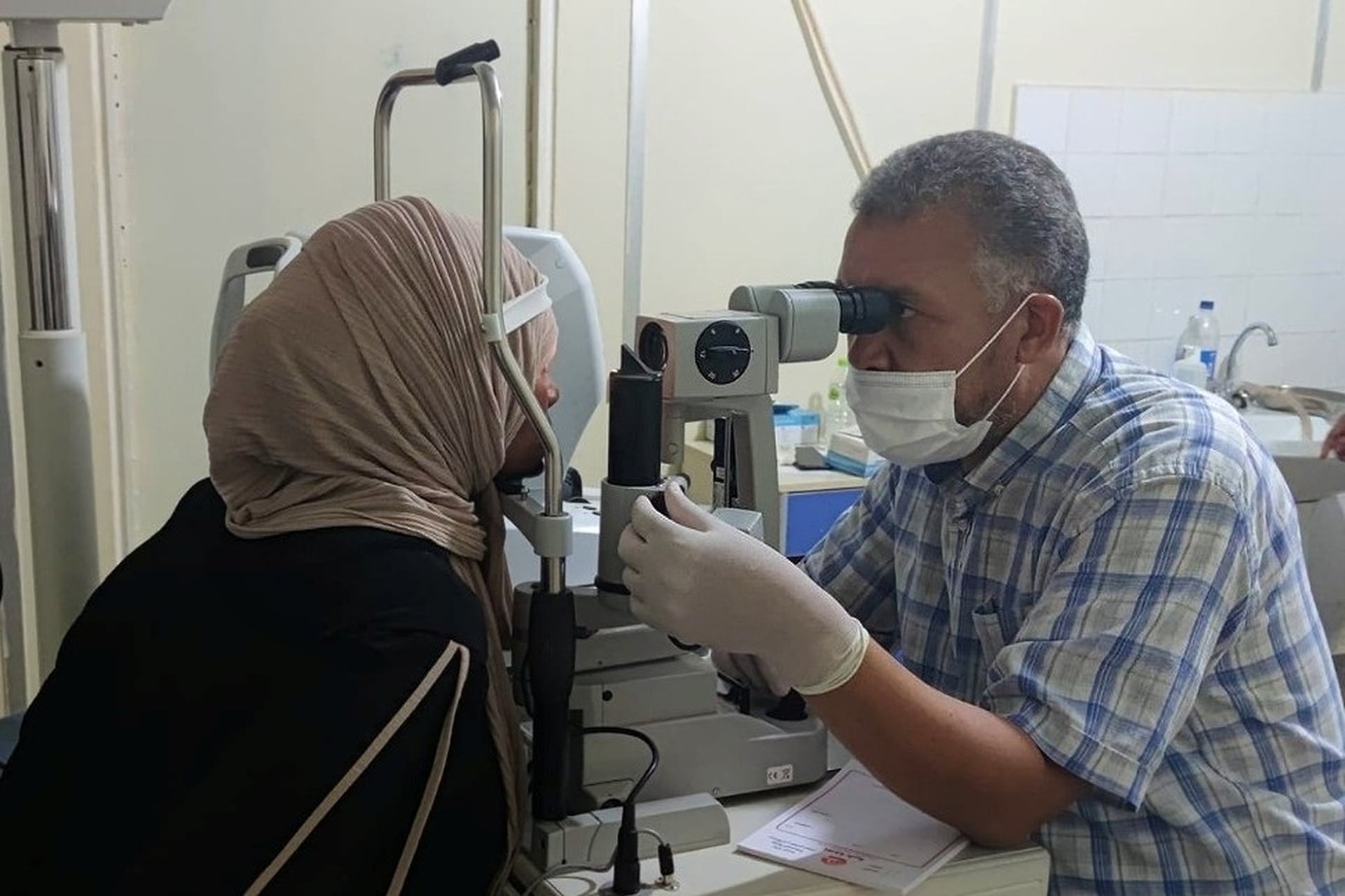
In a landmark declaration for global public health, the World Health Organization (WHO) has officially validated Libya's elimination of trachoma as a public health problem. This monumental achievement represents a hard-won victory in the fight against neglected tropical diseases (NTDs), securing a future free from preventable blindness for countless Libyans and offering a powerful testament to the impact of sustained public health interventions, even amidst challenging circumstances.
Trachoma, a bacterial infection caused by Chlamydia trachomatis, stands as the world's leading infectious cause of blindness. It primarily affects impoverished communities with limited access to clean water, sanitation, and healthcare. The disease begins as a bacterial infection of the eye, often presenting with mild irritation. However, repeated infections over many years can lead to a painful and irreversible condition known as trichiasis, where the eyelashes turn inwards and scrape against the cornea. This constant abrasion eventually causes corneal scarring, leading to irreversible blindness. Women are disproportionately affected, often due to their roles as caregivers, exposing them more frequently to infected children and environments, and suffering the debilitating consequences that further entrench cycles of poverty within families and communities.
For decades, trachoma has cast a long shadow over millions globally, robbing individuals of their sight, dignity, and economic potential. The disease not only inflicts immense personal suffering but also imposes a significant burden on healthcare systems and national economies. Children afflicted with trachoma often miss school, hindering their educational development, while adults lose their ability to work, impacting household incomes and national productivity. The elimination of such a pervasive disease, therefore, transcends mere health metrics; it signifies a profound socio-economic liberation for affected populations.
Libya's journey to this significant milestone has been marked by unwavering commitment and strategic implementation of the WHO-recommended SAFE strategy. The SAFE strategy is a comprehensive, multi-faceted approach designed to interrupt the transmission cycle of trachoma and prevent its blinding consequences. Each letter in SAFE represents a crucial component:
S for Surgery: This involves providing surgical intervention for individuals suffering from trichiasis. Skilled surgeons perform a relatively simple procedure to correct the in-turned eyelashes, alleviating pain and preventing further damage to the cornea, thereby preserving or restoring sight.
A for Antibiotics: Mass drug administration (MDA) of the antibiotic azithromycin is a cornerstone of the strategy. This involves distributing antibiotics to entire communities where trachoma is endemic, even to those without visible symptoms, to reduce the overall burden of infection and break the chain of transmission. This community-wide approach is critical for effective control.
F for Facial Cleanliness: Promoting good hygiene practices, particularly regular face washing, is vital. Clean faces reduce the presence of ocular discharge, which attracts flies that act as vectors for the bacteria. Public health campaigns focusing on behavioral change and education are essential for fostering these habits.
E for Environmental Improvement: This component addresses the underlying socio-environmental factors that facilitate trachoma transmission. It includes improving access to clean water sources, constructing and maintaining adequate sanitation facilities (latrines), and promoting waste management. These improvements reduce breeding grounds for flies and limit exposure to contaminated environments.
Despite facing various internal challenges, including periods of instability, Libya demonstrated remarkable resilience and dedication to its public health goals. The nation's health authorities, in collaboration with international partners, meticulously implemented the SAFE strategy across affected regions. This involved training healthcare professionals, establishing robust surveillance systems, conducting extensive community outreach programs, and ensuring the consistent supply and distribution of necessary medical resources. The commitment of local health workers, often operating in difficult conditions, was instrumental in reaching remote communities and ensuring widespread coverage of interventions.
Achieving validation from the WHO is a rigorous process. It requires a country to demonstrate that it has met specific epidemiological criteria, including a sustained reduction in the prevalence of blinding trachoma (trichiasis) to less than 0.2% in people aged 15 years and older, and a reduction in the prevalence of the infectious agent (Chlamydia trachomatis) in children aged 1-9 years to less than 5%, for at least three years. Libya successfully provided compelling evidence of these achievements through comprehensive surveys and data collection, confirming that trachoma no longer poses a public health threat within its borders.
This success holds profound implications, both domestically and globally. For Libya, it means that future generations will grow up without the fear of this debilitating disease, free to pursue education, work, and contribute fully to society. It alleviates a significant burden on the national health system, allowing resources to be redirected to other pressing health priorities. Economically, the prevention of blindness translates into increased productivity and reduced healthcare costs, fostering greater prosperity and stability.
Beyond Libya's borders, this accomplishment serves as a powerful beacon of hope and a practical blueprint for other nations still grappling with trachoma and other neglected tropical diseases. It underscores the critical importance of political will, sustained funding, robust national health programs, and genuine community engagement. Libya's experience demonstrates that even in complex environments, focused public health initiatives can yield extraordinary results. It reminds the global health community that with concerted effort, even the most entrenched diseases can be overcome.
The elimination of trachoma in Libya is also a significant step forward for the WHO's Eastern Mediterranean Region, contributing to the broader global target of eliminating NTDs by 2030, as outlined in the WHO's road map. It adds to the growing list of countries that have successfully eliminated trachoma, inspiring continued momentum towards a world free from preventable blindness and other NTDs. The lessons learned from Libya's journey – particularly regarding adapting strategies to local contexts and maintaining program continuity despite adversity – are invaluable for global health practitioners.
While this milestone is a cause for celebration, vigilance remains paramount. Maintaining elimination status requires ongoing surveillance to detect any potential resurgence of the disease and ensuring that access to clean water, sanitation, and hygiene education remains a priority. Strengthening primary healthcare systems will be crucial in sustaining these gains and addressing other health challenges that communities face.
Libya's triumph over trachoma is more than just a public health victory; it is a testament to human resilience, the power of collaboration, and the unwavering commitment to a healthier, more equitable world. It stands as a powerful reminder that through collective action and dedicated effort, even the most formidable health challenges can be transformed into stories of success and hope for humanity.
Support Nivaran Foundation's mission to bring health and education solutions to communities worldwide, inspired by achievements like Libya's trachoma elimination.
Talk to Nivaran Global