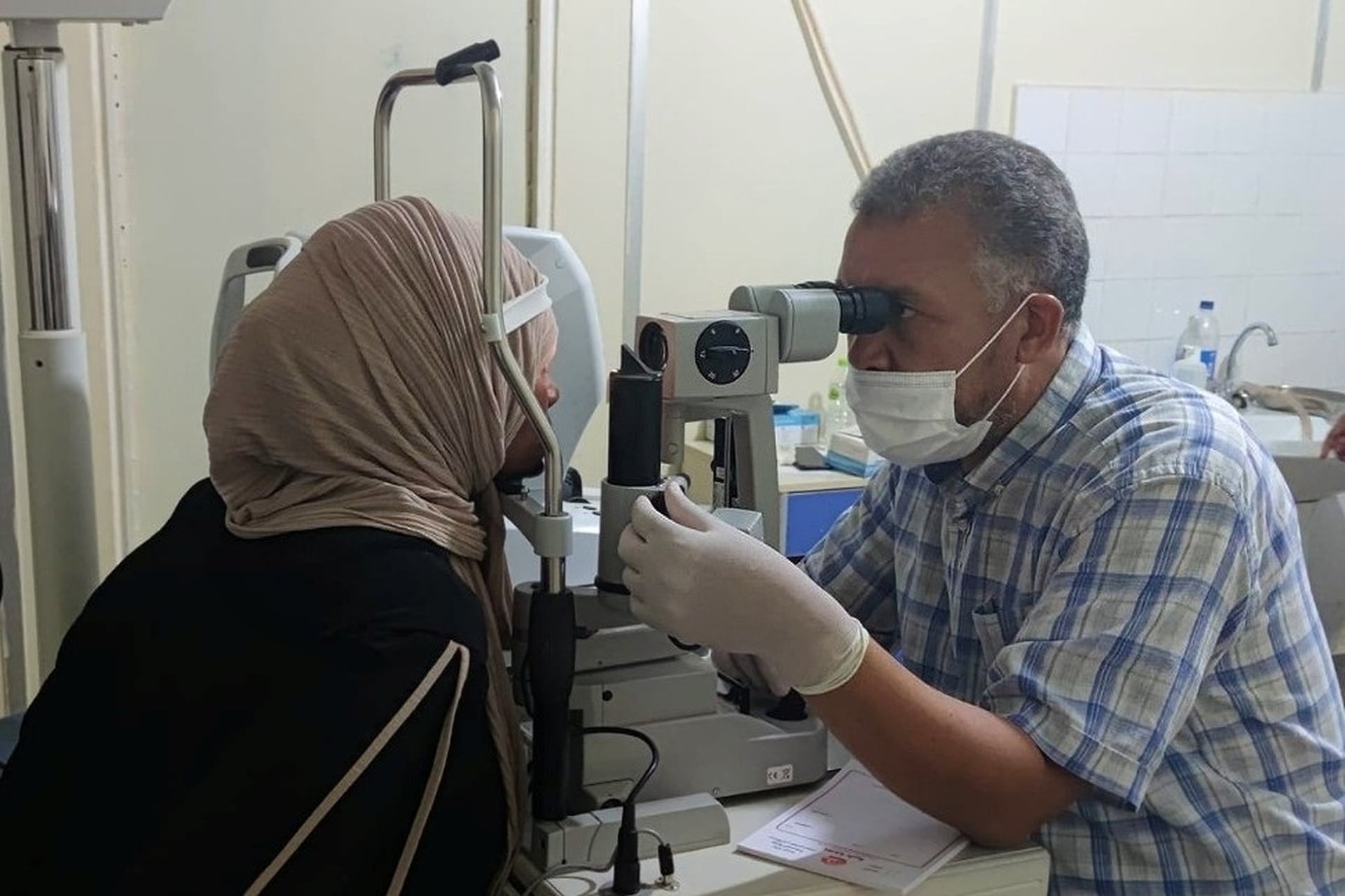
The global fight against preventable diseases has achieved a significant victory as the World Health Organization (WHO) officially validated Libya's elimination of trachoma as a public health problem. This landmark announcement, made on February 18, 2026, marks a profound success for public health within the WHO’s Eastern Mediterranean Region and stands as a powerful testament to the unwavering commitment required to overcome neglected tropical diseases (NTDs). For a nation that has faced considerable challenges, this achievement not only protects its future generations from a debilitating and preventable form of blindness but also serves as an inspiring reminder that sustained public health interventions can yield transformative results, even amidst complex circumstances.
Trachoma, caused by the bacterium Chlamydia trachomatis, is the world's leading infectious cause of blindness. It is a chronic disease that primarily affects marginalized communities with limited access to clean water, sanitation, and healthcare. The infection typically begins in childhood, manifesting as a bacterial conjunctivitis that can cause irritation, discharge, and swelling. Repeated infections over many years lead to a painful condition known as trachomatous trichiasis (TT), where the eyelids turn inwards, causing the eyelashes to rub against the cornea. This constant abrasion results in immense pain, corneal scarring, and eventually irreversible blindness. The cycle of infection is often perpetuated within families and communities, as the bacteria spread through direct contact with eye and nose discharge of infected individuals, as well as via flies that have been in contact with such discharges. The socio-economic ramifications of trachoma are profound, trapping individuals and communities in a cycle of poverty. Blindness prevents adults from working and children from attending school, further exacerbating inequalities and hindering development. The elimination of such a disease therefore represents not just a health victory, but a significant step towards broader societal progress and human dignity.
The global strategy for trachoma elimination, endorsed by the WHO, is known by the acronym SAFE: Surgery for trichiasis, Antibiotics to treat infection, Facial cleanliness, and Environmental improvements. Each component of this comprehensive strategy is critical to breaking the cycle of transmission and preventing new cases. Surgery is offered to individuals suffering from trichiasis to correct the inward-turning eyelids, thereby preventing further corneal damage and preserving sight. Antibiotics, particularly azithromycin, are administered to entire communities to reduce the bacterial load and interrupt transmission. This mass drug administration (MDA) is a cornerstone of the strategy, requiring extensive logistical planning and community engagement. Facial cleanliness campaigns educate communities on the importance of washing faces regularly, especially in children, to reduce the presence of eye and nose discharge that attracts flies and facilitates bacterial spread. Finally, environmental improvements focus on providing access to clean water and adequate sanitation facilities. Improved water sources reduce the need for long journeys to fetch water, freeing up time for hygiene practices, while improved latrines reduce fly breeding sites and interrupt the faecal-oral transmission routes of other diseases, indirectly impacting trachoma. Libya’s success underscores the effective implementation and integration of all these SAFE components into its national health programs.
Libya's journey to elimination was undoubtedly a long and arduous one, requiring decades of dedicated effort and strategic partnerships. While specific details of their national program are extensive, the general framework would have involved robust surveillance systems to identify affected areas, widespread community-based interventions, and consistent monitoring and evaluation. The nation’s public health infrastructure, despite facing various internal and external pressures, demonstrated remarkable resilience and commitment. Collaboration between the Libyan Ministry of Health, the WHO, and other international and local partners would have been instrumental in mobilizing resources, training healthcare workers, and ensuring the equitable distribution of interventions. This sustained commitment, often in challenging environments, is a hallmark of successful NTD elimination programs. The ability to maintain focus on public health goals, even when faced with competing priorities, speaks volumes about the dedication of the healthcare professionals and policymakers involved.
The elimination of trachoma in Libya carries significant implications beyond its borders. It contributes to the global target of eliminating at least one NTD in 100 countries by 2030, a goal set within the WHO's NTD roadmap. Libya now joins a growing list of countries, including Morocco, Oman, and Saudi Arabia in the Eastern Mediterranean Region, and many others globally, that have successfully eliminated trachoma. Each such victory adds momentum to the broader movement to eradicate NTDs, demonstrating that these diseases, often considered diseases of poverty, are indeed conquerable. The success in Libya provides invaluable lessons for other nations still grappling with trachoma, particularly those in conflict zones or with fragile health systems, highlighting the importance of adaptable strategies and community ownership. It reinforces the message that even in complex humanitarian settings, public health achievements are possible with strategic planning, sustained funding, and strong political will.
Beyond the immediate health benefits, the elimination of trachoma unlocks significant socio-economic advantages for Libya. Preventing blindness means more children can attend school, leading to improved educational outcomes and greater opportunities for future generations. Adults, free from the debilitating pain and vision loss, can participate more fully in the workforce, boosting productivity and contributing to economic growth. The reduction in healthcare costs associated with treating trachoma and its complications frees up resources that can be redirected to other pressing health needs. Furthermore, the improvements in water and sanitation infrastructure, integral to the SAFE strategy, have broader public health benefits, reducing the incidence of other waterborne and hygiene-related diseases. This holistic impact underscores that investments in NTD elimination are not merely health expenditures but fundamental investments in human capital and sustainable development.
Despite these successes, the global fight against NTDs continues to face considerable challenges. Funding remains a critical hurdle, as many NTDs disproportionately affect low-income countries with limited national budgets. Ensuring sustained access to medicines, diagnostic tools, and surgical services requires robust supply chains and equitable distribution mechanisms. Political instability, conflict, and population displacement can disrupt health services, making it difficult to implement and sustain elimination programs. Climate change also poses emerging threats, potentially altering the geographical distribution of vectors and increasing the risk of certain NTDs. Moreover, maintaining vigilance after elimination is crucial. Countries must implement robust post-validation surveillance systems to detect and respond to any re-emergence of the disease, ensuring that the gains made are not reversed. This requires ongoing investment in public health infrastructure, trained personnel, and community awareness.
Libya's achievement serves as a powerful call to action for the international community to redouble efforts in the fight against all NTDs. It demonstrates that with concerted global cooperation, scientific innovation, and community engagement, even the most entrenched diseases can be overcome. The Nivaran Foundation, through its global news desk, champions such stories of progress, believing that shared knowledge and successful models are vital catalysts for change. This victory in Libya is not just a national triumph but a global beacon of hope, illustrating what is possible when humanity unites against common health adversaries. It reinforces the critical role of organizations like the WHO in coordinating global health efforts and validating achievements, providing the necessary framework for countries to aspire to and achieve such monumental public health goals.
The path forward for global health involves not only celebrating these victories but also learning from them to accelerate progress in other areas. The lessons from Libya’s trachoma elimination program—the importance of a multi-faceted approach, community involvement, sustained political will, and international partnership—are universally applicable. As the world continues its journey towards achieving universal health coverage and the Sustainable Development Goals, the elimination of diseases like trachoma stands as a tangible marker of progress, reminding us that a healthier, more equitable future is within reach for all.
Support Nivaran Foundation's global initiatives to combat preventable diseases and uplift communities worldwide.
Talk to Nivaran Global