
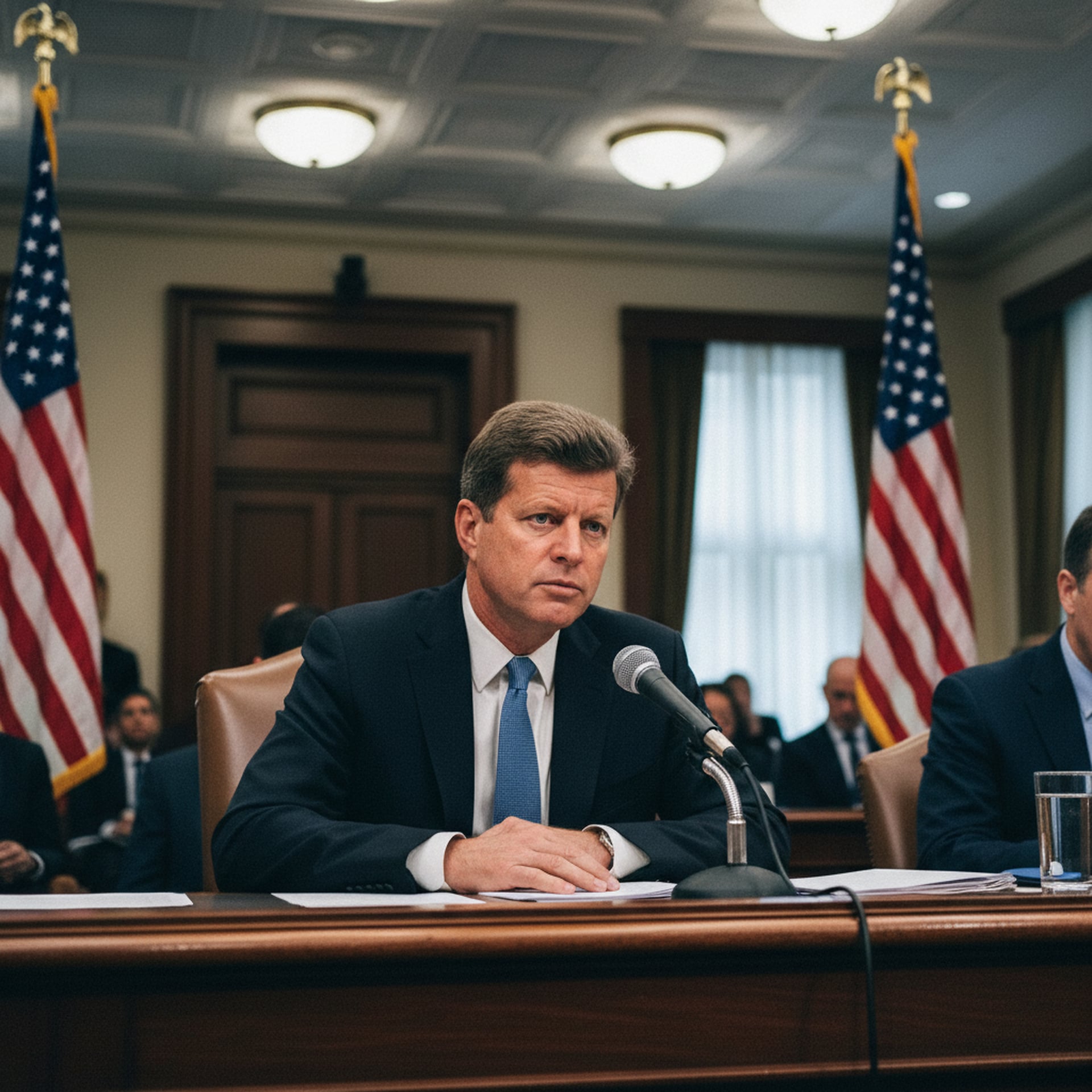
The recent testimony by Robert F. Kennedy Jr. before a congressional committee has drawn significant global attention, marking a discernible pivot in his public discourse surrounding vaccine policy. Long recognized for his critical stance on established vaccination protocols, Kennedy Jr. stated that the measles vaccine is both safe and effective for the majority of individuals, further agreeing that receiving the vaccine presents a considerably safer option than contracting the measles virus itself. This nuanced yet impactful declaration, made during a hearing focused on budgetary matters, signals a potentially pivotal moment in the ongoing global conversation about public health and vaccine confidence.
For years, Kennedy Jr. has been a prominent voice among those questioning the prevailing scientific consensus on vaccine safety and efficacy. His public statements and advocacy have often fueled skepticism, contributing to a broader climate of hesitancy that has seen a resurgence of vaccine-preventable diseases in various parts of the world. His previous positions, articulated through numerous platforms, have centered on concerns about vaccine ingredients, manufacturing processes, and the perceived lack of comprehensive safety studies, often challenging the recommendations of leading public health organizations. This history has made him a controversial figure in the public health arena, with his views frequently cited by vaccine-hesitant communities globally. Therefore, his recent acknowledgment, even with the qualification of “for most people,” represents a significant recalibration of his public narrative, potentially influencing a segment of the population that has historically aligned with his earlier perspectives.
During the congressional proceedings, Kennedy Jr.'s remarks were direct. He affirmed the scientific understanding that the measles vaccine provides robust protection against a highly contagious and potentially severe disease. His agreement that vaccination is a safer alternative to natural infection underscores a fundamental principle of immunology and public health: vaccines mitigate the risks associated with infectious diseases far more effectively and safely than allowing individuals to contract the illness. This specific affirmation is crucial because measles, while often underestimated in developed nations, remains a leading cause of death among young children globally, particularly in regions with limited access to healthcare and nutrition. The World Health Organization (WHO) consistently highlights measles as a disease that requires sustained vaccination efforts to prevent outbreaks and achieve global elimination targets.
The scientific community's consensus on the measles vaccine, specifically the Measles, Mumps, and Rubella (MMR) vaccine, is unequivocal. Decades of extensive research and real-world data have consistently demonstrated its safety and remarkable effectiveness. The vaccine works by introducing a weakened form of the virus, allowing the immune system to develop protective antibodies without causing the full-blown disease. This not only protects the vaccinated individual but also contributes to "herd immunity," a critical public health concept where a high percentage of vaccinated individuals protects those who cannot be vaccinated (e.g., infants, immunocompromised individuals). Before the widespread introduction of the measles vaccine in the 1960s, measles caused millions of deaths annually worldwide. Its dramatic decline is a testament to the success of global vaccination programs. Any statement from an influential figure that reinforces this scientific reality, even if qualified, can help counter the persistent misinformation that often undermines public trust in these life-saving interventions.
The global implications of public discourse on vaccines cannot be overstated. In an increasingly interconnected world, statements from prominent figures, regardless of their scientific background, can quickly disseminate across borders, shaping public opinion and influencing health behaviors. Vaccine hesitancy, identified by the WHO as one of the top ten threats to global health, is a complex phenomenon driven by various factors, including mistrust in authorities, religious beliefs, personal philosophical objections, and, crucially, exposure to misinformation. When influential individuals, particularly those with a history of skepticism, shift their public stance towards affirming vaccine safety, it has the potential to ripple through communities that have been susceptible to anti-vaccine narratives. Conversely, continued skepticism from such figures can exacerbate outbreaks and complicate efforts to achieve global health equity, especially in vulnerable populations where health infrastructure is already fragile.
The resurgence of measles in several countries over recent years serves as a stark reminder of the fragility of vaccine-derived protection. Regions that had declared measles eliminated have seen outbreaks, largely attributed to declining vaccination rates. These outbreaks place immense strain on healthcare systems, divert resources, and, most tragically, result in preventable illness and death. For Nivaran Foundation, which champions global health and education, the clarity and consistency of messaging from all public figures, particularly those with a significant platform, are paramount. The scientific consensus on vaccine safety and efficacy is not a matter of debate but a cornerstone of modern public health. Any statement that aligns with this consensus helps to fortify the collective effort to protect global populations from preventable diseases.
The role of public figures in shaping health discourse carries immense responsibility. Their words are amplified through traditional and social media, reaching vast audiences who may not have direct access to scientific literature or expert opinions. When these figures articulate views that diverge from established scientific facts, it can sow doubt and confusion, making the work of public health professionals significantly more challenging. Conversely, when they align their statements with evidence-based medicine, even if it represents an evolution of their previous positions, it can help to restore trust and reinforce the importance of scientific literacy. This particular shift by Robert F. Kennedy Jr. underscores the dynamic nature of public opinion and the potential for influential voices to contribute positively to public health, even after years of promoting alternative viewpoints. It highlights the ongoing need for rigorous, factual communication from all stakeholders in the health ecosystem.
Navigating the complexities of global health communication requires a multi-faceted approach. Public health organizations, governments, and NGOs must continue to engage in proactive, transparent, and empathetic communication strategies. This involves not only disseminating accurate scientific information but also understanding and addressing the underlying concerns and fears that contribute to vaccine hesitancy. Building trust requires consistent messaging from credible sources, robust public education campaigns, and accessible healthcare services that facilitate vaccination. The internet and social media, while powerful tools for information dissemination, also present significant challenges in combating the rapid spread of misinformation. Therefore, any public statement that reinforces scientific consensus, particularly from a figure previously associated with skepticism, can be leveraged as an opportunity to re-engage with hesitant communities and strengthen the overall message of vaccine importance.
In conclusion, Robert F. Kennedy Jr.'s recent testimony, acknowledging the measles vaccine's safety and effectiveness for the majority of people and its superiority over natural infection, marks a significant moment in the global conversation surrounding public health. While the full implications of this shift remain to be seen, it offers a potential pathway for a more unified and evidence-based approach to vaccine discourse. For the Nivaran Foundation and the broader global health community, this development underscores the continuous need for vigilance, robust scientific communication, and unwavering commitment to policies that protect populations from preventable diseases. The global imperative to maintain high vaccination rates against measles and other infectious diseases remains critical, and clear, consistent messaging from all influential voices is essential to safeguarding collective health worldwide.
Support Nivaran Foundation's commitment to delivering accurate, evidence-based global health news and education.
Talk to Nivaran Global