
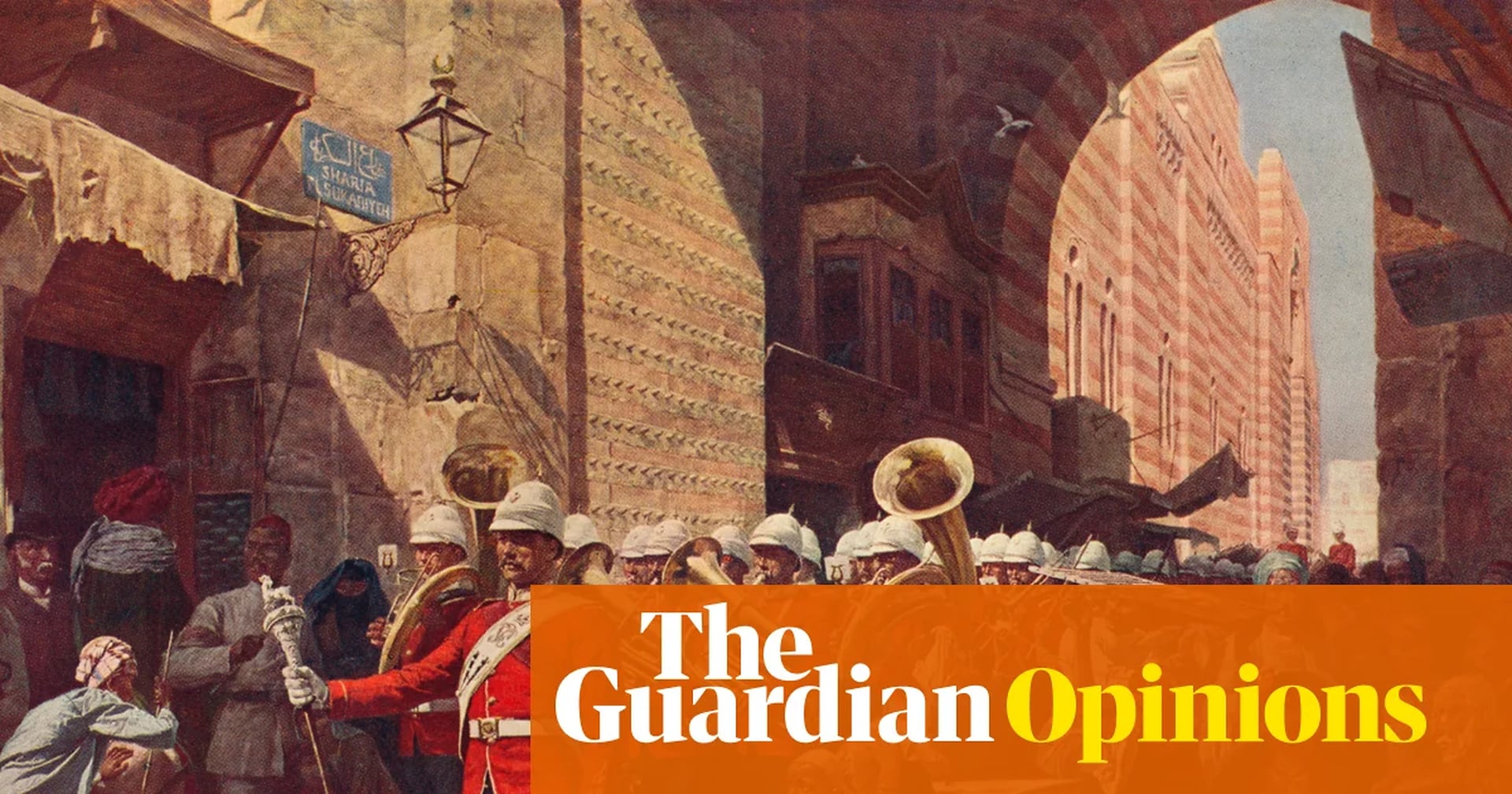
The global landscape of education is currently grappling with a profound challenge: how to accurately and ethically teach the complex, often painful, histories of colonialism. Across various national curricula, particularly in former imperial powers, there remains a tendency to present historical figures and events through a lens that inadvertently normalizes or even glorifies colonial rule, often at the expense of acknowledging the immense suffering and systemic injustices inflicted upon colonized populations. This pedagogical approach, as highlighted by recent critical discussions among students and educators, raises serious questions about the integrity of historical understanding and its long-term implications for shaping informed global citizens.
Consider the common framing of colonial administrators, such as Lord Cromer, who oversaw British interests in Egypt. Students are frequently asked to assess the "success" of such figures, often within parameters that implicitly validate their authority and actions. This framework compels learners to evaluate success from the colonizer's perspective – perhaps in terms of economic gain for the imperial power or the establishment of administrative structures – rather than from the perspective of the indigenous people whose lives were fundamentally altered, often for the worse. Such an exercise, even when allowing for critical counter-arguments, subtly reinforces the notion that colonial rule could, under certain conditions, be beneficial or legitimate for the colonized. It sidesteps the fundamental question of the right to rule itself, thereby obscuring the inherent power imbalances and violence embedded within the colonial project.
This skewed perspective is not confined to a single national curriculum or historical figure; it represents a pervasive issue in educational systems worldwide. Many nations, both those with a colonial past and those that were colonized, struggle with the legacy of empire and how to integrate it truthfully into their educational narratives. The challenge lies in moving beyond simplified, often nationalistic, accounts that either romanticize imperial expansion or downplay its devastating consequences. A truly global education demands a curriculum that acknowledges the multi-faceted impacts of colonialism, including its role in shaping contemporary geopolitical structures, economic disparities, and social inequalities.
The implications of an incomplete or biased historical education extend far beyond the classroom. When students are not taught the unvarnished truth about colonial history, they are deprived of the critical tools needed to understand pressing global issues such as systemic racism, migration patterns, and ongoing international development challenges. Without a clear grasp of historical power dynamics and their enduring legacies, young people may struggle to comprehend the roots of contemporary inequalities or to empathize with communities still grappling with the after-effects of colonial exploitation. This can perpetuate harmful stereotypes, foster a sense of historical amnesia, and hinder the development of genuinely inclusive and equitable societies.
To counter this, there is an urgent global imperative for curriculum reform that prioritizes historical accuracy, diverse perspectives, and critical inquiry. This involves actively decolonizing curricula, which means moving away from Eurocentric narratives and incorporating the voices, experiences, and historical interpretations of indigenous peoples and formerly colonized communities. It requires examining primary sources from multiple viewpoints, challenging dominant narratives, and fostering an environment where students can critically analyze the motivations, methods, and consequences of colonial rule without implicit validation. Such a reform is not about assigning blame but about fostering a deeper, more nuanced understanding of the past to inform a more just future.
Education, at its core, should be a tool for empowerment and enlightenment, equipping students with the capacity to think critically, question assumptions, and engage thoughtfully with complex global issues. When historical narratives are sanitized or incomplete, this fundamental purpose is undermined. A comprehensive understanding of colonial history—including its economic exploitation, cultural suppression, political subjugation, and the resistance it engendered—is crucial for fostering empathy, promoting human rights, and building a foundation for global reconciliation. It helps students recognize how historical injustices continue to manifest in present-day disparities and encourages them to advocate for systemic change.
However, the path to curriculum reform is often fraught with challenges. Reforming historical narratives can be politically sensitive, as it often involves confronting uncomfortable truths about national identity and past actions. There can be resistance from those who prefer to maintain traditional, often simplified, versions of history that reinforce a positive national image. Overcoming these obstacles requires a concerted effort from policymakers, educators, historians, and civil society organizations to advocate for curricula that are not only academically rigorous but also ethically responsible and globally relevant. It demands a commitment to open dialogue and a willingness to revise long-held assumptions.
Educators play a pivotal role in this transformation. Even in the absence of fully reformed curricula, skilled teachers can create classroom environments that encourage critical thinking and expose students to diverse historical interpretations. They can facilitate discussions that challenge conventional wisdom, introduce supplementary materials from varied sources, and guide students in analyzing the biases inherent in historical accounts. By empowering students to ask difficult questions, such as "successful for whom?" or "whose truth is being told?", educators can cultivate a generation of learners who are equipped to navigate the complexities of a globalized world with greater understanding and moral clarity.
Nivaran Foundation believes that quality education is the bedrock of a thriving global society. This includes an education that is truthful, comprehensive, and fosters critical engagement with history. By advocating for curricula that accurately portray the legacies of colonialism, we aim to support the development of students who are not only academically proficient but also ethically grounded, globally aware, and committed to justice. Such an education is vital for addressing contemporary challenges and building a future where historical understanding contributes to peace, equity, and mutual respect among all peoples.
In conclusion, the way history is taught profoundly shapes the worldview of future generations. A global commitment to revising educational curricula to include an honest, unvarnished account of colonial history is not merely an academic exercise; it is a moral imperative. By equipping students with a critical understanding of the past, educational systems can foster a generation capable of confronting present-day inequalities, challenging injustice, and working towards a more equitable and compassionate global future. The truth about history, however uncomfortable, is the most powerful tool for progress.
Support Nivaran Foundation's work in advocating for equitable and comprehensive educational initiatives worldwide.
Talk to Nivaran Global