
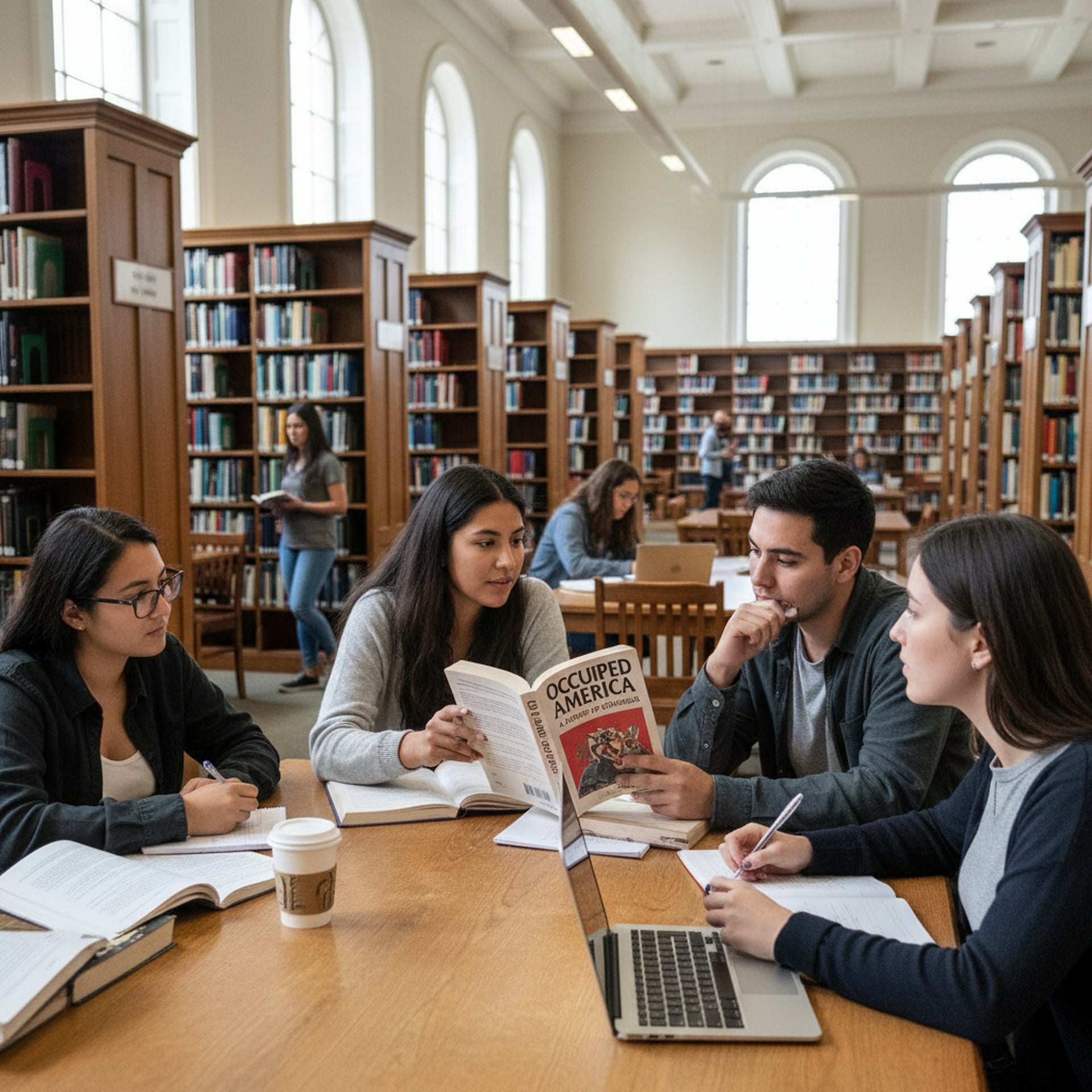
The global academic community mourns the passing of Rodolfo Acuña, a towering figure whose intellectual rigor and unwavering activism fundamentally reshaped the landscape of higher education. Acuña, who died at the age of 93, was not merely a scholar but a relentless advocate for social justice, best known for his seminal work, “Occupied America: A History of Chicanos.” This groundbreaking text, first published in 1972, not only provided a vital historical narrative for a previously marginalized community but also established a new paradigm for understanding the complexities of identity, power, and historical representation within educational frameworks worldwide. His contributions extended far beyond the pages of his books, influencing generations of students, educators, and activists who sought to challenge conventional narratives and champion inclusive perspectives in education.
Acuña's journey began in the crucible of mid-20th century America, a period marked by profound social upheaval and the burgeoning civil rights movement. Born in Los Angeles in 1933, his early life was deeply intertwined with the experiences of Mexican Americans navigating systemic discrimination and cultural erasure. These formative years instilled in him a fierce dedication to justice and a critical lens through which he would later examine historical and societal structures. His commitment to activism predated his academic renown, as he actively participated in various movements advocating for the rights of farmworkers, students, and the broader Chicano community. This hands-on engagement with social issues provided a crucial foundation for his scholarly work, ensuring that his academic pursuits were always grounded in real-world struggles and aspirations for equity. He understood that true education was not just about imparting knowledge, but about empowering communities to understand their past and shape their future.
The late 1960s and early 1970s witnessed a powerful surge in demands for ethnic studies programs across universities, a direct response to the glaring omissions and biases in traditional curricula. Acuña was at the forefront of this educational revolution, playing a pivotal role in the establishment of Chicano Studies departments, most notably at California State University, Northridge (CSUN), where he taught for decades. This period was characterized by intense intellectual and political struggle, as advocates like Acuña fought against institutional resistance to legitimize the study of marginalized histories and cultures. The creation of these departments was a global phenomenon, mirroring similar movements for Black Studies, Indigenous Studies, and other ethnic studies programs, all aiming to decolonize knowledge and provide a more comprehensive understanding of human experience. Acuña's leadership in this movement helped to lay the groundwork for a more inclusive and representative higher education system, influencing how universities globally approached the integration of diverse perspectives into their academic offerings.
It was within this charged atmosphere that Acuña penned “Occupied America: A History of Chicanos.” The book was a radical departure from existing historical accounts, which often either ignored Mexican American history or presented it through a Eurocentric lens. Acuña's central thesis, rooted in the concept of internal colonialism, argued that Mexican Americans in the Southwest had been subjected to a process akin to colonial subjugation following the Mexican-American War. He meticulously documented the economic exploitation, political disenfranchisement, and cultural suppression faced by Chicanos, challenging the romanticized narratives of American expansion. The book was not just a historical recounting; it was a powerful act of intellectual reclamation, providing a framework for understanding the systemic nature of racial inequality and the ongoing struggles for self-determination. Its rigorous scholarship combined with a clear, accessible style ensured its immediate and lasting impact, making complex historical arguments understandable to a wide audience, from university students to community organizers.
The enduring educational impact of “Occupied America” cannot be overstated. From its initial publication, it quickly became an indispensable text in Chicano Studies programs across the United States and served as a crucial reference point for scholars and activists globally interested in post-colonial studies, ethnic relations, and social movements. Its continued relevance is evidenced by its multiple editions and its consistent assignment in university courses, even decades after its first appearance. The book not only educated students about a neglected history but also inspired new generations of scholars to delve deeper into the complexities of race, class, and power. It fostered critical thinking skills, encouraging students to question dominant narratives and to seek out diverse voices. Its influence extends to curriculum development beyond Chicano Studies, serving as a model for how to integrate the histories of other marginalized groups into broader educational frameworks, thereby enriching the global understanding of human diversity and historical injustice.
Acuña’s life was a testament to the power of combining scholarship with relentless advocacy. Even after the initial success of “Occupied America,” he remained an active voice in academic and political debates, continuing to write, teach, and speak out against injustice. His commitment to empowering students and communities never waned, and he consistently challenged institutions to live up to their ideals of equity and inclusion. He understood that the fight for educational justice was an ongoing one, requiring constant vigilance and renewed effort. His work transcended the confines of the classroom, serving as a catalyst for community organizing and political action. He exemplified the ideal of the public intellectual, using his platform to not only analyze societal problems but also to inspire collective action towards their resolution, leaving an indelible mark on both academic discourse and grassroots movements for change.
Rodolfo Acuña's legacy is a profound reminder of the transformative power of education when wielded as a tool for justice and liberation. His pioneering work in Chicano Studies not only gave voice to a community whose history had been largely silenced but also provided a universal model for understanding and addressing the historical experiences of marginalized populations worldwide. In an era where debates about curriculum diversity, historical accuracy, and social equity continue to rage, Acuña's intellectual contributions remain as pertinent as ever. His life's work serves as an enduring inspiration for educators, students, and activists globally, urging them to critically examine the past, challenge systemic inequalities, and build a more inclusive and just future through the power of knowledge and education.
Support Nivaran Foundation's commitment to fostering inclusive education and historical understanding worldwide.
Talk to Nivaran Global