
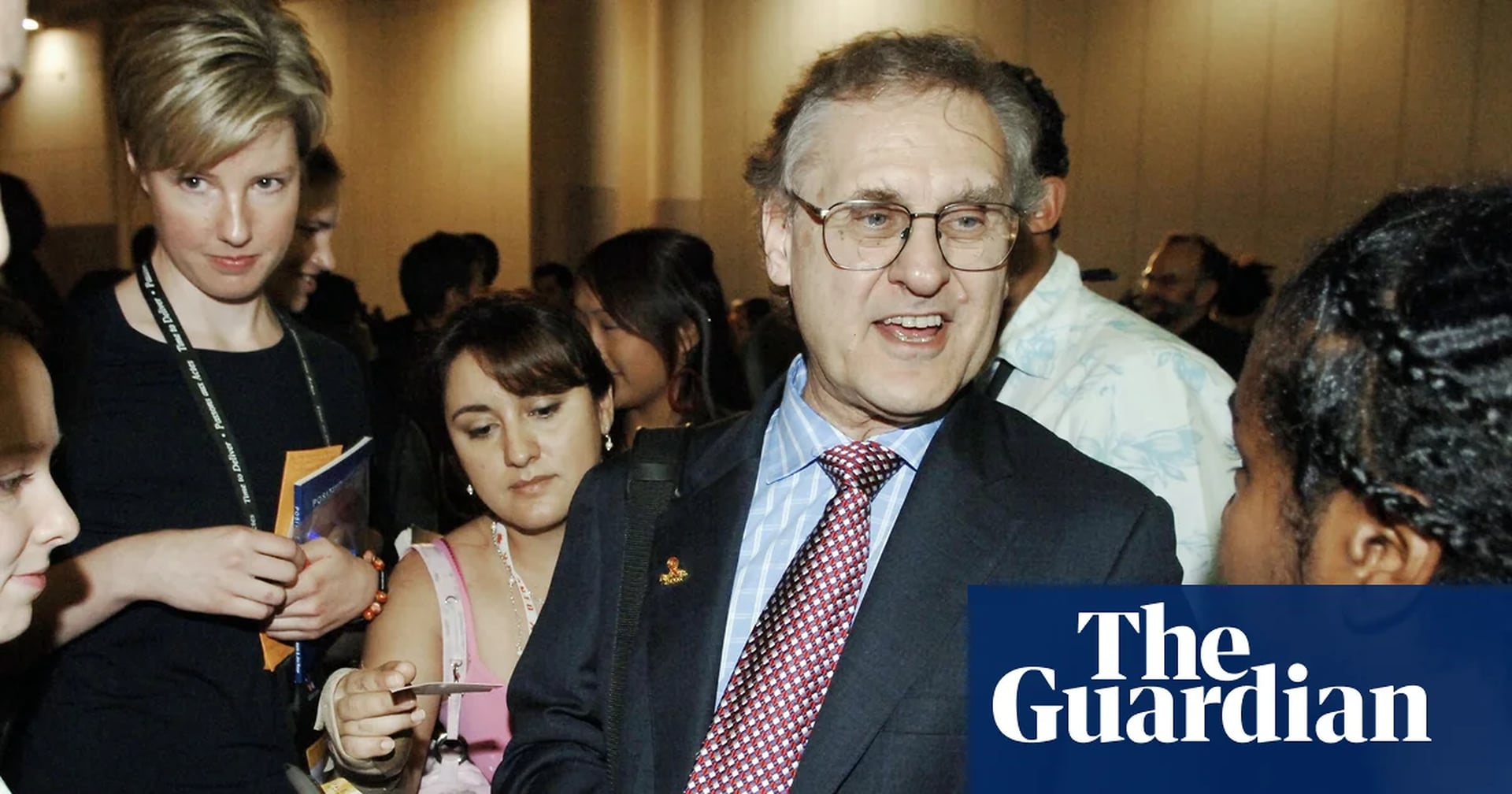
The global health community mourns the loss of Stephen Lewis, a towering figure in international advocacy whose relentless efforts brought critical attention and action to the HIV/AIDS epidemic. Lewis, a distinguished Canadian diplomat, politician, and human rights champion, passed away at the age of 88 after a battle with cancer. His decades-long commitment to confronting one of humanity's most severe health crises left an indelible mark on global public health policy and practice, inspiring countless individuals and organizations to join the fight for health equity. His passing marks the end of an era for a dedicated humanitarian whose voice resonated powerfully across continents, demanding justice and resources for those most affected by the pandemic.
Born into a family deeply entrenched in Canadian politics, Stephen Lewis carved out a formidable career in public service. He led Ontario’s New Democratic Party (NDP) and served as the Canadian ambassador to the United Nations, roles that honed his diplomatic skills and gave him a profound understanding of international mechanisms. However, it was his passionate engagement with global health, particularly the burgeoning HIV/AIDS crisis, that defined his later life and cemented his legacy. His transition from national politics to the international arena was driven by a profound moral conviction, as he witnessed the escalating devastation of the epidemic, especially in sub-Saharan Africa. This pivot underscored his belief that global challenges demand global solutions, transcending national borders and political affiliations.
In the late 20th and early 21st centuries, the HIV/AIDS epidemic presented an unprecedented global health catastrophe. Millions were dying, particularly in developing nations, with sub-Saharan Africa bearing the brunt of the crisis. The disease not only claimed lives but also shattered social structures, orphaned millions of children, decimated workforces, and pushed already vulnerable communities deeper into poverty. Stigma and discrimination further compounded the suffering, creating barriers to testing, treatment, and care. At a time when effective antiretroviral treatments were becoming available in wealthier nations, access remained a distant dream for the vast majority of those afflicted in poorer countries. This stark inequality fueled Lewis's outrage and galvanized his resolve to act. He recognized that the epidemic was not merely a medical challenge but a profound issue of human rights, social justice, and global responsibility.
Stephen Lewis's most impactful role came as the United Nations Special Envoy for HIV/AIDS in Africa, a position he held from 2001 to 2006. In this capacity, he became a tireless and often fiery voice for the voiceless. He traveled relentlessly across the African continent, visiting clinics, orphanages, and communities ravaged by the disease. He listened to the stories of those affected, bearing witness to their immense suffering and resilience. Armed with these firsthand accounts, Lewis confronted world leaders, international bodies, and pharmaceutical companies with unvarnished truths, challenging their complacency and demanding urgent, scaled-up responses. He was a vocal critic of the slow pace of action, the inadequacy of funding, and the systemic inequalities that perpetuated the crisis. His speeches were renowned for their moral clarity and emotional power, cutting through diplomatic niceties to expose the human cost of inaction.
He consistently highlighted the disproportionate impact of HIV/AIDS on women and girls, emphasizing the need for gender-specific interventions, including access to education, protection from sexual violence, and empowerment initiatives. Lewis argued passionately for universal access to antiretroviral drugs, not as a luxury, but as a fundamental human right. His advocacy played a crucial role in mobilizing resources, pushing for debt relief for affected nations, and advocating for stronger health systems capable of delivering comprehensive care. He championed the Global Fund to Fight AIDS, Tuberculosis and Malaria, recognizing its potential to channel critical funding directly to those on the front lines. His work extended beyond mere calls for aid; he sought to dismantle the structural barriers that allowed the epidemic to flourish, advocating for holistic approaches that addressed poverty, food security, and education alongside medical treatment.
The impact of Stephen Lewis's advocacy is immeasurable. While the fight against HIV/AIDS is far from over, his efforts contributed significantly to a paradigm shift in the global response. His persistent campaigning helped to secure billions of dollars in funding for treatment and prevention programs, leading to a dramatic increase in the number of people receiving life-saving antiretroviral therapy. He helped to break down the walls of silence and stigma surrounding the disease, fostering a more open and compassionate dialogue. The global community, spurred by voices like Lewis’s, began to recognize HIV/AIDS not just as a health crisis but as a development emergency requiring concerted, multi-sectoral action.
His work underscored the critical role of civil society organizations and community-led initiatives in delivering effective responses. He was a staunch supporter of grassroots movements, understanding that sustainable change often originates from the ground up. Lewis’s legacy is not just in the policies he influenced or the funds he helped secure, but also in the moral compass he provided to the global health movement. He taught the world that empathy, courage, and unwavering commitment are essential in addressing complex humanitarian challenges. His ability to connect with individuals, from heads of state to struggling grandmothers in rural villages, allowed him to bridge divides and build consensus for urgent action.
Stephen Lewis’s life work offers profound lessons for contemporary global health challenges. His approach demonstrated the power of principled advocacy in driving change, even in the face of immense political and economic inertia. He showed that addressing health crises requires more than just medical solutions; it demands a deep understanding of social determinants of health, a commitment to human rights, and a willingness to challenge power structures. The fight against HIV/AIDS, significantly shaped by his contributions, serves as a blueprint for responding to other global health threats, from emerging pandemics to persistent diseases of poverty. It highlights the importance of international cooperation, equitable access to innovation, and sustained investment in public health infrastructure.
His unwavering focus on the most vulnerable populations—women, children, and those in marginalized communities—remains a crucial reminder that global health initiatives must be equitable and inclusive. The battle against stigma, which Lewis so passionately fought, continues to be relevant in addressing mental health, non-communicable diseases, and other conditions often shrouded in silence. His career exemplifies how a single, determined individual can mobilize global attention and resources, transforming despair into hope and inaction into progress.
Stephen Lewis’s passing leaves a void in the global health advocacy landscape, but his spirit and legacy will undoubtedly continue to inspire. He was a beacon of hope and a relentless champion for justice, whose life was a testament to the power of compassionate action. The Nivaran Foundation, along with countless others dedicated to global health and human rights, honors his memory by reaffirming the commitment to the principles he so passionately upheld: that health is a universal right, that no one should be left behind, and that collective action is essential to build a healthier, more equitable world. His life serves as a powerful reminder that the fight for human dignity and well-being is an ongoing endeavor, requiring courage, conviction, and an unwavering belief in the possibility of a better future. His voice, though now silent, will echo through the corridors of global institutions and in the hearts of those who continue his vital work.
Support Nivaran Foundation's ongoing efforts to champion global health equity and education, continuing the legacy of advocates like Stephen Lewis.
Talk to Nivaran Global