
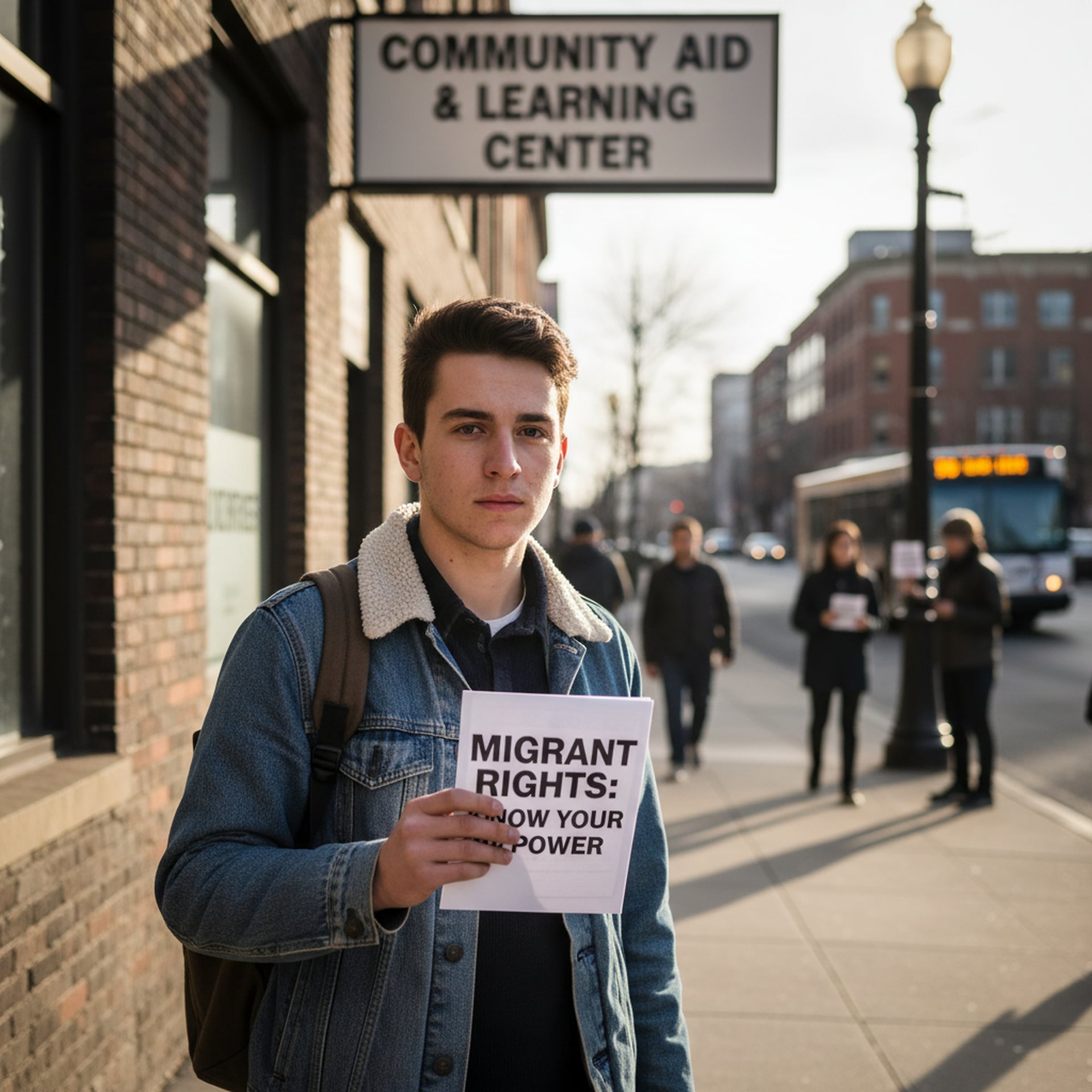
The recent liberation of Dylan Lopez Contreras, a New York City public school student, from federal immigration detention has resonated far beyond the confines of his immediate community, casting a stark light on the global predicament of young migrants caught in complex legal and humanitarian systems. His release, while a personal triumph, was immediately tempered by a profound commitment to those still held, underscoring a universal plea for justice and dignity for all individuals navigating the precarious landscape of international migration. Contreras, reportedly the first known New York City public school student to face such federal apprehension last year, has transformed his personal ordeal into a platform for advocacy, pledging to "continue fighting" for the countless others whose lives remain on hold within detention facilities worldwide. This resolve highlights a critical intersection of human rights, educational access, and public health, issues central to the mission of organizations like the Nivaran Foundation, which champions the holistic well-being of vulnerable populations globally.
The detention of children and young adults, particularly those seeking asylum or better opportunities, represents a deeply contentious aspect of immigration policies across numerous nations, from the Americas to Europe and parts of Asia. While governments often cite national security, border control, or administrative necessity as justifications, the profound human cost, especially for minors, is immeasurable and frequently outweighs any perceived benefits. Globally, thousands of young people find themselves in various forms of immigration detention, ranging from secure, prison-like facilities to less restrictive but still confining settings. These environments, by their very nature, are ill-suited for the developmental needs of children and adolescents. The disruption to their lives is profound, severing ties to family, community, and crucially, education. For students like Contreras, who are integrated into public school systems, detention abruptly halts their academic progress, often at critical junctures in their learning journeys. This interruption is not merely a temporary setback; it can have devastating, long-lasting repercussions, impacting future educational attainment, employment prospects, and overall societal integration. The international community, through various conventions like the UN Convention on the Rights of the Child (UNCRC), unequivocally states that detention of children should only be a measure of last resort and for the shortest appropriate period, yet this principle is frequently challenged by prevailing national policies that prioritize enforcement over child welfare.
Beyond the immediate cessation of schooling, the psychological and emotional toll of detention on young migrants is a significant public health concern that demands urgent attention. Children and adolescents are particularly vulnerable to the stresses of confinement, uncertainty, and separation from familiar support networks. Experiences of trauma, often endured pre-migration due to conflict or persecution, and during the perilous migratory journey itself, are frequently exacerbated by the detention environment. The constant fear of deportation, the loss of autonomy, and the lack of privacy contribute to pervasive feelings of helplessness and despair. Symptoms of anxiety, depression, post-traumatic stress disorder, and other severe mental health challenges are commonly reported among detained youth. The often-limited or non-existent access to appropriate mental health services, educational programming, recreational activities, and consistent social support within these facilities further compounds their distress. For many, the experience of detention can lead to chronic psychological issues that persist long after release, affecting their ability to form healthy relationships, concentrate in school, and fully participate in society. Nivaran Foundation recognizes that safeguarding the mental well-being of young migrants is as crucial as ensuring their physical health and educational opportunities, forming an integral part of their holistic development and future resilience.
Contreras's pledge to advocate for those left behind underscores the powerful role of lived experience in driving social change and shaping public discourse. His voice, amplified by his personal journey through the immigration system, brings a human face to the often-abstract and depersonalized debates surrounding immigration policy. This form of youth advocacy is vital in challenging prevailing narratives, fostering empathy, and pushing for more humane and rights-respecting approaches. Across continents, young activists, many of whom are former detainees themselves, are emerging as powerful advocates for their peers, demanding alternatives to detention, improved conditions within existing facilities, and greater access to legal representation and educational resources. Their collective efforts are critical in holding governments accountable to international human rights standards and in fostering a global dialogue that prioritizes the welfare of children and youth, regardless of their migratory status. These young leaders are not just seeking individual relief; they are striving for systemic change that upholds the dignity and potential of every child.
The global landscape of youth migration is increasingly complex and dynamic, driven by a myriad of interconnected factors including armed conflict, political persecution, endemic poverty, the escalating impacts of climate change, and the universal pursuit of educational and economic opportunities. Millions of young people embark on perilous journeys each year, often alone or separated from their families, seeking safety and a brighter future away from untenable circumstances. Upon arrival in host countries, they frequently encounter formidable bureaucratic hurdles, pervasive xenophobia, and restrictive policies that can strip them of their fundamental rights and impede their integration. The overarching challenge for the international community is to develop comprehensive, compassionate, and effective strategies that not only address the root causes of migration but simultaneously protect the rights and well-being of those who migrate. This includes investing significantly in education and health infrastructure in origin countries, facilitating safe and legal pathways for migration, and implementing robust support systems in host nations that prioritize integration, rehabilitation, and community-based solutions over isolation and punitive measures.
Alternative models to detention for migrant children and families have proven to be both more humane and often more cost-effective than traditional confinement. These alternatives typically involve community-based programs, foster care, or supported independent living arrangements that allow children to remain in educational settings, access essential health services, and maintain family unity. Examples from countries like Sweden, Belgium, and even pilot programs in the United States have demonstrated that such approaches can effectively manage immigration cases while safeguarding the well-being of children. These models not only protect the physical and mental health of young migrants but also enable them to continue their education, thereby preserving their potential contributions to society and fostering successful integration. The success of these programs in various countries demonstrates unequivocally that legitimate security and administrative concerns can be addressed without resorting to the harmful practice of detention, aligning national policies more closely with international child protection standards and humanitarian principles.
The story of Dylan Lopez Contreras serves as a poignant reminder that the challenges faced by young migrants are not isolated incidents but rather symptoms of systemic issues that demand global attention and collaborative solutions. His commitment to continuing the fight for others is a testament to the resilience of the human spirit and a powerful call to action for governments, civil society organizations, and individuals alike. Ensuring that every child, regardless of their background or migratory status, has unimpeded access to education, adequate healthcare, and protection from harm is not merely an aspirational goal but a fundamental human right and a cornerstone of a just and equitable world. The Nivaran Foundation, through its global initiatives, champions these principles, advocating for policies and programs that uphold the dignity and potential of all young people, recognizing that their well-being is intrinsically linked to the health and prosperity of the global community. The struggle for migrant youth education and well-being is a shared responsibility, requiring sustained effort and unwavering dedication to ensure that no young person is left behind in the pursuit of a brighter, more secure future for all.
Support Nivaran Foundation's global efforts to ensure education and health access for vulnerable youth worldwide.
Talk to Nivaran Global