
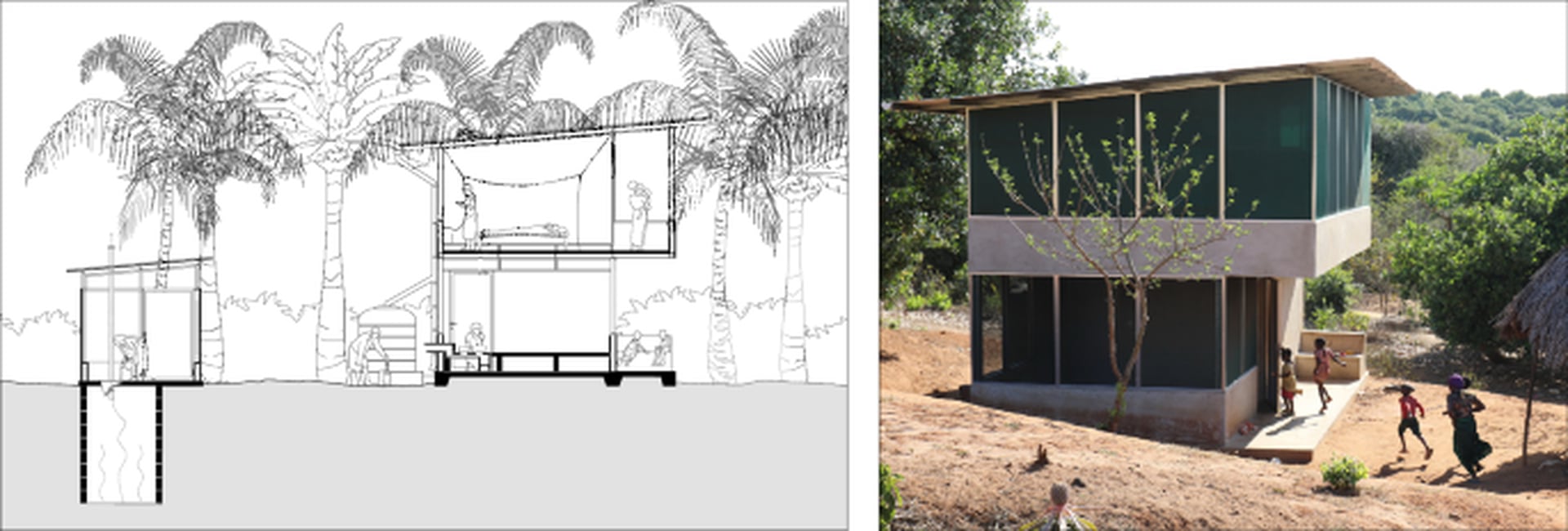
In many rural communities across Africa, the dwelling a child calls home can be a significant determinant of their health and future. Traditional housing, while culturally rich, often lacks the structural elements necessary to protect against prevalent infectious diseases and environmental hazards. This pervasive challenge has long contributed to high rates of childhood illness, impacting development and educational attainment. However, a pioneering cluster-randomized controlled trial, detailed in a recent publication in Nature Medicine, offers a powerful, evidence-based solution: a thoughtfully designed, sustainable house that dramatically improves child health outcomes.
The study addresses a critical nexus where environmental conditions directly influence public health. Children in these regions are disproportionately affected by acute respiratory infections (ARIs) due to indoor air pollution from cooking fires, diarrheal diseases stemming from inadequate sanitation and contaminated water sources, and malaria transmitted by mosquitoes. Traditional homes frequently feature poor ventilation, allowing smoke and particulate matter to accumulate; lack sealed structures, providing easy entry for disease vectors; and often have rudimentary or shared sanitation facilities, increasing the risk of pathogen transmission. These factors create a cycle of illness that hinders physical growth, cognitive development, and overall well-being, perpetuating poverty across generations.
The innovative intervention introduced by the researchers centers on a sustainable house design that integrates public health principles with local building practices. Key features include enhanced ventilation systems, such as strategically placed windows and elevated roof designs, to significantly reduce indoor air pollution and improve air quality. Integrated, hygienic latrines and improved waste disposal mechanisms are incorporated directly into or adjacent to the dwelling, drastically cutting down on exposure to fecal pathogens. Furthermore, the homes are equipped with screened windows and doors, acting as a crucial barrier against mosquitoes and other disease-carrying insects, thereby mitigating the risk of malaria and other vector-borne illnesses. The design also emphasizes the use of locally sourced, durable, and sustainable materials, ensuring affordability, cultural appropriateness, and long-term resilience against environmental stressors.
The rigor of the cluster-randomized controlled trial methodology lends significant weight to its findings. Conducted across numerous rural communities in a sub-Saharan African nation, the study involved a substantial number of households and children, carefully randomized into intervention and control groups. The intervention group received the newly designed sustainable homes, while the control group continued to reside in traditional dwellings. Researchers meticulously tracked health indicators over an extended period, allowing for a robust comparison of outcomes. This gold-standard approach minimizes bias and provides compelling evidence of the intervention's efficacy, moving beyond anecdotal observations to concrete, quantifiable improvements.
The primary outcomes measured focused on the incidence of critical childhood illnesses. The study specifically monitored the rates of acute respiratory infections, diarrheal diseases, and malaria episodes in children under five years of age. Beyond disease incidence, researchers also assessed anthropometric measures, including stunting, wasting, and underweight, to gauge the impact on physical development. Secondary outcomes extended to cognitive development scores, school attendance rates, household energy consumption for cooking and lighting, and even maternal mental health, recognizing the interconnectedness of family well-being. This comprehensive data collection paints a holistic picture of the intervention's far-reaching benefits.
The findings, as reported in 2026, are transformative. The sustainable house design led to a significant reduction in the incidence of all three primary childhood illnesses: acute respiratory infections, diarrheal diseases, and malaria. Children living in the intervention homes exhibited markedly improved growth metrics, with lower rates of stunting and wasting. The positive effects extended beyond physical health, with preliminary data suggesting improvements in cognitive development and school attendance, attributed to fewer days lost to illness. These results underscore the profound impact that a safe and healthy living environment can have on a child's entire developmental trajectory, offering a tangible pathway out of the cycle of poor health and limited opportunity.
The mechanisms through which these housing improvements translate into better health are clear and compelling. Enhanced ventilation directly reduces exposure to harmful indoor air pollutants, thereby lowering the risk of respiratory ailments. The provision of integrated, hygienic sanitation facilities curtails the spread of waterborne and foodborne pathogens, leading to a decrease in diarrheal diseases. Furthermore, the physical barrier provided by screened windows and doors effectively minimizes human-vector contact, significantly reducing the transmission of malaria. Beyond disease prevention, the improved thermal comfort, natural light, and overall safer environment contribute to better sleep, reduced stress, and an enhanced quality of life for both children and their caregivers.
The implications of this research are global and far-reaching. The sustainable house design is not merely a localized solution but a scalable blueprint for addressing child health disparities across rural Africa and other developing regions. Its success provides a strong impetus for national housing policies, international development aid programs, and non-governmental organizations to integrate similar designs into their initiatives. The long-term cost-effectiveness, stemming from reduced healthcare expenditures and increased human capital through improved health and education, makes such investments economically viable and socially imperative. This model demonstrates that foundational infrastructure can be a powerful tool for public health.
While the study presents overwhelmingly positive results, the path to widespread adoption is not without its challenges. Considerations such as the initial cost of construction, even with locally sourced materials, cultural acceptance of new designs, and ensuring long-term maintenance of features like insect screens and improved latrines, require careful planning and community engagement. Future research will undoubtedly focus on long-term follow-up studies to assess sustained impact, detailed cost-benefit analyses across diverse contexts, and the adaptation of these designs to varying climatic zones and cultural preferences. Integrating these housing interventions with other health programs, such as nutrition and vaccination campaigns, could further amplify their impact.
Nivaran Foundation recognizes the profound significance of this research. It exemplifies the power of interdisciplinary solutions—where architecture, public health, and sustainable development converge to create lasting change. By demonstrating that a well-designed home can be a cornerstone of child health, this study offers hope and a clear direction for global efforts to uplift vulnerable communities. It reinforces our commitment to supporting evidence-based initiatives that not only treat illness but fundamentally transform the environments in which children grow and thrive, paving the way for a healthier, more equitable future for all.
Support Nivaran Foundation's commitment to evidence-based solutions that improve health and well-being for children in vulnerable communities worldwide.
Talk to Nivaran Global