
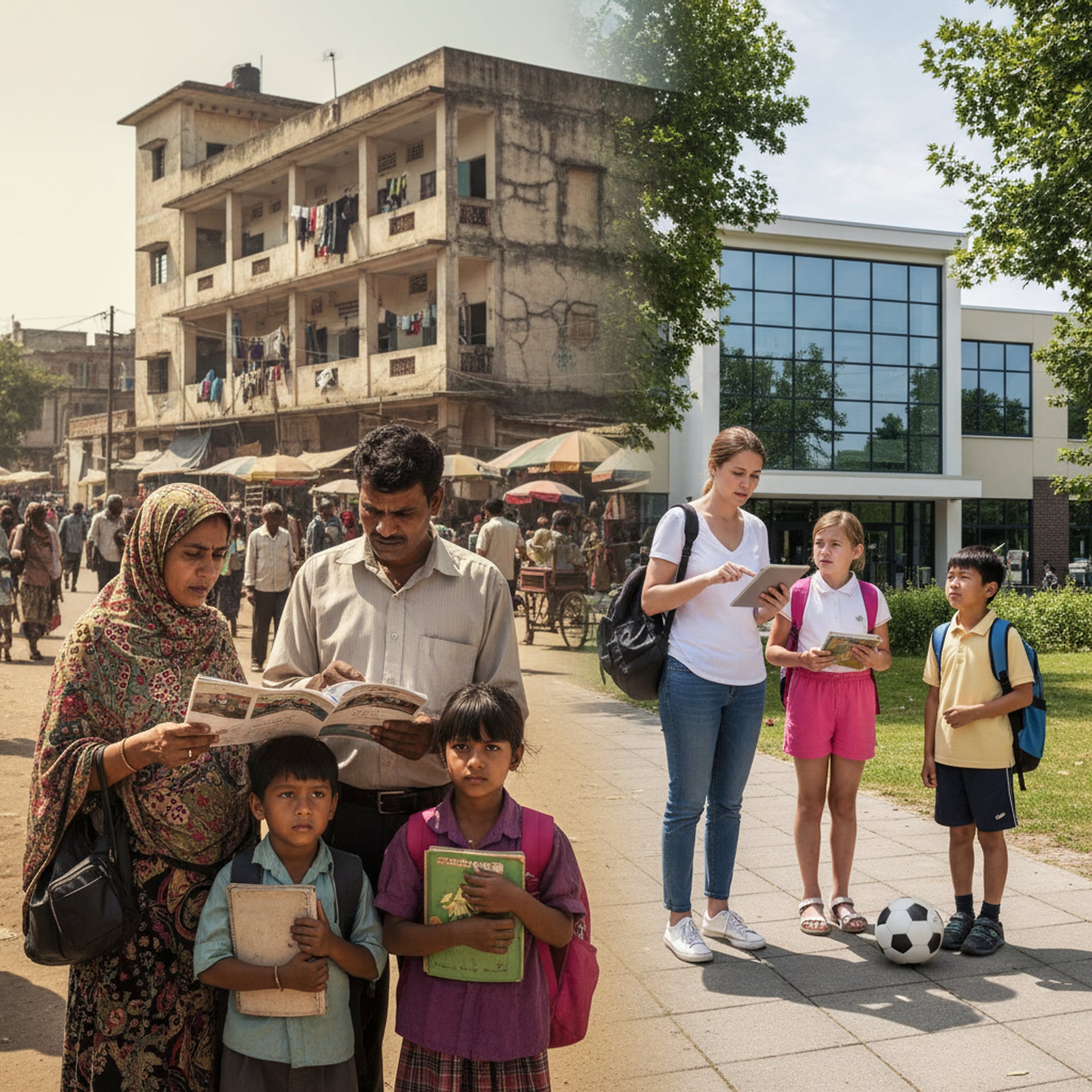
The quest for quality education is a fundamental aspiration for families worldwide, yet for millions, it remains an elusive dream. From bustling megacities to remote rural communities, parents confront an escalating dilemma: how to secure a robust educational foundation for their children without succumbing to overwhelming financial strain. This challenge, often framed as a local issue, is in fact a pervasive global crisis, deeply intertwined with economic disparities, societal structures, and the future trajectory of nations. The struggle highlighted in developed regions, where even affluent societies grapple with the cost of living in neighborhoods with top-tier public schools and the prohibitive expense of private alternatives, mirrors a more acute and widespread predicament across the developing world. Here, the very existence of adequate educational infrastructure, let alone quality, is often uncertain, creating a chasm between aspiration and reality that impacts generations. The implications extend far beyond individual households, shaping national productivity, social cohesion, and equitable global development.
At the heart of this global educational crisis lies economic inequality. Families with limited financial resources are often confined to areas where public schools are underfunded, overcrowded, and lack essential resources, from qualified teachers to modern learning materials. This creates a stark two-tiered system: those who can afford to live in affluent districts or pay for private schooling gain access to superior educational opportunities, while others are left with options that may barely meet basic standards. The cost of living, particularly in urban centers, often dictates housing choices, inadvertently determining a child's educational prospects. This phenomenon is not unique to any single country; it is a universal pattern observed from the rapidly expanding cities of Asia and Africa to the established metropolises of Europe and North America. The economic burden extends beyond tuition fees, encompassing transportation, uniforms, books, and supplementary tutoring, all of which can become insurmountable barriers for low-income households, effectively locking children out of pathways to upward mobility.
Public education systems, intended as the great equalizer, are frequently under immense pressure globally. Decades of underinvestment, coupled with increasing student populations and evolving educational demands, have stretched resources thin. Teachers are often underpaid, facilities are dilapidated, and curricula may struggle to keep pace with the needs of a rapidly changing world. In response, private schools have proliferated, offering perceived higher quality, smaller class sizes, and specialized programs. However, these institutions come with a hefty price tag, making them inaccessible to the vast majority. Even in countries with ostensibly strong public systems, the flight of more affluent families to private alternatives can further deplete resources and political will for public school improvement, creating a vicious cycle. This widening gap between public and private provision exacerbates social stratification, embedding educational disadvantage within specific socio-economic groups and making it increasingly difficult for individuals to transcend their circumstances through merit alone.
Beyond economic standing, geography plays a critical role in shaping educational access and quality. Rural communities, particularly in developing nations, frequently suffer from a severe lack of educational infrastructure. Schools may be distant, requiring long and often unsafe commutes, or may not exist at all beyond primary levels. Teacher recruitment and retention are significant challenges in these areas, leading to understaffed schools and a reliance on less qualified educators. Furthermore, the digital divide adds another layer of inequality. While technology has the potential to bridge educational gaps, access to reliable internet, devices, and digital literacy remains unevenly distributed. Students in urban centers or wealthier regions often benefit from technology-enhanced learning, while their rural or poorer counterparts are left behind, further widening the knowledge and skill gap essential for participation in the modern global economy. This disparity is not merely about access to gadgets but about access to contemporary pedagogical tools and resources increasingly vital for comprehensive learning.
Governments worldwide face complex policy choices regarding education, often balancing competing priorities with limited budgets. Many nations struggle with insufficient public funding, leading to a reliance on external aid or, more commonly, a transfer of costs to parents. In some contexts, corruption or inefficient resource allocation further cripples educational initiatives. Policies aimed at improving equity, such as school zoning or targeted funding for disadvantaged areas, often face political resistance or prove difficult to implement effectively. The lack of a cohesive, long-term national strategy for educational development, coupled with frequent shifts in policy with changes in administration, can undermine progress. This policy paralysis, combined with persistent funding gaps, ensures that the structural issues preventing equitable access to quality education remain largely unaddressed, perpetuating cycles of educational disadvantage across generations.
The consequences of unequal access to quality education are profound and far-reaching, extending across generations. Children who receive a substandard education are less likely to achieve higher levels of schooling, limiting their future employment prospects and earning potential. This often traps families in cycles of poverty, as parents are unable to secure well-paying jobs and thus cannot afford better educational opportunities for their own children. The societal impact is equally significant: a less educated populace can hinder economic growth, reduce innovation, and exacerbate social inequalities. It can also lead to decreased civic participation and a weakening of democratic institutions. Breaking this intergenerational cycle requires not just incremental improvements but systemic transformations that address the root causes of educational inequity, ensuring that every child, regardless of their background or location, has a genuine chance to thrive.
Despite the formidable challenges, various innovative approaches are being explored globally to address the crisis. Community-led initiatives, often supported by non-governmental organizations, are establishing local learning centers, providing supplementary education, and advocating for improved public services. Technology is also being leveraged to deliver educational content to remote areas, though challenges of infrastructure and digital literacy persist. Some governments are experimenting with targeted funding models, teacher training programs, and curriculum reforms designed to enhance quality and equity. The push for early childhood education is gaining momentum, recognized as a critical foundation for future learning. However, these solutions, while promising, often operate at a localized scale and struggle to achieve widespread systemic change without significant political will, sustained funding, and comprehensive policy frameworks that prioritize education as a fundamental human right and a cornerstone of national development.
The struggle to find good, affordable schools is not merely an individual family's burden; it is a collective global responsibility. Addressing this crisis demands a concerted effort from governments, international organizations, civil society, and communities themselves. It requires increased and more equitable public investment in education, reforms that prioritize quality and inclusivity, and policies that actively dismantle the barriers created by economic and geographic disparities. Furthermore, fostering global partnerships to share best practices, resources, and innovative educational models can accelerate progress. Ensuring that every child has access to a quality education is not just an ethical imperative; it is an investment in human potential, social stability, and sustainable development for all. The future prosperity and peace of our interconnected world hinge on our collective ability to unlock the full educational potential of every young mind, transforming a universal struggle into a universal triumph.
Support Nivaran Foundation's initiatives to advocate for equitable access to quality education worldwide.
Talk to Nivaran Global