
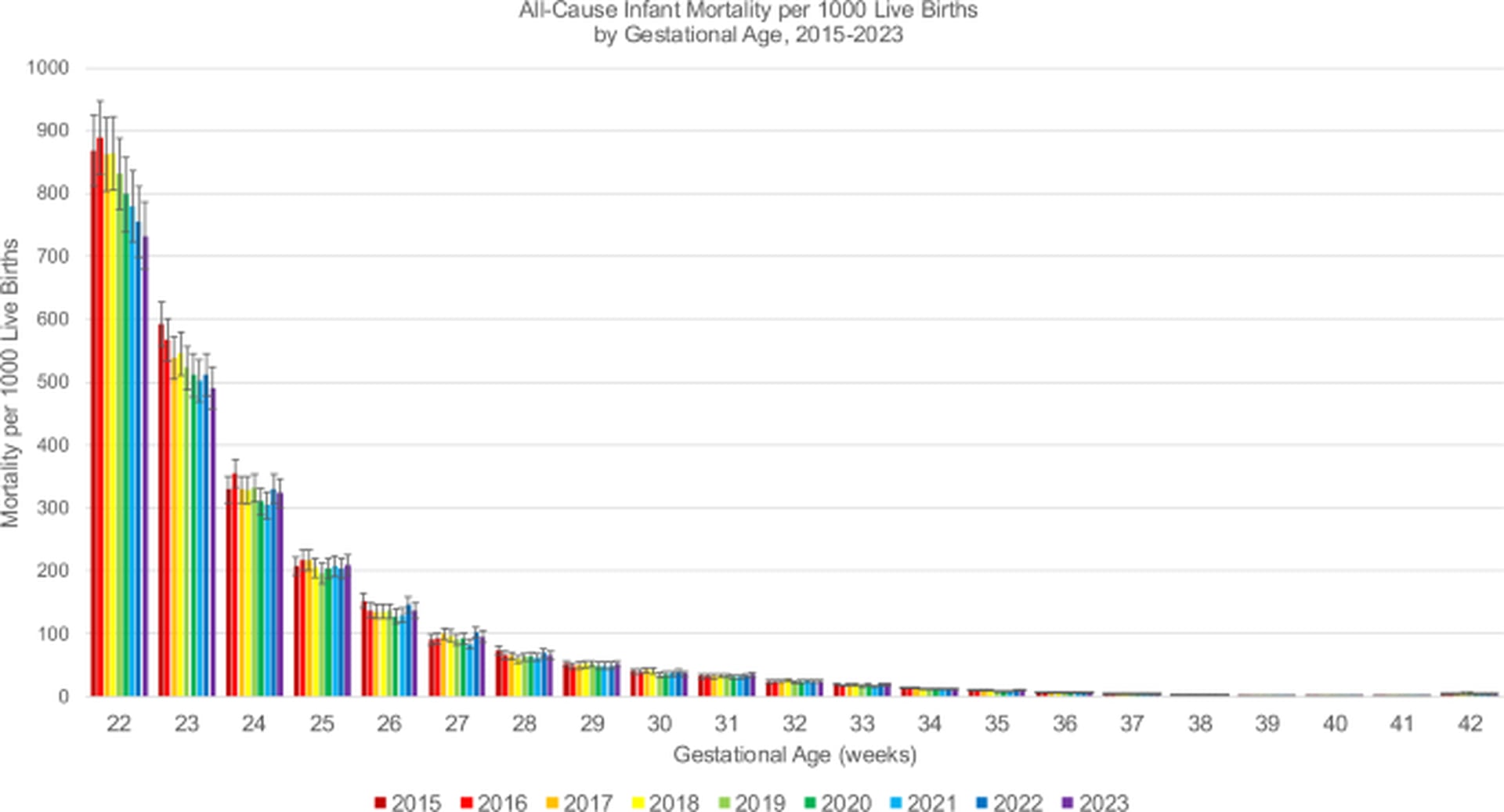
The global health community consistently monitors infant mortality rates as a crucial indicator of a nation's overall health and socioeconomic development. These rates reflect not only the immediate health of newborns but also the quality of maternal care, access to healthcare services, and broader societal factors influencing family well-being. A recent study published in Nature analyzing U.S. infant mortality trends by gestational age from 2015 to 2023 provides a detailed look at survival rates among infants born at different stages of pregnancy. While focused on the United States, the insights gleaned from such comprehensive data are invaluable for understanding universal challenges and informing global strategies to reduce infant mortality, particularly in regions facing significant resource constraints and health disparities.
Understanding the relationship between gestational age and infant mortality is paramount. Infants born extremely preterm, typically before 28 weeks of gestation, face significantly higher risks of mortality and morbidity due to underdeveloped organs and systems. As gestational age increases, the chances of survival generally improve, but even small differences in weeks can have profound impacts on an infant's prognosis. The U.S. study, by meticulously tracking these trends over nearly a decade, offers a granular perspective on how medical advancements, public health interventions, and societal changes might influence outcomes across various gestational age cohorts. Such detailed analyses allow health systems to identify specific vulnerabilities and target interventions more effectively, from enhancing prenatal care to optimizing neonatal intensive care unit (NICU) protocols for different stages of prematurity.
Globally, infant mortality remains a pressing concern, particularly in low- and middle-income countries (LMICs) where rates are often many times higher than in high-income nations. While the U.S. context differs significantly from many LMICs in terms of healthcare infrastructure and resources, the fundamental biological challenges of prematurity and birth complications are universal. Data from a high-resource setting can highlight best practices, identify persistent challenges even with advanced care, and underscore the importance of early intervention. For instance, if the U.S. study reveals specific gestational age groups where mortality rates have stagnated or worsened despite advanced medical care, it signals areas where global research and innovation are still critically needed. Conversely, improvements in certain cohorts could point to successful strategies in prenatal screening, maternal health management, or neonatal resuscitation that could be adapted and scaled in other settings.
Key determinants of infant mortality extend beyond just gestational age, encompassing a complex interplay of maternal health, quality of perinatal care, and broader socioeconomic factors. Maternal health conditions such as hypertension, diabetes, infections, and inadequate nutrition during pregnancy can significantly increase the risk of preterm birth and other complications. Access to regular, high-quality antenatal care is crucial for early detection and management of these conditions, ensuring mothers receive appropriate guidance and support throughout their pregnancy. In many parts of the world, particularly rural and underserved areas, access to skilled birth attendants and emergency obstetric care remains a significant challenge. Complications during delivery, if not managed promptly and effectively, can lead to birth asphyxia, trauma, and severe infections, all major contributors to infant mortality. The availability of well-equipped facilities, trained personnel, and essential medicines during childbirth is a critical component of reducing these preventable deaths.
Beyond direct medical interventions, socioeconomic factors exert a powerful influence on infant survival. Poverty, lack of education, poor sanitation, and limited access to clean water contribute to a cycle of poor health outcomes. Malnutrition among pregnant women, often linked to food insecurity, can lead to low birth weight and preterm delivery. Furthermore, environmental factors, such as exposure to pollution or hazardous living conditions, can also impact fetal development and infant health. Addressing these underlying social determinants requires a multi-sectoral approach, integrating health policies with initiatives in education, economic development, and infrastructure. Investments in women's education, for instance, have been consistently linked to improved maternal and child health outcomes, as educated mothers are often better equipped to make informed health decisions, access healthcare services, and provide nurturing environments for their children.
Health equity is another critical lens through which to view infant mortality data. Even within high-income countries like the U.S., significant disparities often exist along racial, ethnic, and socioeconomic lines. These disparities are frequently rooted in systemic inequities, historical injustices, and unequal access to quality healthcare and social resources. Understanding how these factors intersect with gestational age to influence mortality rates in the U.S. can provide valuable lessons for addressing similar inequities in other global contexts. For instance, if the study highlights higher mortality rates for specific demographic groups at particular gestational ages, it points to the need for targeted interventions that address social determinants of health and ensure equitable access to comprehensive care, regardless of background or location. This includes culturally sensitive healthcare delivery, community-based health programs, and policies aimed at reducing poverty and improving living conditions for vulnerable populations.
For the global health community, studies like the one from the U.S. serve as a vital reminder of the continuous need for robust data collection and analysis. While direct replication of high-resource healthcare models may not be feasible in all settings, the principles derived from such research—the importance of gestational age assessment, comprehensive antenatal care, skilled delivery, and postnatal support—are universally applicable. International organizations, national governments, and non-governmental organizations must collaborate to strengthen health information systems in LMICs, enabling them to collect, analyze, and act upon their own infant mortality data. This includes investing in training for healthcare workers, improving data infrastructure, and fostering research partnerships that can adapt evidence-based interventions to local contexts.
The path forward in reducing global infant mortality requires sustained political will, adequate financial investment, and a commitment to innovation and collaboration. Leveraging insights from detailed studies, even those from specific national contexts, can inform the development of more effective, equitable, and sustainable interventions worldwide. By focusing on the critical period of gestation and birth, and by addressing the complex web of medical, social, and economic factors that influence infant survival, the global community can continue to make progress towards a future where every child has the chance to thrive. The U.S. data, therefore, is not merely a national statistic but a global learning opportunity, urging collective action to safeguard the health and future of the world's youngest citizens.
Support Nivaran Foundation's mission to advance global health equity and improve child survival rates worldwide.
Talk to Nivaran Global